
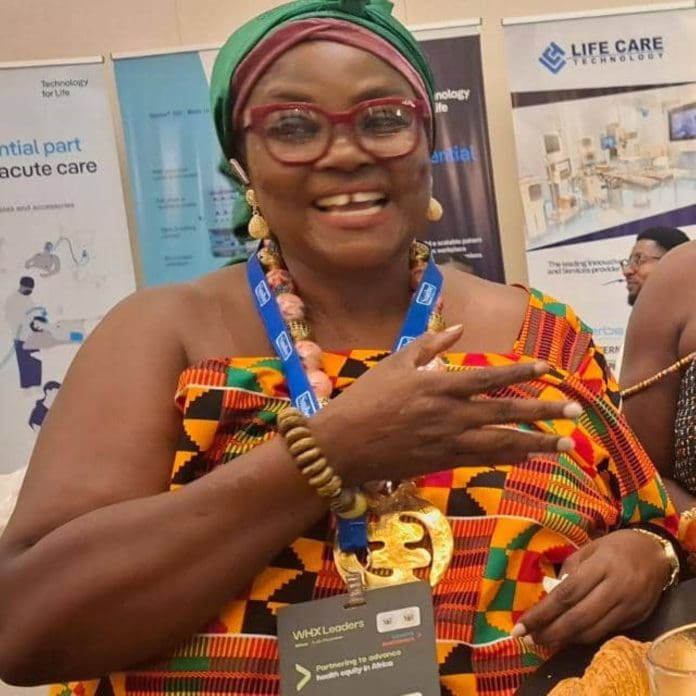

The President of the All Regions Queen Mothers’ Association, Nana Otubea II, has described as “very unfortunate” the rejection of queen mothers’ inclusion in the Regional and National Houses of Chiefs by the Asantehene, Otumfuo Osei Tutu II.
Nana Otubea II, who also serves as President of the Oti Queen Mothers’ Association and Paramount Queen Mother of the Nkonya Traditional Area in the Biakoye District of the Oti Region, stressed that the 1992 Constitution is supreme over any individual, institution, or group.
In a press statement issued at Nkonya, she noted that Ghana has come a long way and undergone significant cultural reforms and transformation.
At the final 2025 meeting of the Ashanti Regional House of Chiefs in Kumasi on Friday, December 19, the Asantehene opposed the proposal, citing custom and precedent. The proposal, championed by the National House of Chiefs led by Osagyefo Yaw Gyebi II, seeks amendments to the Chieftaincy Act, 2008 (Act 759) to establish a “Chamber of Queen Mothers” and grant them seats alongside chiefs to promote gender equity.
Nana Otubea II argued that while the Asantehene’s position may reflect tradition, it contradicts the Affirmative Action (Gender Equity) Act passed by Parliament in July 2024. She emphasized that the Houses of Chiefs are state institutions funded by the Government of Ghana, not traditional councils, and therefore fall outside the Asantehene’s jurisdiction.
She further stated that if Parliament has passed a landmark law to enhance women’s participation in politics, the economy, and society, then queen mothers deserve representation at both regional and national levels. This, she added, aligns with the cultural role of mothers and queen mothers acknowledged by the Asantehene himself.
Nana Otubea II urged the Asantehene to reconsider, stressing that culture must evolve to meet societal, national, and global aspirations through dialogue and stakeholder engagement. She concluded that the Affirmative Action law is here to stay, and no individual can overturn it.