

By Edward Adjei FRIMPONG
Rising tidal waves are wreaking havoc on the livelihoods of residents in fishing communities in the Anloga District of Volta Region, including Fuveme and Dzaflagbe, destroying homes, fishing assets and critical infrastructure; and placing the local fishing economy under severe strain.

The coastal communities, where fishing is the primary source of livelihood, have suffered repeated shoreline erosion over the years. Residents say the latest tidal wave incident on April 16, 2026 has worsened the already fragile situation, washing away homes, school buildings, canoes, fishing nets and other vital assets.
The destruction has disrupted fishing activities and deprived many households of their principal source of income, raising concerns over food security and the sustainability of economic activities in the area.
A visit to the communities revealed that the tidal waves had swept away a sandbar constructed by residents as a temporary barrier against the encroaching sea. This has narrowed the land buffer between the Atlantic Ocean and the Volta estuary near Ada, exposing more homes and economic assets to the risk of further destruction.
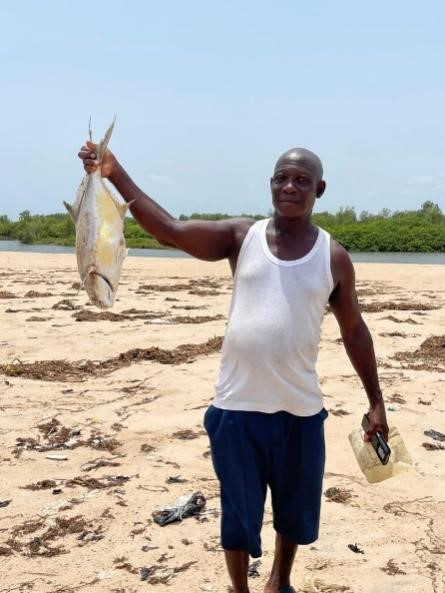
A fisherman at Fuveme, Jackson Akorli, said: “Beyond the direct impact on marine fishing, we fear the intrusion of seawater into the Keta Lagoon and surrounding inland water bodies. This will affect the breeding conditions for tilapia and mudfish, the main fish species supporting inland fishing economies in the enclave”.
The worsening coastal erosion has displaced hundreds of residents, many of whom are now taking shelter in makeshift structures in coconut groves, while others have moved to neighbouring communities such as Atiteti and Atorkorkodzi, which are themselves under threat from the advancing sea.
The humanitarian crisis is compounding economic hardship, especially for women and children whose livelihoods depend on the fishing value chain, including fish processing and trading.
The erosion is steadily eroding the productive base of the local economy. As households lose boats, fishing gear and shelter, the fishing value chain that supports incomes in these communities is weakening, raising the risk of deeper poverty, migration and long-term economic dislocation.
Fishing leaders are calling for urgent government intervention to halt the destruction and preserve the economic viability of the affected communities.
The Atiteti-Fuveme Representative of the Ghana National Canoe Fishermen Council, Amos Agboado, said the construction of sea defence infrastructure was now the most critical intervention required.
“The major intervention needed now is the construction of sea defence to insulate the affected communities from further destruction. Without the sea defence, we cannot continue with fishing here,” he said.
He said relocation would not be a practical solution, as it would disconnect residents from their main economic activity.
“Relocation is not the ideal option because it will deprive the people of their only source of livelihood — fishing. At the proposed relocation area, such as Tunu, the only means of survival is fishing in mangroves, but that area has been designated as a protected zone, limiting access,” he added.
Mr. Agboado also called for the dredging of sections of the Volta River estuary, arguing that sediment build-up had reduced its capacity to contain tidal surges, leading to recurrent overflow and worsening coastal flooding.
The plight of the communities highlights the growing economic risks climate change poses to Ghana’s coastal livelihoods. The fisheries sector remains a major source of employment and food security, particularly in vulnerable coastal areas, but rising sea levels, coastal erosion and environmental degradation are threatening its long-term sustainability.
Post Views: 65
Discover more from The Business & Financial Times
Subscribe to get the latest posts sent to your email.