
By; Nana Karikari, Senior Global Affairs Correspondent
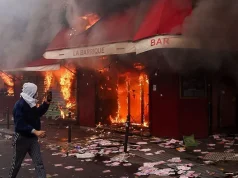
More than 160 people have been detained across France, including over 100 in Paris, as police deployed tear gas and water cannons during widespread clashes with protesters on Saturday. French security forces faced off against demonstrators in multiple cities as nearly a month of student-led unrest expanded into a broad movement against government policy.
Escalation in the Capital
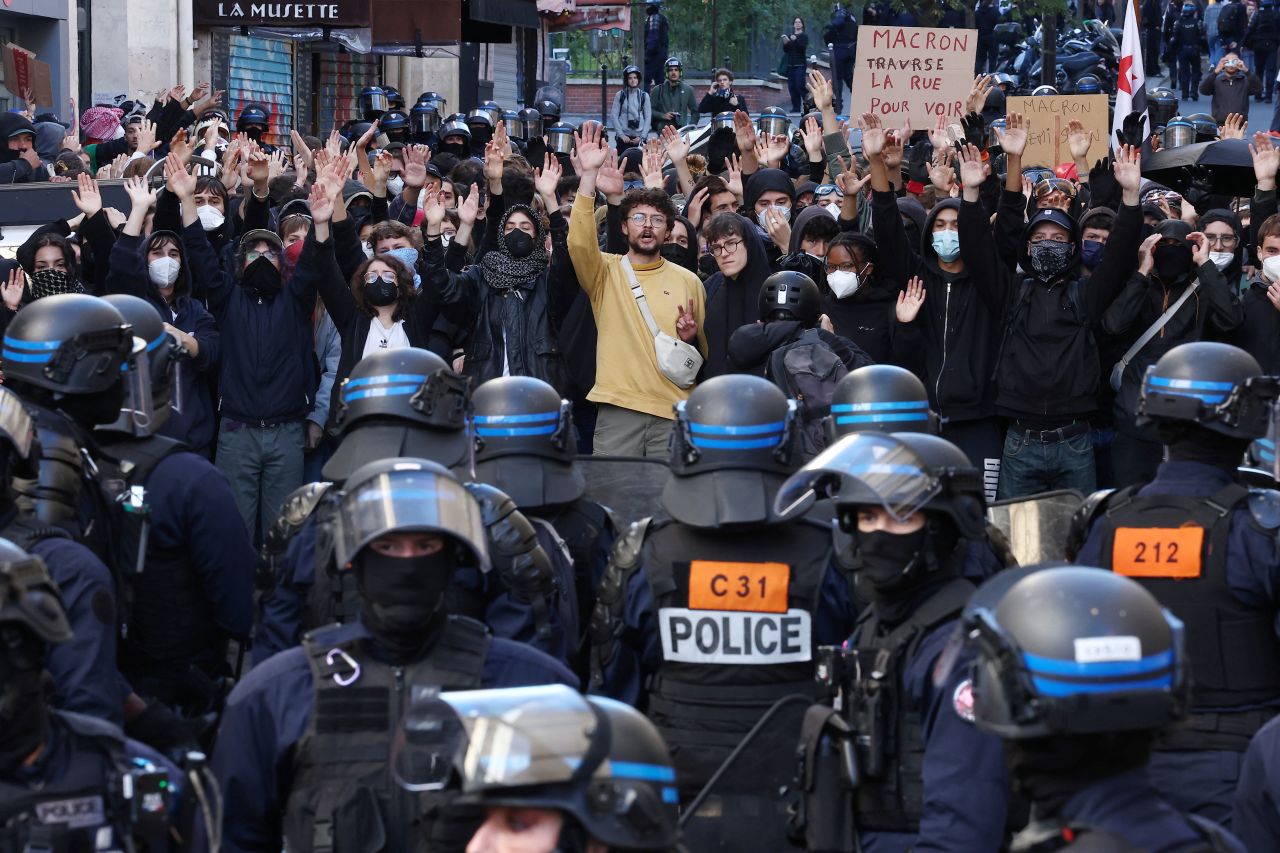
Tens of thousands of activists, students, and trade unionists packed the streets surrounding the Place de La République in Paris ahead of a planned 2:30 p.m. march. The mood began with jubilation and determination before rapidly turning tense.
Riot police charged the square multiple times under volleys of tear gas more than half an hour before the march was scheduled to set off. A student orchestra played during the initial tear gas deployment before bystanders formed a protective human chain to escort them to safety.
Protesters aimed fireworks at law enforcement lines while police deployed water cannons to push back hundreds of young people along the boulevard. A video released by authorities showed masked, hooded individuals wielding weapons, launching projectiles, and smashing street pavement bricks alongside a social media caption questioning their intent: “Have they come to protest?”
Clashes Spread to Provincial Hubs
The unrest extended far beyond Paris, with actions reported in major regional centers including Rennes, Marseille, and Lyon.
Outside Lyon’s Jean Moulin University, law enforcement launched tear gas grenades to clear a gathering of approximately 300 people according to CNN affiliate BFMTV. Demonstrators across the country staged blockades and localized disruptions as part of an estimated 60 marches and 250 coordinated actions targeting public infrastructure.
Broadening Social Coalition
What began in late September as a localized suburban high school action in support of striking teachers has morphed into a major national crisis with international visibility, attracting comments from U.S. President Donald Trump.
The demonstration brought together diverse political and social factions. Demonstrators ranged from high school students demanding increased teacher hiring, smaller class sizes, and improved building conditions to older citizens displaying placards calling for tax reform and the resignation of French President Emmanuel Macron.
Political support coalesced around Jean-Luc Mélenchon’s far-left La France Insoumise, which backed the student movement, demanded a cap on fuel prices, and framed the day as a potential launching pad for broader systemic change. Joining them were taxi drivers executing rolling blockades around Paris airports through Saturday and farmers organizing tractor demonstrations.
Members of the gilets jaunes, or Yellow Vests, also mobilized in large numbers. Established in 2018 when over 250,000 citizens rallied against a fuel tax hike intended to combat climate change, the high-visibility jacket movement evolved into a broader coalition spanning anarchists, anti-immigration populists, hard-core fascists, and environmentalists.
During their initial 2018 demonstrations, at least 10 people died within six weeks before the government yielded, scrapping the fuel tax and enacting a 10 billion euro ($11.05 billion) package of wage increases and tax relief for low-income citizens. The movement resurfaced periodically, including a 2020 Paris protest where police questioned over 250 people, though radical elements faced criticism, including a 2019 Fondation Jean-Jaurès study showing 50% of surveyed supporters held beliefs in a global Zionist conspiracy.
Government and Police Defense
Government officials signaled rising concern over the widespread disruptions. French President Emmanuel Macron addressed the public ahead of the demonstrations, appealing for calm while acknowledging constitutional guarantees.
“There is a constitutional right to protest, but what goes along with this right is respect,” Macron said.
The Paris Police Prefecture defended its officers’ actions and rejected criticism regarding tactical aggressiveness. Supervising officials reaffirmed their stance online during the confrontations.
“We do not back down in the face of rioters and those who’ve come to attack law enforcement,” the prefecture stated, adding that officers faced “hostile individuals intent on violence” at Place de la République who were “standing their ground with courage and professionalism.”
In response to the expanding unrest, French leadership convened an emergency crisis unit meeting at 6:00 p.m. local time, bringing together the chiefs of staff for the Prime Minister, the Interior Minister, and the Minister of Justice to coordinate the state response.
Outlook for the Crisis
As evening approached, the coalition between student groups, trade unions, and veteran political activists demonstrated a growing capacity to paralyze transport networks and public squares across France. With the government holding firm on public order and law enforcement defending its tactical response, the political impasse poses a persistent governance challenge for the Macron administration as it balances constitutional rights to demonstrate against the imperative to maintain public safety.