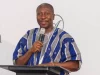


Chairman of the Constitutional Review Committee Professor Henry Kwasi Prempeh has warned that perceived selective enforcement of anti corruption laws is steadily undermining public trust in Ghana’s justice system, weakening institutions meant to protect accountability and the rule of law.
Speaking on JoyNews on Thursday, December 26, 2025, after the committee submitted its final report to President John Dramani Mahama earlier this week, Professor Prempeh argued that when anti corruption efforts appear politically skewed or inconsistently enforced, citizens lose confidence in both the justice system and democratic institutions.
According to him, corruption cannot be tackled effectively if prosecutions are seen as targeting only certain individuals while others remain untouched. He stressed that the legitimacy of anti corruption agencies depends not only on legal authority but on fairness and consistency.
He described Ghana’s presidency as excessively centralized. “What people call power is also a burden,” he said, noting that presidents are currently responsible for appointing an overwhelming number of officials.
He explained that the committee is not seeking to strip presidents of authority but to regulate how appointments are made. “You shouldn’t allow the captain of one team to choose the referee,” Professor Prempeh said, arguing that positions requiring impartiality should follow independent selection processes.
On corruption prosecution, he questioned the effectiveness of vesting prosecutorial power in a politically appointed Attorney General. “If it was going to work, it would have worked by now,” he said.
Professor Prempeh pointed to public perception as a major problem. “Even when you act, people assume it’s partisan,” he said. “Once trust is lost, the outcomes are not believed.”
He said the proposal for an independent anti corruption commission is grounded in evidence from other jurisdictions. “This model is not new. Some countries have accepted that the Attorney General prosecuting corruption doesn’t work,” he explained.
Professor Prempeh further observed that Ghana’s strong legal architecture, including constitutional safeguards and oversight bodies, risks becoming ineffective if enforcement lacks transparency and impartiality. He called for a renewed commitment to due process, equal treatment before the law and institutional independence.
The governance expert urged political leaders to refrain from interfering in investigations and prosecutions, warning that political influence erodes professional integrity within state institutions. He emphasized that rebuilding trust requires clear accountability, open communication and visible consequences for wrongdoing, regardless of status or political affiliation.
He noted that once the public believes justice is selective, anti corruption becomes a political tool rather than a national cause. His comments come amid growing public debate over corruption cases and the credibility of enforcement agencies, with civil society groups echoing concerns about double standards in the fight against graft.
Professor Prempeh concluded that without credible, even handed justice, Ghana’s anti corruption agenda risks losing public support, a setback he warned could have lasting consequences for democracy and national development.
Ultimately, he said the constitutional reforms are meant to produce an effective presidency focused on governance rather than patronage. “We are giving the president the right kind of power and taking away what has become a burden,” he said.
The eight member Constitutional Review Committee was inaugurated by President Mahama on January 19, 2025, and submitted its final report on Monday, December 22, 2025. The committee visited 10 regions and held engagements with academics, trade unions and citizens across the country.
Committee members included Justice Sophia Akuffo Adinyira, retired Supreme Court Justice; Professor Kwame Karikari; former Electoral Commission Chairperson Charlotte Osei; Dr Godwin Djokoto; Ibrahim Tanko Amidu; Dr Esi Ansah; and Dr Rainer Akumperigeya. Professor Prempeh serves as Executive Director of the Ghana Centre for Democratic Development.
The committee’s mandate was to review and resolve challenges from previous constitutional reviews, particularly those of the 2010 Constitution Review Commission and the 2023 Constitution Review Consultative Committee. Compiled over 11 months, the final report contains proposed amendments to Ghana’s 1992 Constitution aimed at strengthening governance, promoting citizen participation and addressing key national issues.
Key recommendations include extending the presidential term from four to five years with regulated campaign seasons, separating executive powers from the legislature, expanding the authority of the Council of State, and establishing constitutional oversight for state owned enterprises through a body similar to the State Interests and Governance Authority.
The committee deliberately excluded any provision for a third presidential term, finding no public demand or political appetite for such a change. Professor Prempeh noted that the proposal for a five year term is designed to give governments more time to implement policies without constant campaign pressure, as presidents currently spend about six months settling into office and nearly a year campaigning for re election.
He explained that the five year term may actually be harsher on presidents, making re election more difficult to achieve. “If you have not performed well in five years, Ghanaians are not really going to entertain the thought of letting you stay,” he said.
The committee also recommended ending what it described as the hybrid relationship between the executive and the legislature in favor of clearer separation between the two arms of government. Changes are proposed for the public sector to reduce partisan influence, with state owned enterprises placed under constitutional oversight.
Under the proposals, the Council of State would receive expanded authority, moving closer to its original 1969 conception as a co guarantor in presidential appointments. The recommendations also address appointment processes for state owned enterprises, aimed at improving transparency and efficiency.
President Mahama said the report would be published soon, adding that he did not want it kept like a nuclear secret, though he did not provide a publication date. The President is expected to outline the next steps for implementing the recommendations, marking a significant moment in Ghana’s democratic process.
The submission of the report has generated public debate, with some observers praising the thoroughness of the process while others have questioned certain recommendations. Former Deputy General Secretary of the National Democratic Congress Samuel Koku Anyidoho criticized Professor Prempeh’s media engagements following the report’s submission, suggesting he should allow the government’s white paper to speak for itself.
Former Special Prosecutor Martin Amidu also criticized Professor Prempeh for what he described as selective activism, noting his silence on the role of the Council of State during the Akufo Addo administration while appearing vocal under the current NDC government. However, Professor Kwaku Asare defended Professor Prempeh, stating that Amidu’s attack betrayed a fundamental misunderstanding of how a constitutional review committee operates.