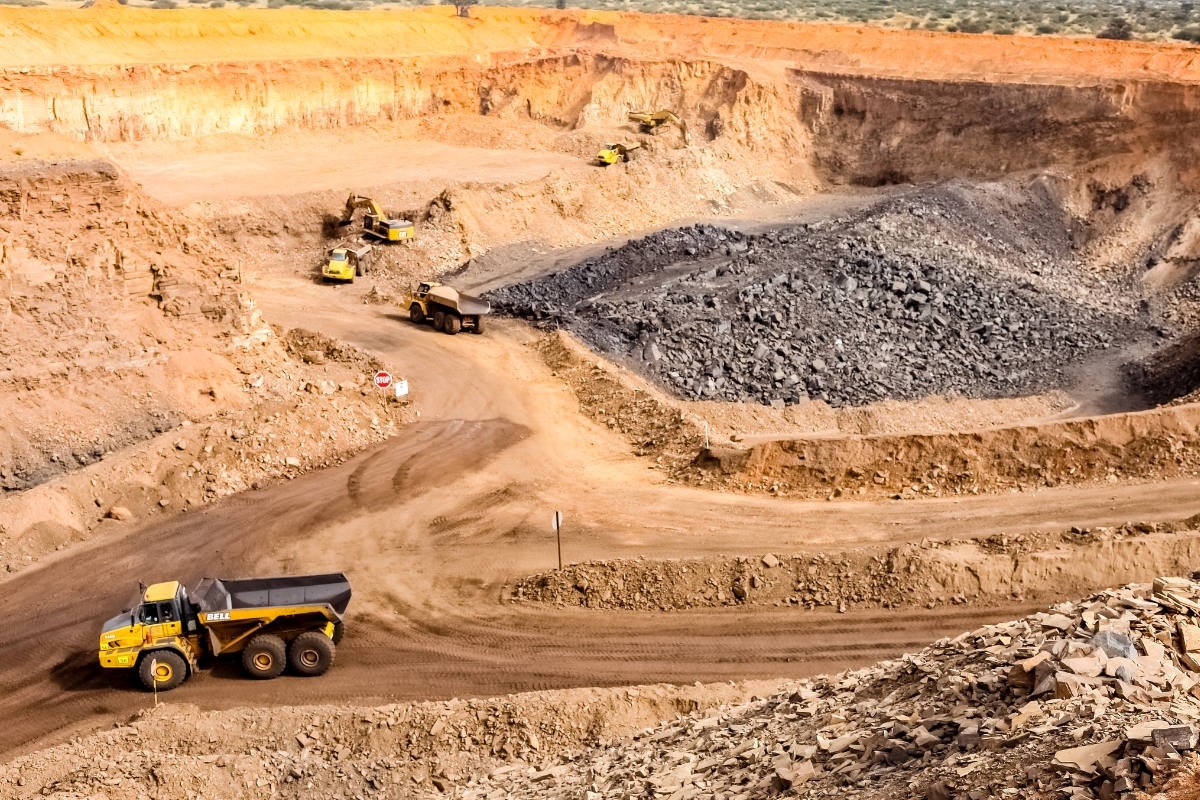
Zambia gained independence in 1964 at the height of a global copper boom, when both prices and output were at record highs. Mining tax averaged 17% of GDP between 1965 and 1970. This windfall funded major infrastructure projects, including the Kafue Gorge Upper hydro scheme, with minimal borrowing.
However, it also brought long-term costs, such as a higher wage bill and growing maintenance obligations. Under Kenneth Kaunda’s United National Independence Party (UNIP), Zambia also used mining revenue to expand state-led industry by acquiring 51% stakes in most major non-mining industries. Many of these firms proved unprofitable because the domestic market was too small and they depended heavily on imported inputs. As losses grew, the government had to repeatedly bail them out.
This shift toward state control soon extended to mining. In 1969, Kenneth Kaunda announced the Matero Reforms, beginning the nationalization of Zambia’s copper industry. The reforms gave the Zambian government a 51% stake in the Copperbelt’s two major mining companies.
Kaunda argued that without control of the mines—which generated about 95% of export earnings and half of government revenue—Zambia could not achieve economic independence. Unfortunately, almost as soon as the mines came under national control, copper prices began to fall while oil prices rose. The costs of treating the mining industry as a cash cow soon became clear.
Copper production in Zambia plummeted from its peak of 750,000 tons in 1973 to 230,000 tons in 2000. Mining tax fell from 18% of GDP in 1974 to zero in 1977, while a fiscal surplus of 3.4% of GDP in 1974 turned into a deficit of 21.5% in 1975. Rather than cut spending, the government borrowed in the expectation that copper prices would recover.
They did not recover for another 30 years, and deficits averaged about 14% of GDP between 1975 and 1990. The fiscal crisis soon became a debt crisis that left Zambia effectively bankrupt and with more debt per person than any other country at the time.
For about 30 years from the mid-1970s, government spending was dominated by salaries, interest payments, subsidies, and parastatal bailouts, leaving little for education or health. By the 1990s, infrastructure built in the early years had badly deteriorated, social services had largely collapsed, and GDP per capita had contracted by an average of 2.6% per year between 1975 and 1991—one of the steepest peacetime declines on record.
By the end of this long decline, the old model had plainly failed. UNIP was replaced by the Movement for Multi-party Democracy (MMD), which made two major policy shifts. First, under IMF and World Bank structural adjustment, it restored fiscal discipline by raising revenue and cutting spending, mainly by removing subsidies.
Though painful in the short term, these reforms brought the fiscal deficit down to manageable levels and helped Zambia secure major debt relief under HIPC in 2006, when much of its foreign debt was written off. Second, MMD accepted that state-led production had failed and moved ahead with privatization.
Despite job losses and political resistance, the program largely succeeded. The mines were its most important and contentious part. After privatization, new owners invested heavily, and copper output recovered five years before prices rebounded in 2004. The state was no longer burdened by massive parastatal losses, including the roughly $1 million a day it had spent in the late 1990s to keep Zambia Consolidated Copper Mines (ZCCM) operating.
Together with lower interest costs after HIPC, renewed mining tax revenue, and faster growth, this helped reduce the fiscal deficit to 2.9% of GDP in 2004 and keep it near that level until 2012. Backed by another copper boom from 2004, Zambia then recorded its longest stretch of real GDP growth, averaging 6.8% a year between 1999 and 2011, which expanded spending on health, education, and roads and significantly reduced poverty.
That recovery, however, did not last. When the Patriotic Front (PF) took office in 2011, it inherited one of the strongest economic positions in Zambia’s history: rapid growth, a low fiscal deficit, low debt, single-digit inflation, a balance-of-payments surplus, strong foreign-exchange reserves, and a stable exchange rate. Instead of consolidating these gains, PF abandoned fiscal discipline and increased borrowing from China and through Eurobonds to fund a decade-long spending spree. In 2013, the public-sector wage bill rose by 45%, fuel subsidies were reintroduced, and infrastructure spending surged.
Much of this spending was politically rather than economically driven, adding to debt without significantly raising GDP. Fiscal deficits, which had averaged about 3.8% of GDP between 2004 and 2012, rose to an average of 9.2% between 2013 and 2021.
PF also sought to reinstate the state as owner of the means of production. It reversed the 2010 privatization of Zamtel, canceled the 20-year concession for Zambia Railways, and sought to liquidate Konkola Copper Mines (KCM) after a license dispute with its operator, Vedanta. The dispute became a major legal and political battle over ownership, control, and the future of Zambia’s mining sector. In 2020, PF also re-acquired Mopani Copper Mines by assuming $1.5 billion in debt to Glencore.
They also frequently altered the mining tax regime—implementing sliding-scale royalties, increasing property transfer taxes, and attempted to impose unbending local content policies to force foreign mines to use local service providers. By repeating key UNIP-era policies, PF produced similar outcomes: GDP growth averaged 0.7% between 2015 and 2020, while the World Bank estimates that poverty has risen steadily since 2015. In 2020, just 14 years after HIPC debt relief, Zambia defaulted on its Eurobond and became bankrupt for a second time. Four years later the government abandoned its second attempt to nationalize the mines by selling a controlling stake in Mopani to an Abu-Dhabi based fund.
If this story sounds familiar, it should. Change a few names and dates, and it becomes Ghana’s economic history. Ghana followed a broadly similar path, though in gold rather than copper. Ghana also experimented with mine nationalization through the State Gold Mining Corporation (SGMC), created when the government took over some of the country’s private gold mines in the early 1960s. This interventionist approach deepened under Ignatius Acheampong, whose government argued that the Ghanaian state should control the “commanding heights” of the economy.
In mining, this meant raising state ownership to 51% controlling stakes in the major foreign-owned mines through SGMC and related state entities. As in Zambia, the promise was that national control would bring economic sovereignty and higher public revenues.
In practice, however, political interference, underinvestment, weak management, and a worsening macroeconomic crisis undermined performance. By 1982, mining output had collapsed. Ghana had been a major gold producer with output exceeding 912,000 ounces in 1964, but by 1983 it had fallen to just 216,000 ounces.
That history matters because the same misguided debate is resurfacing today over control of mining resources. The script is painfully familiar: some demand direct state ownership, while others want private Ghanaians to push out the foreign investors the country deliberately courted after passing the 1986 Minerals Law. But Ghana’s own record offers little reason to believe either route will deliver the growth and revenues its champions promise.
More often, these schemes end in mismanagement, underinvestment, patronage, and decline, leaving the country poorer while a politically connected few cash in. Ghana tried this in the 1970s, and it failed; Zambia followed the same path, tried again in 2019, and eventually retreated. It turns out “resource control” is not a panacea for bad fiscal decisions. We should be careful not to sacrifice a productive mining sector to the empty slogans of economic nationalism. But what do I know?
Gideon Donkor, an avid reader, dog lover, foodie, closet sports genius but a non-financial expert
Post Views: 80
Discover more from The Business & Financial Times
Subscribe to get the latest posts sent to your email.