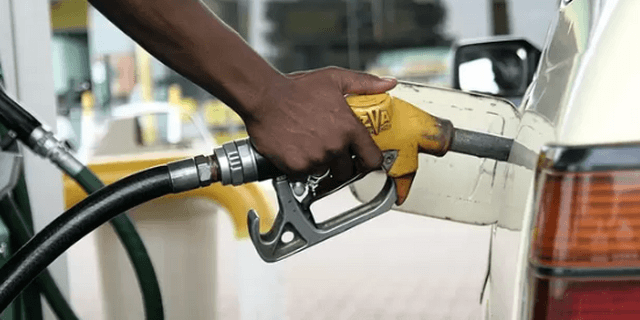

Last week, Ghana joined a growing number of countries implementing measures to support consumers facing rising fuel prices due to conflict in the Middle East and disruptions in energy markets.
The government announced a temporary reduction in fuel prices by lowering various margins, absorbing GH¢2.00 per liter on diesel and GH¢0.36 per liter on petrol. This initiative is set to remain in effect for one month, after which it will be reevaluated.
According to the International Energy Agency (IEA) website tracker, many countries have reduced fuel taxes as part of their immediate relief strategies in response to escalating costs. A common underlying assumption among these nations is that the conflict will end shortly. But what if they are wrong and that this disruption goes on longer than we are projecting?
About 20% of global oil supply has been disrupted because of the Iran war, yet global markets are responding as if it is only a short-term setback. Equity markets have shrugged off the disruptions and have mostly posted positive returns year to date.
Even the oil market has embedded in an optimistic temporary view. The headline price for Brent Crude is $96 per barrel but that is the price of the front-end futures contract. Oil futures set the price that oil will trade at not today, but on some future date.
If you do not want the promise of crude in the future but want immediate physical delivery of crude, then you will need to pay up to $120 per barrel. This high spot price correctly reflects the reality that about 10-12mn barrels of the daily supply of crude are missing. The futures market seems to be pricing in the expectations that the crisis could soon be resolved.
When political leaders mention possible peace plans—even if those statements are not fully believable—they still influence pricing. As a result, the real signal is diluted, so futures prices do not rise as much as they should, especially compared to refined product prices, which have more than doubled since the conflict began.
An old wall street adage is “don’t fight the tape” meaning it is not wise to trade against the market trend. But I cannot help to be a tard bit pessimistic. Market optimism has been seemingly validated by the announcement of a ceasefire and the commencement of preliminary face-to-face negotiations in Islamabad. Although these discussions have not resulted in an immediate settlement, they have so far created a lull in the fighting.
It is becoming clear that the United States is reluctant to resume bombing, yet it cannot accept terms from Iran that might appear as surrender. Iran has also made it clear that its resilience exceeds what its adversaries expected, and it refuses to make concessions that compromise its sovereignty. The United States has recently taken steps to establish a naval blockade against Iran, with the goal of causing economic difficulties and encouraging Iran to reach an agreement. However, I am unsure how effective this will be.
Iran has adapted its economy to decades of sanctions. Since the war began, it has sold 1.8 million barrels per day of crude at prices two to three times higher than before, giving it an additional three months’ worth of pre-war oil revenue. Furthermore, it is reported that 138 million barrels of Iranian oil are currently stored in tankers floating offshore near China.
With the temporary lifting of sanctions, this oil can now be sold, offsetting approximately 75 days of lost production resulting from the blockade. Iran also retains access to many essential imports from Russia through the Caspian Sea. Trying to reconcile the interest of the two antagonists and the fact that Iran is not pressed for time suggest the effects of the conflict on oil can easily drag on.
Even if the war were resolved immediately, the effects would not be undone right away. Energy-production infrastructure has suffered damage, and these are not assets that can be restored in a matter of weeks, they require years to rebuild. All this points to a market that is facing more than just short-term disruption.
Even though the oil market has been disrupted in the past two months, what we have been experiencing is a delayed reaction. Oil shipments move slowly, so existing deliveries have continued after the disruptions, creating a “temporal buffer” that delays immediate collapse. Governments’ intervention with the release of strategic reserves and supply coordination have managed to calm markets somewhat by temporarily masking the impact.
However, maintaining consumption as supply shrinks accelerates depletion, bringing future difficulties forward while concealing them. Eventually the imbalance shows and the correction does not come in the form of just elevated oil prices but also by demand destruction.
In response to an energy shock, economic output normally declines as affordability and capacity are reduced. Airlines reduce flights because of costly or limited fuel supplies. Businesses adjust operations accordingly, supply chains shrink, and agricultural output declines because of fertilizer shortages.
These developments contribute not only to increased prices, but also to a reduction in the availability of goods and services, with these impacts emerging in successive stages. Initially, there is a lull where conditions seem under control. Next comes recognition, as shortages emerge in certain areas. Finally, adjustment occurs with demand reduced to meet limited supply. Currently, we are transitioning between the first and second stages.
Some regions are already experiencing fuel shortages, rationing, and reduced economic activity. Countries such as Kenya, the Philippines, and Vietnam have implemented fuel rationing, restricted workdays and limited air travel.
Europe is projected to run out of jet fuel by the end of May. As major economies like Europe and China encounter these constraints, competition for remaining supplies intensifies. These wealthier economies can outbid others, effectively shifting the problem onto weaker participants like African countries. Consequently, apparent stability in developed markets often masks instability elsewhere.
Currently, authorities in Ghana report that there is at least a nine-week supply of fuel, both stored in tanks and aboard ships awaiting offloading. This appears to provide an adequate buffer and implies that price control should be the primary concern.
However, if the conflict persists for another month or longer, global supply could tighten, potentially resulting in challenges replenishing local stocks. Instead of engaging in political gestures and lowering prices, the government should consider allowing higher prices to foster some demand reduction.
This approach would help extend the life of existing reserves. Additionally, it would be prudent to empower BOST to maintain greater reserves, rather than weakening its financial position by reducing its margin—especially at a time when its role is crucial. Monitoring the fuel situation in neighboring countries is also essential, as difficulties there could lead to unexpected depletion of Ghana’s fuel buffer.
Also Bank of Ghana needs to coordinate with the commercials banks to ensure that the necessary credit lines are adequately sized to meet the rising cost of fuel imports. You do not need to run out before you experience economic dislocations, just the fear of shortages can create a panic and lead to distribution disruptions long before you planned.
If you interpret the current happenings as a brief surge in prices, your policy choices will likely be short-term. Seeing it as a fundamental change in the energy supply chain demands more comprehensive adjustments.
Governments tend to respond slowly, bound by established habits and an expectation of continuity. Once the future no longer mirrors the past, the window to make changes closes before the shift becomes apparent. Do not mistake today’s calm for tomorrow’s storm—this could be the end of comfort, not the start of certainty. But what do I know?
Gideon Donkor, an avid reader, dog lover, foodie, closet sports genius but a non-financial expert
Post Views: 23
Discover more from The Business & Financial Times
Subscribe to get the latest posts sent to your email.