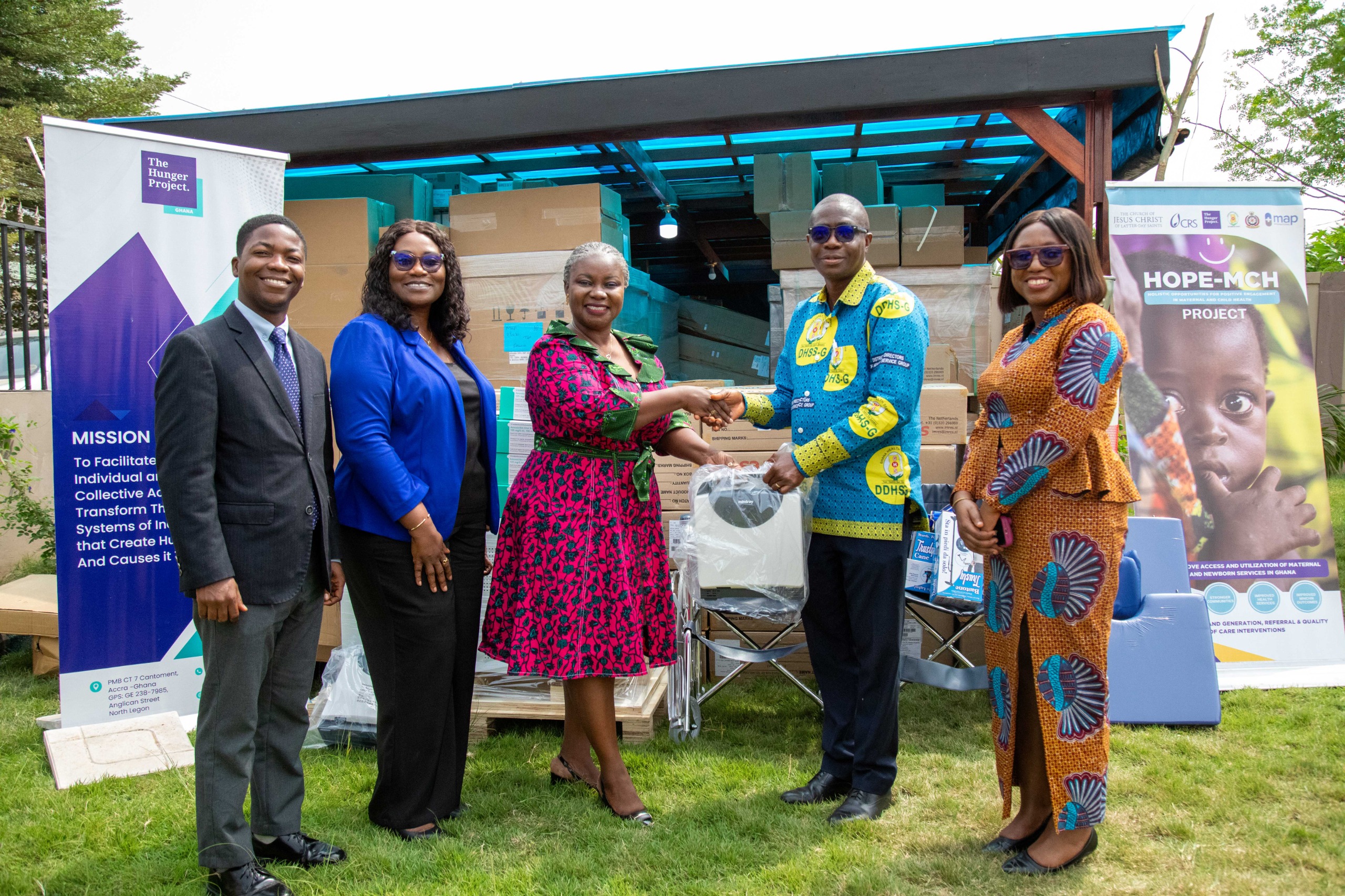

The Hunger Project–Ghana (THP–Ghana), with funding support from The Church of Jesus Christ of Latter-day Saints, has officially handed over essential medical supplies, valued at US$165,000 to the Ghana Health Service (GHS) to support maternal, newborn and child healthcare.
The supplies included autoclaves, vaccine fridges, ultrasound scan machines with printers, delivery beds, Infant AMBU Bags, Foetal Dopplers, antibiotics and supplements and assistive devices.

The handing over ceremony held at the premises of The Hunger Project–Ghana office in Accra marked the official transfer of medical supplies to ten (10) health facilities across five (5) administrative areas; Asuogyaman District, Asante Akim South Municipal, Kwahu East District, Abuakwa South Municipal and Suhum Municipal in the Ashanti and Eastern Regions.
The support forms part of the Holistic Opportunities for Positive Engagement in Maternal and Child Health (HOPE-MCH) project, which seeks to improve access to inclusive, safe, and quality maternal, newborn, and child healthcare services, particularly in underserved communities.
Speaking at the ceremony, Agatha Quayson, Country Leader of The Hunger Project–Ghana, reaffirmed THP–Ghana’s long-standing commitment to strengthening community-based healthcare systems.

“The Hunger Project has a demonstrated commitment to improving maternal health in Ghana. Since 1996, THP–Ghana has partnered closely with the Ghana Health Service to address limited access to essential maternal and reproductive health services in over 450 communities. CHPS facilities supported by THP-Ghana serve more than 350,000 people in rural areas,” she said.
She added that the medical supplies will support antenatal care, safe deliveries, emergency obstetric response, preterm care, and postnatal services, contributing directly to improved maternal and child health outcomes in the beneficiary facilities.
Speaking on behalf of the Ministry of Health, Evelyn Amoako, the Deputy Director of Nursing Services at the Ministry of Health, Ghana described the intervention as timely and critical.

“The cumulative effect of interventions like this must ultimately be a sustained reduction in maternal mortality. Strengthening facility readiness and ensuring the availability of essential medicines and equipment are critical to achieving this goal,” she noted.
Also speaking at the event, Marian Esiape, Africa West Area Manager for Welfare and Self Reliance, representing The Church of Jesus Christ of Latter-day Saints, emphasized the commitment of the church to safeguarding the health and dignity of mothers and children.
“The HOPE-MCH intervention reflects our shared conviction that every mother deserves a safe pregnancy and delivery, and every child deserves a healthy start to life. The medical equipment and medicines being handed over today are not merely supplies, but tools of hope—supporting skilled health workers, strengthening health facilities, and ultimately saving lives,” she said.
Under the HOPE-MCH Project, The Hunger Project-Ghana has supported the renovation of five(5) health facilities in the Ashanti and Eastern Region, refurbished the Eastern Regional Emergency Dispatch Centre, and provided over forty(40) health workers with requisite skills to provide quality inclusive maternal and child healthcare .
Post Views: 153
Discover more from The Business & Financial Times
Subscribe to get the latest posts sent to your email.