

…Political freedom gave Ghana its voice. The next chapter requires generational leadership, productive systems and the quiet discipline that turns hope into enduring prosperity.
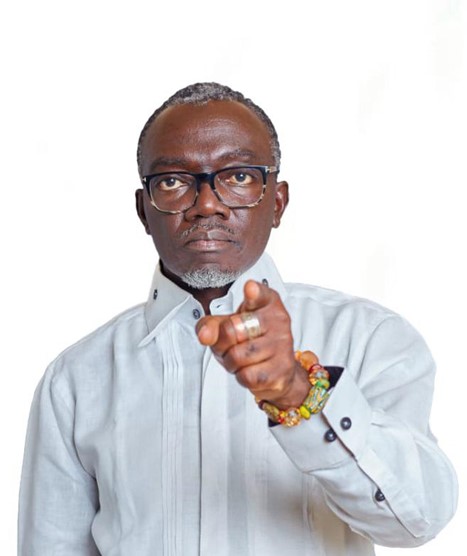
By Ing. Prof. Douglas BOATENG
Seventy years after independence, Ghana stands at a moment not only of celebration but of reflection; a moment that asks a quieter and more difficult question than patriotism often allows: what does true economic freedom actually look like for a nation that fought so courageously for political liberation?
In 2027, Ghana will mark seventy years since its independence from colonial rule. Seventy years is not young for a nation. It is old enough to have outgrown excuses, yet still young enough to correct its course. It is old enough to demand evidence of economic emancipation, not merely memories of political freedom.
Ghana has travelled far since 1957. The country has built democratic stability admired across Africa and maintained peaceful political transitions that many nations continue to strive for. These achievements matter. They are foundations of national confidence. Yet anniversaries do more than celebrate history. They invite reflection. And reflection sometimes requires uncomfortable questions. How do we know whether Ghana is truly progressing economically, or merely adapting creatively to structural weaknesses that persist beneath the surface? Political freedom was declared in 1957. Economic emancipation must be demonstrated through systems that endure.
NyansaKasa (Words of Wisdom): Freedom announced without discipline becomes freedom postponed.
Reflection: Political liberation creates opportunity. Economic emancipation requires sustained national discipline across generations.
Political freedom was declared. Economic freedom must be built
Political independence is an event. Economic emancipation is a condition. One is declared.
The other must be constructed patiently through productivity, institutional strength and resilience. Economic emancipation is not measured by speeches, parades or anniversaries. It reveals itself through quieter indicators. It appears when a nation retains meaningful value from what it produces. It appears when economic shocks do not trigger panic. It appears when institutions prove stronger than personalities.
In many developing economies, independence celebrations remain loud while economic structures remain fragile. Nations can celebrate sovereignty loudly while quietly importing most of the goods, technologies and industrial products that sustain daily life. This reality does not diminish the importance of independence. But it reminds us that the journey from political freedom to economic self-reliance is long and demanding.
Lessons from nations that faced similar beginnings
When Ghana became independent in 1957, several countries that today represent economic success stories were navigating similar challenges. According to historical GDP data compiled by the World Bank Development Indicators and Maddison Historical Statistics, in the early 1960s:
- South Korea’s GDP per capita was roughly US$158
• Ghana’s GDP per capita was approximately US$183
• Malaysia’s GDP per capita stood around US$299
• Singapore’s GDP per capita was approximately US$430
At that moment in history, the developmental distance between these economies was not dramatic. But over the next six decades, their trajectories diverged sharply.
According to the World Bank World Development Indicators (2023):
- Singapore’s GDP per capita now exceeds US$80,000
• South Korea’s GDP per capita exceeds US$33,000
• Malaysia’s GDP per capita exceeds US$13,000
• Ghana’s GDP per capita remains below U$3,000
The difference is not in natural resources. Singapore has virtually none. South Korea has few. The difference lies in long-term industrialisation strategies, education systems aligned with economic priorities and policy continuity sustained across generations.
NyansaKasa (Words of Wisdom): Nations do not become prosperous by hope alone. They become prosperous by structure.
Reflection: Economic transformation occurs when institutions and productivity systems remain consistent beyond political cycles.
When growth does not always mean control
Ghana’s economy has grown significantly since independence. Infrastructure has expanded. Education has improved. Access to healthcare has broadened. Yet growth without structural control can remain fragile. According to the World Bank Ghana Economic Update (2022) and International Monetary Fund country reports, Ghana’s export earnings remain concentrated in three primary commodities:
- Gold contributes about 40 per cent of export revenue
• Cocoa contributes roughly 15–20 per cent
• Oil contributes approximately 10–15 per cent
Together, these commodities generate the majority of Ghana’s foreign exchange. However, the most profitable segments of these industries often lie outside the country. Gold is mined locally but refined and traded globally through international hubs. Cocoa beans are exported, while chocolate manufacturing, cosmetics and nutraceutical products generate far greater downstream value elsewhere. In practical terms, a nation can fly its flag proudly while its factories remain relatively few. The deeper measure of economic freedom, therefore, lies not in the visibility of sovereignty but in the quiet productivity of its industrial systems.
NyansaKasa (Words of Wisdom): The farmer who sells the grain and buys the bread will always chase the harvest.
Reflection: Economic resilience requires deeper participation in value chains rather than dependence on raw commodity exports.
Debt cycles as economic signals
Debt itself is not inherently problematic. Many countries borrowed extensively during periods of industrial expansion. South Korea relied heavily on external borrowing during the early stages of its industrialisation in the 1960s and 1970s. Singapore invested heavily in infrastructure before becoming a global financial hub. The difference lies in how borrowing is used. Borrowing that builds productive capacity strengthens future prosperity. Borrowing to finance consumption postpones structural reform.
According to the IMF Article IV Consultation Reports (2023) and the World Bank International Debt Statistics, Ghana’s public debt has exceeded 80 per cent of GDP in recent years, reflecting fiscal pressures arising from economic shocks and structural vulnerabilities. These debt cycles often signal deeper economic realities, such as limited export diversification and vulnerability to fluctuations in commodity prices. Economic emancipation, therefore, does not mean avoiding debt entirely. It means managing obligations without recurring distress.
Industrialisation – A habit built over generations
Industrialisation cannot be announced. It must be practised repeatedly. Countries that transformed themselves economically built interconnected systems. Factories succeed because electricity is reliable. Logistics function because ports, roads and railways are synchronised. Skills expand because education systems support industrial needs.
According to OECD Economic Surveys and World Bank industrial development studies, South Korea’s export-driven industrialisation integrated manufacturing investment with technical education and strong institutional discipline. Singapore aligned its industrial planning with logistics infrastructure and global trade strategy. Germany’s vocational training system continues to supply skilled technicians to advanced manufacturing sectors. Industrial transformation, therefore, emerges from disciplined ecosystems sustained over decades.
NyansaKasa (Words of Wisdom): Factories thrive on discipline long after speeches fade.
Reflection: Sustainable industrial growth depends on institutional consistency rather than episodic policy announcements.
Youth and the opportunity of demography
Africa’s demographic profile presents one of the most significant economic opportunities of the twenty-first century. According to the United Nations World Population Prospects (2022):
- Africa’s population may reach 2.5 billion by 2050
• One in four people globally will be African
• More than 60 per cent of the continent’s population is under the age of 25
This youth population could become one of the most powerful engines of global economic growth. But only if productive opportunity expands rapidly enough. Youth unemployment, therefore, represents more than a social challenge. It is an economic signal. When young people migrate in search of opportunity, the problem is rarely ambition. It is the alignment between education, industry and economic policy.
NyansaKasa (Words of Wisdom): A nation that exports its youth exports its tomorrow.
Reflection: Human capital becomes a lasting national advantage only when domestic systems convert talent into opportunity.
What leaders might consider next
Economic emancipation requires patient structural reforms. African economies may increasingly consider capturing deeper segments of value chains in sectors such as cocoa processing, mineral beneficiation and petrochemical development. Education systems may also need stronger alignment with industrial development through expanded technical and vocational training.
Regional collaboration under the African Continental Free Trade Area (AfCFTA) offers an opportunity to build integrated manufacturing ecosystems across the continent. Natural resource revenues could increasingly be managed through long-term sovereign investment strategies that protect wealth for future generations, as demonstrated by countries such as Norway and Botswana. Such reforms require patient leadership and long-term thinking.
A reflective and hopeful conclusion
Ghana’s journey since independence has not been insignificant. Democratic stability, entrepreneurial energy and a resilient population provide strong foundations for future transformation. But the next chapter requires something deeper than aspiration. It requires leaders who think generationally rather than electorally.
NyansaKasa (Words of Wisdom): Hope may inspire a nation, but only productivity can emancipate it.
Reflection: Economic freedom ultimately belongs to nations that produce competitively, innovate consistently and export confidently.
Seventy years after independence, Ghana does not need louder speeches about freedom. It needs quieter evidence of economic strength. True emancipation will arrive when the economy can absorb global shocks calmly, finance its ambitions sustainably and build industries that outlive political cycles. The encouraging truth is that Ghana possesses the talent, resources and institutional foundations to achieve this transformation. But success will depend on leaders willing to think not only about the next election, but about the next generation. Because the best of Ghana and indeed the best of Africa is not behind us.
It is still ahead.
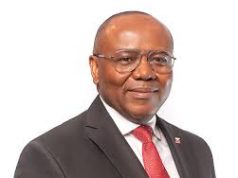
>>>the writer is a globally celebrated thought leader, Chartered Director, industrial engineer, supply chain management expert, and social entrepreneur known for his transformative contributions to industrialisation, procurement, and strategic sourcing in developing nations.
As Africa’s first Professor Extraordinaire for Supply Chain Governance and Industrialization, he has advised governments, businesses, and policymakers, driving sustainability and growth. During his tenure as Chairman of the Minerals Income Investment Fund (MIIF) and Labadi Beach Hotel, he led these institutions to global recognition for innovation and operational excellence. He is also the past chairman of the Public Procurement Authority.
A prolific author of over 90 publications, he is the creator of NyansaKasa (Words of Wisdom), a thought-provoking platform with over one million daily readers. Through his visionary leadership, Professor Boateng continues to inspire ethical governance, innovation, and youth empowerment, driving Africa toward a sustainable and inclusive future.
Post Views: 3
Discover more from The Business & Financial Times
Subscribe to get the latest posts sent to your email.