

By Steven E. Hendrix
When Kwame Nkrumah helped build Ghana’s legal education system, the purpose was clear. A free country could not depend forever on another country to train its lawyers.
Before independence, the path to the legal profession ran through Britain. That made sense for a colony. It made less sense for a republic determined to govern itself.
The Ghana School of Law was therefore more than a school. It was an institution of independence. It told the world that Ghana would not only make its own laws. Ghana would also train the lawyers, judges, scholars, and public servants needed to give those laws life.
Now Ghana stands at another such moment.
The Legal Education Act, 2026, gives the new Council for Legal Education and Training a chance to carry that work forward. This is not merely an administrative reform. It is the next stage of Ghana’s legal independence.
That is why this moment matters.
Ghana led Africa to independence. It helped define the meaning of self-government for a continent. It built institutions that inspired others. Today, Ghana has an opportunity to lead again: by building one of Africa’s strongest, most open, most rigorous, and most respected systems of professional legal education.
Why not Ghana?
Why should Ghana not become the continent’s elite provider of legal education? Why should Accra, Kumasi, Tamale, Cape Coast, Ho, Sunyani, and other centers of learning not help train lawyers for Ghana, West Africa, and the wider continent? Why should Ghana not produce legal education on par with the best institutions in the world?
This reform should not be modest in ambition.
It should be Ghanaian in character, African in reach, and global in quality.
The first reality facing the new Council is access.
For too long, capable law graduates have faced a narrow professional gate. Some students may not have been ready. That is true in every system. But when the structure itself produces scarcity, the public begins to ask whether the system protects quality or protects privilege.
That question should not be dismissed. It should be answered through reform.
Ghana should not lower standards. It should widen opportunity while raising standards. Those goals are not enemies. They belong together.
A legal education system that draws talent from more regions, more languages, more communities, and more social backgrounds can become stronger, not weaker. Diversity is not a threat to quality. Properly managed, it is one source of quality.
The law serves all Ghanaians. The legal profession should therefore understand all Ghanaians.
A profession drawn too narrowly from the same schools, the same cities, the same families, and the same social networks will miss too much of the country it claims to serve. Ghana is not only Accra. Ghana is not only the coast. Ghana is Akan, Ewe, Ga-Dangme, Mole-Dagbani, Guan, Gurma, Grusi, Mande, and more. It is Christian, Muslim, traditional, and secular. It is urban and rural. It is formal and customary. It speaks English in court, but many languages in life.
Legal education should reflect that national reality.
This is not about ethnic politics. It is about justice.
A lawyer who understands the language, culture, land systems, family structures, and lived experience of more communities is often a better lawyer. A justice system that includes more of the country is more likely to be trusted by the country.
Kofi Annan once wrote that Africa’s democratic success depends on two things: education and the rule of law. He was right. Education unlocks national talent. The rule of law gives citizens confidence that power will not decide outcomes.
Legal education sits exactly at that intersection.
The second reality is quality.
The concern about quality is real. It deserves respect. Ghana must not replace one bottleneck with a flood of weak programs. That would damage students, courts, clients, and the reputation of the bar.
But quality is not protected by scarcity alone.
Quality is protected by standards. It is protected by honest accreditation. It is protected by strong teaching, serious assessment, practical training, ethics, supervision, data, and transparency. It is protected when weak institutions are denied approval, and when approved institutions can lose that approval if they fail.
The new Council should therefore make quality visible.
It should publish accreditation standards. It should publish timelines. It should explain decisions. It should require institutions to show that they can teach advocacy, ethics, legal writing, research, drafting, negotiation, client service, courtroom practice, and professional responsibility.
It should require practical training. It should require legal aid exposure. It should require students to understand how ordinary people experience the justice system.
A law graduate should not only know cases. A law graduate should know clients.
The third reality is national purpose.
Ghana’s Constitution speaks in the language of freedom, justice, equality of opportunity, probity, accountability, and the rule of law. These are not decorative words. They are national promises.
Legal education is one way a country keeps those promises.
When courts delay, lawyers are unprepared, legal fees rise beyond reach, or citizens do not understand their rights, constitutional promises become distant. When lawyers are well trained, ethical, practical, and broadly drawn from the country, those promises come closer to daily life.
That is why this reform is not only for law students.
It is for the accused person who needs a defense. It is for the widow in a land dispute. It is for the small business owner who needs a contract enforced. It is for the farmer, the migrant, the child, the worker, the investor, and the citizen who needs the state to act lawfully.
The fourth reality is geography.
A national legal education system should serve the nation.
It should not simply create more seats in Accra. It should build legal capacity across Ghana. That does not mean every institution should run a professional law course. It means the Council should think strategically about where legal need exists, where talent is being lost, and where institutions can be strengthened to serve the public.
Regional inclusion can improve legal education. It can also improve the justice system.
Students trained closer to different communities may better understand customary law, land tenure, local governance, family law, language access, and the practical barriers citizens face. That knowledge matters. It can make lawyers more useful. It can make courts more credible. It can make justice less remote.
The fifth reality is finance.
Every reform fails if no one pays for it.
The Council will need public resources. But public resources alone will not be enough. Ghana needs a sustainable financing model for legal education. That should include reasonable fees, scholarships, institutional cost-sharing, technology, private support, and targeted aid for students from poorer backgrounds.
Access without affordability is not access.
If the system expands but only wealthier students can enter, reform will fail in moral terms even if it succeeds in administrative terms.
The Council should also avoid a system that depends entirely on annual budget politics. Legal education is long-term national infrastructure. It needs stable funding, transparent costs, and clear value for money.
The sixth reality is public trust.
The new Council will operate under scrutiny. That is not a problem. It is a safeguard.
The Council should welcome scrutiny by making its work transparent. It should publish the rules before applying them. It should publish aggregate examination results. It should report annually on access, quality, cost, student outcomes, regional inclusion, gender inclusion, and institutional performance.
Where decisions are hidden, suspicion grows. Where standards are vague, influence fills the gap. Where results are not published, the public assumes unfairness even when officials act in good faith.
A reform meant to open the profession must itself be open.
The seventh reality is professional identity.
Law is not just a career. It is a public trust.
Ghana does not need only more lawyers. It needs better lawyers. It needs lawyers who can serve courts, clients, communities, businesses, families, and the Constitution. It needs lawyers who understand ethics not as a subject to pass, but as a discipline to live.
That requires more than lectures.
Students must learn judgment. They must learn restraint. They must learn candor to the court. They must learn loyalty to clients without betrayal of justice. They must learn that legal skill without integrity can harm a nation.
The Council should therefore place ethics, legal aid, and practical service at the center of professional formation.
The eighth reality is technology.
The legal profession is changing. Artificial intelligence, digital evidence, electronic filing, cybercrime, data protection, online transactions, and cross-border business are no longer future issues. They are present issues.
Ghana should not use this reform to reproduce yesterday’s curriculum in more places. It should build tomorrow’s legal education system.
A modern Ghanaian lawyer should understand constitutional rights and digital risk. Commercial law and data. Courtroom advocacy and online dispute resolution. Customary law and global transactions. Local reality and international standards.
This is how Ghana can lead.
The ninth reality is implementation.
Passing a law is difficult. Implementing one is harder.
The early decisions will matter most. Who serves on the Council? How independent will accreditation be? What standards will apply? How will conflicts of interest be handled? How will weak institutions be refused? How will strong institutions be encouraged? How will the Council resist pressure from those who want approval before they are ready?
Institutional reform is not just a legal act. It is a management challenge. It requires budgets, systems, staffing, timelines, data, audits, public communication, and discipline.
It also requires courage.
The Council must say yes to innovation. It must also say no to shortcuts.
Ghana has done this before. At independence, it did not merely change flags. It built institutions. It trained citizens. It claimed the right to govern itself.
Legal education reform should be understood in that tradition.
Nkrumah warned that Ghana’s independence would be meaningless unless it was linked to Africa’s liberation. Today, Ghana can give that idea a modern legal meaning. It can build a legal education system that serves Ghana and helps lead Africa.
That does not require lowering the bar. It requires raising the bar and widening the road toward it.
The task before the Council is therefore larger than accreditation. It is larger than admissions. It is larger than the Ghana School of Law, important as that institution remains.
The task is to build a system worthy of Ghana’s Constitution, Ghana’s diversity, Ghana’s legal tradition, and Ghana’s future.
The Council should begin with a simple promise: every qualified student should have a fair chance; every approved institution should meet a serious standard; every graduate should be tested honestly; and every lawyer called to the bar should be ready to serve the public with competence, humility, and integrity.
That would honor the Ghana School of Law’s founding purpose.
It would also help Ghana complete the next stage of its legal independence and lead Africa toward excellence through inclusion.
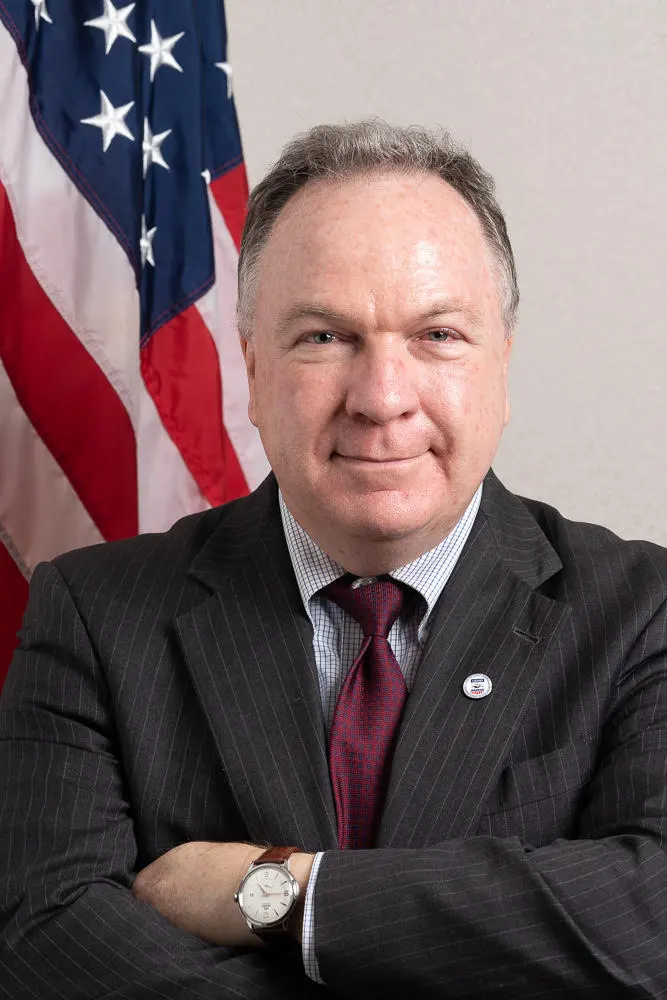
Steven is a former senior United States diplomat and development official who served as Deputy Mission Director of the United States Agency for International Development (USAID) in Ghana. He is a Barrister and Solicitor of the Supreme Court of Ghana, and a graduate of the Ghana School of Law. He has worked on legal education, rule of law, institutional reform, sustainable finance, and performance systems in Africa, Latin America, and the Middle East. He is a Senior Research Fellow, DePaul University College of Law, International Human Rights Law Institute.
Post Views: 78
Discover more from The Business & Financial Times
Subscribe to get the latest posts sent to your email.