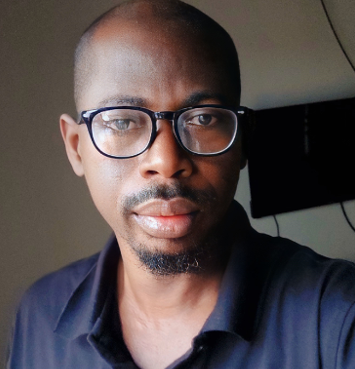

By Emmanuel Adu-Mensah
Step into any glass-and-steel high-rise in Ridge, the Airport City enclave, or the bustling financial hubs of downtown Accra on a Monday morning. The energy is real. Young, sharp Ghanaian professionals, graduates from our finest institutions like Legon, Ashesi, Cape Coast, and KNUST, stride into boardroom meetings with sleek laptops, tailored suits, and absolute confidence. On the surface, work has never looked better or smoother. Complex corporate tax audits that used to take accounting teams weeks of painful, line-by-line checking are now sorted out in seconds.
Catchy marketing talk, credit risk assessments, and legal compliance summaries are generated with just a single typed prompt. But if you look closer, past the glowing screens and the perfect charts, a quiet tragedy is unfolding.
We are witnessing a new kind of office crisis – not about a lack of money, bad loans, or dumsor, but a crisis of human capability. It is the creeping, silent phenomenon of Cognitive Atrophy, or simply put, our minds are losing their sharpness because we are letting machines do all the heavy thinking.
The Trap of “Too Easy”
For generations, the Ghanaian corporate climber was built on grit and deep mental workout. To be a top professional in Accra meant having a sharp, firsthand understanding of your business terrain. It required strong intuition – what our elders might compare to the wisdom of the Okyeame (the chief’s linguist) – the unique ability to read between the lines, sense hidden market risks, and connect complex pieces of a puzzle. Today, apps like ChatGPT and automated corporate software promise to take that heavy mental lifting off our shoulders.
Because we want to save time and energy, we naturally push our hardest thinking tasks onto these digital tools. But the human brain operates on a very strict law: use it or lose it. When we stop driving our own critical thinking, the mental muscles we use for deep analysis and problem-solving begin to weaken. We are sleepwalking into a state of mental bankruptcy, trading our long-term brainpower for short-term convenience.
Moving from Creators to Fixers
To see this happening right now, you only have to look at daily life in major firms across Ghana. The modern professional is fast being demoted from a creative problem solver to an “Exception Manager”, someone who just sits on the sidelines and only steps in when the computer throws an error message. Take our commercial banks on the Liberation Road.
A decade ago, approving a multi-million-cedi loan for a local commercial farm required deep, careful thinking. A credit analyst had to weigh unpredictable rainfall patterns in the Middle Belt, the constant ups and downs of the cedi, and the informal, unrecorded way market women do business at Makola or Agbogblossie. It required an active, street-smart, and deeply understanding mind.
Today, automated credit-scoring software processes the numbers through a hidden formula and simply spits out a “Yes” or “No.” The analyst just clicks “Confirm.” When the machine works too perfectly, we experience what is known as the “Google Effect” – because answers are so easy to get online, our brains stop bothering to memorize or learn the core rules of risk.
We see this same pattern creeping into top accounting and consulting firms in the capital. Junior auditors no longer pore over physical paper invoices to find mistakes; they just upload spreadsheets into AI tools that flag irregularities automatically.
In marketing departments from big telecom companies to factories on the Spintex Road, brand managers who once spent days debating local consumer behavior and cultural nuances now just tell an AI to “generate a campaign for urban Ghanaian youth.”
In every case, we are making a big mistake: we confuse the machine’s brilliant output with our own intelligence. We look at our beautiful PowerPoint slides and think we are getting smarter, but in reality, our mental muscles are losing their strength.
The Point of No Return: Locked In
The biggest danger here is that this is a one-way street, leading to what is called Agentic Lock-in – the point where you are completely locked into dependency. As we keep passing our thinking jobs to AI, our independent decision-making skills evaporate.
Over time, we cross a line where the ability to act on our own is completely wiped out. Imagine a sudden, unexpected shock to the economy – like a dramatic, unpredicted policy shift from the Bank of Ghana or a sudden global financial crisis. When the automated financial models and forecasting tools begin to glitch or give wild, incorrect results under the pressure of a chaotic market, the human supervisor hits a wall.
Even if they suspect the machine is dead wrong, they can no longer step in to fix it. Why? Because after years of just watching the screen, they no longer have the internal knowledge, the mental blueprints, or the basic muscle memory needed to untangle the numbers by hand.
They are locked into a system they can no longer control, yet they are legally and professionally responsible for mistakes they do not even understand. The brilliant Ghanaian professional is effectively turned into a passive spectator of a reality managed by a computer.
Reclaiming Our Minds
As a country, we have always taken immense pride in our brilliant minds. We are the land of great builders, scholars, and deep thinkers. If we let office convenience quietly strip away our ability to think critically, we risk hollowing out the very leaders needed to build the Ghanaian dream. We cannot – and should not – turn our backs on technology.
AI is an amazing tool that helps us work at incredible speeds. But we urgently need to change how we use it. Corporate leaders across Accra must stop judging success purely by how much of the business is fully automated. We need to intentionally bring some “healthy friction” back into our offices.
We need training programs that force workers to solve problems manually from scratch before they are allowed to touch the software. We must design workflows where AI acts like a sparring partner to challenge our thoughts, rather than a ghostwriter that replaces our thinking entirely.
We must embrace the spirit of Sankofa – the sacred Akan principle that tells us to go back and fetch what we forgot. In this digital age, what we are leaving behind is our very capacity for deep, independent thought.
The next time you sit in a boardroom in Airport City and prepare to let an algorithm write your company’s next big strategy, ask yourself: Are we using this tool to make our own brilliance bigger, or are we quietly letting it buy out our minds?
The writer is a lecturer and researcher who explores the intersection of technology, culture, and human agency.
Post Views: 1
Discover more from The Business & Financial Times
Subscribe to get the latest posts sent to your email.