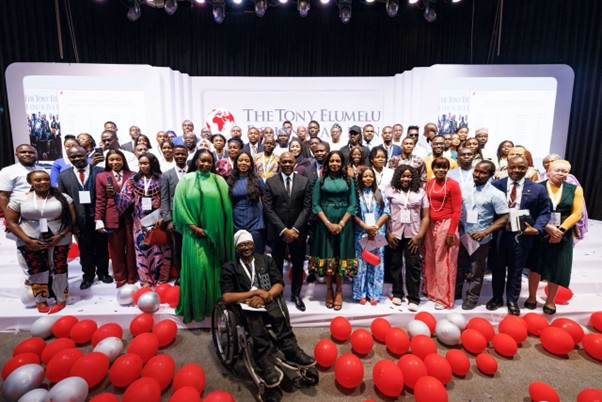
It’s Tony Elumelu’s birthday, and as has become something of a tradition, Africa is the one receiving the gift.
On March 22, 2026, at Transcorp Hilton in Abuja, the Tony Elumelu Foundation (TEF) announced its 12th cohort of entrepreneurs, 3,200 young Africans from all 54 countries on the continent, each walking away with a non-refundable $5,000 seed grant, mentorship, and access to the TEF digital platform, TEFConnect.
This first cohort of 2026 (with three more planned across the year) is part of a programme that has quietly become one of Africa’s most consequential private-sector-led development initiatives. Since launching in 2010, TEF has disbursed over $100 million to more than 24,000 entrepreneurs, helped lift 2.1 million Africans out of poverty, created 1.5 million jobs, and generated a remarkable $4.2 billion in revenue across the continent. Perhaps most striking: 80% of TEF-backed businesses survive and scale, compare that to the global average of just 1 in 5.
Writing in his annual birthday letter, Elumelu put it plainly: “Africa’s greatest resource has never been oil or gold. It has always been its people.”

Women Stole the Show — Fairly
One of the standout headlines from this year’s cohort? Women outnumber men. 51% of selected entrepreneurs are female, and crucially, this wasn’t a quota. It was merit. Across hundreds of thousands of applications, women simply outperformed, submitting stronger business ideas, clearer models, and sharper visions.
As Elumelu noted: “When opportunity is accessible, African women do not simply participate, they lead.”
The Numbers Behind the Selection
Getting into TEF is no walk in the park. The selection process independently overseen by EY, is rigorous and multi-staged:
- 265,529 applications received
- 112,202 passed eligibility screening
- 60,530 cleared the business assessment quiz
- 26,600 survived expert review
- 5,000 made it through due diligence
- 1,951 were finally selected for this first cohort
85% of those selected were graded Excellent, meaning they demonstrated outstanding readiness to build and run a real business. The cohort skews young (75% are aged 18–35), with 30% coming from rural communities, a signal that TEF is reaching beyond city centres and into the grassroots of the African economy.
The biggest sector Agriculture & Agribusiness at nearly 31%, followed by Fashion & Textiles, Food & Beverage Processing, and ICT/AI.
Post Views: 2
Discover more from The Business & Financial Times
Subscribe to get the latest posts sent to your email.