
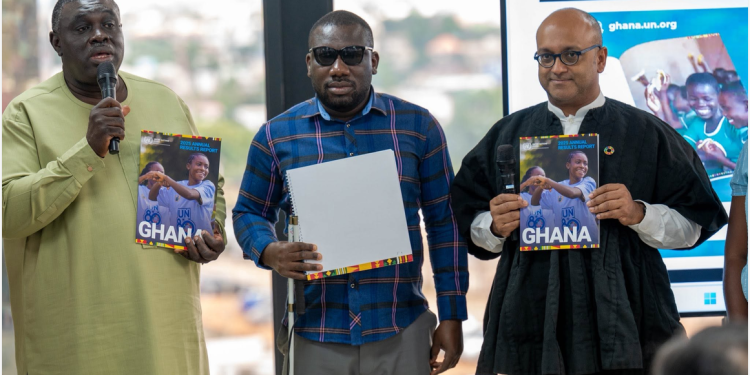

The United Nations increased its programme delivery rate in Ghana to 80 percent in 2025 from 64 percent a year earlier, implementing development programmes worth US$112 million as the country navigated economic recovery and fiscal adjustment, according to the UN Ghana Annual Results Report 2025.
UN Resident Coordinator Zia Choudhury said the improved delivery reflected stronger coordination across the UN country team’s 34 agencies, funds and programmes, alongside efforts to align interventions more closely with Ghana’s national priorities.
“In 2025, the UN system in Ghana delivered programmes worth US$112 million. That’s an 80 percent delivery rate against resources available,”Mr. Choudhury said at the report launch in Accra, describing the increase from 2024 as the result of a deliberate push toward greater discipline, coherence and collaboration.
The programmes covered sectors including education, nutrition, climate resilience, social inclusion and institutional development. According to the report, support reached children through education and nutrition interventions, helped farmers access climate-related assistance, expanded opportunities for women and girls, and promoted inclusion for persons with disabilities.
The improved implementation rate comes as Ghana continues to recover from recent macroeconomic challenges. The Resident Coordinator noted that inflation had eased and progress had been made in health, education and livelihoods. However, he said climate change continued to disrupt livelihoods, particularly in northern Ghana, while youth unemployment, learning outcomes and inequality remained significant concerns.
The UN also highlighted growing pressure on development financing globally. Mr. Choudhury said official development assistance was declining in many areas while resources were being stretched across multiple crises, creating a need for alternative financing approaches.
“Closing the financing gap will require new approaches,” he said, adding that the UN system was committed to supporting domestic resource mobilisation, attracting private investment and advancing innovative financing mechanisms.
The Ministry of Finance described the UN’s contribution as extending beyond funding support, emphasising its role in providing technical expertise, coordination and policy support.
David Klotey Collison, Coordinating Director for Operations at the Ministry of Finance, said Ghana was emerging from a difficult period of economic adjustment and shifting its focus from stabilisation to long-term transformation.
He said the government’s priorities now include job creation, agricultural transformation, climate resilience and stronger social protection systems. International partnerships, he added, remain important in supporting those objectives.
“This is where international cooperation becomes indispensable, not as a substitute for domestic effort, but as a complement to it,” Mr. Collison said.
The ministry also signalled interest in expanding the use of innovative financing instruments, including green finance and public-private partnerships, while leveraging technology and data systems to improve public-sector service delivery.
Both the government and the UN said work would begin on the next UN Sustainable Development Cooperation Framework, which will seek to align future support with Ghana’s development priorities and the Sustainable Development Goals through 2030.
While development financing conditions remain challenging, officials said stronger coordination, targeted investments and broader partnerships will be central to sustaining progress and closing remaining development gaps.
Post Views: 1
Discover more from The Business & Financial Times
Subscribe to get the latest posts sent to your email.