

Ghana is charting a new direction for scientific research, with renewed calls for innovation that delivers practical solutions to national and continental challenges after a decade of building world-class research capacity through the West African Centre for Cell Biology of Infectious Pathogens (WACBIP).
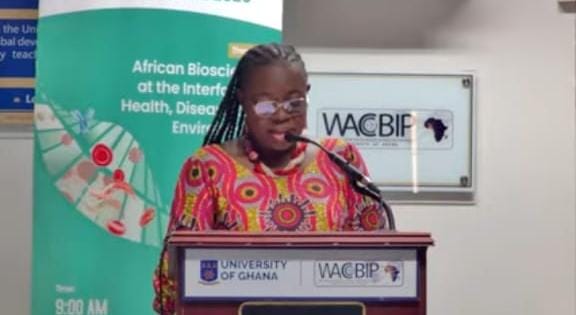
The message dominated discussions at WACBIP’s 10th anniversary conference at the University of Ghana, where scientists, policymakers and development partners reflected on the Centre’s achievements while outlining priorities for the next decade.
Since its establishment, WACBIP has evolved into one of Africa’s leading bioscience research centres, advancing work in genomics, infectious diseases and diagnostics while training hundreds of scientists from across the continent.
However, speakers at the conference stressed that the next phase of scientific progress must move beyond academic publications and conferences to deliver tangible solutions that improve lives.
They argued that research should increasingly address pressing challenges such as disease outbreaks, climate-related health threats, food security and sustainable development.
University of Ghana Vice-Chancellor, Professor Nana Aba Appiah Amfo, described WACBIP’s journey as one driven by resilience, innovation and strategic vision.
She said the Centre has not only produced internationally recognised research but has also transformed the University’s research ecosystem by improving infrastructure, strengthening institutional systems and expanding global partnerships.
The conference, held under a theme highlighting the link between health, disease and the environment, underscored the growing consensus that Africa’s development challenges require multidisciplinary collaboration.
Participants noted that issues such as climate change, emerging infectious diseases and environmental degradation can no longer be tackled in isolation.
Over the past decade, WACBIP has helped position Ghana as a regional hub for African-led scientific research by attracting international collaborations while developing local expertise and reducing reliance on external scientific capacity.
The United Kingdom, one of the Centre’s longstanding partners, reaffirmed its commitment to supporting research and innovation in Ghana.
Jamie Proctor of the Foreign, Commonwealth & Development Office’s West Africa Research and Innovation Hub said the UK’s investment in research remains a priority because of its contribution to economic growth and sustainable development.
He highlighted the strong scientific partnership between Ghana and the UK, pointing to continued collaboration through joint research strategies and upcoming support for the Ghana National Research Fund.
According to him, despite declining global development assistance, research funding has been protected because of its long-term value.
Mr Proctor challenged scientists, particularly early-career researchers, to look beyond academic achievement and focus on generating measurable impact through innovation, collaboration and effective public engagement.
He also identified stronger science communication as a critical priority, urging researchers to better communicate the value of their work to policymakers and the wider public.
In response, stakeholders announced new efforts to strengthen science journalism and improve public understanding of scientific research.
As WACBIP enters its second decade, participants agreed that Ghana’s scientific community must now focus on transforming knowledge into practical solutions that improve health, drive innovation and accelerate national development.
DISCLAIMER: The Views, Comments, Opinions, Contributions and Statements made by Readers and Contributors on this platform do not necessarily represent the views or policy of Multimedia Group Limited.
DISCLAIMER: The Views, Comments, Opinions, Contributions and Statements made by Readers and Contributors on this platform do not necessarily represent the views or policy of Multimedia Group Limited.
Source link