

By Edward Adjei FRIMPONG
With anxiety etched across her face and uncertainty hanging over her future, 50-year-old cocoa farmer Grace Benneh feared that the only way of life she had ever known might soon disappear.
Speaking at Yawsae in the Sunyani Municipality of the Bono Region, she expressed concern that the growing menace of illegal mining in nearby communities could spread across farmlands, threatening cocoa cultivation and other agricultural activities that sustained her family.
“The thought of losing my only source of livelihood keeps me anxious and nervous. Illegal mining is steadily taking over our communities and putting farming at risk,” she lamented.
Madam Benneh and her husband depended entirely on farming to support their six children. The couple owned a 10-acre cocoa farm at Jinijini and also cultivated maize, cassava and plantain to supplement household income.
Their concerns mirrored those of many farmers in the area following reports that unknown individuals had recently moved into the enclave in search of gold without the consent of local residents.
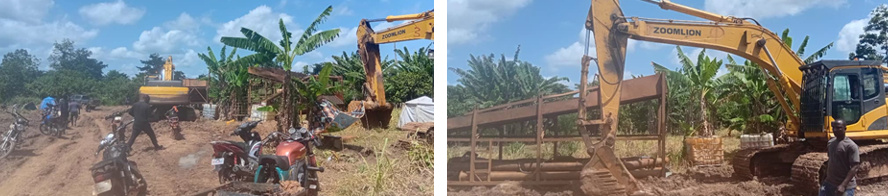
Community members said they woke up one morning to find about nine excavators and other mining equipment stationed near the Amoma River. The machines were reportedly guarded by heavily built men, some allegedly armed, leaving residents fearful and powerless.
Sources indicated that illegal mining activities had already begun at Amomagya, a village within the enclave, raising fears about the destruction of farmlands and pollution of the Amoma River, a key source of water for surrounding communities, including Atronie.
Although the mining activities were concentrated at Amomagya, their impact extended far beyond the village. Residents of Yawsae, Jinijini, Atronie and other nearby communities cultivated farms in the area, producing cocoa, cashew, maize, rice, cassava and plantain.
The enclave was regarded as one of the major food-producing areas within the Sunyani Municipality. Residents feared that unchecked mining activities could destroy farms, undermine livelihoods and reduce food production.
Fear, intimidation and displacement
Checks conducted for this report revealed that some residents had begun leaving Amomagya, alleging harassment and threats from men guarding the mining site.
For farmers, the situation had become more than an environmental threat—it had disrupted access to their livelihoods. One farmer, Tetteh Ayettey, said he had been unable to visit his farm for weeks.
“For weeks now, I have been unable to access my farm because the gunmen frighten us and warn us not to come close to the mining site. Ironically, the site is on the shortest route to my farm. I have already prepared the land for plantain cultivation, but I cannot go there to plant,” he said.
Like many others, Mr. Ayettey feared the continued presence of illegal miners could jeopardise his cocoa and cashew farms and threaten his family’s survival.
Farms for gold
Residents revealed that some farmers were being compelled to surrender their cocoa and cashew plantations to illegal miners for compensation they considered inadequate. Those who rejected the offers allegedly risked having their farms destroyed without receiving any compensation.
For many, the choice was painful: accept a low valuation and lose years of investment, or resist and risk losing everything.
Threat to cocoa and cashew production
Ghana’s cocoa sector was already under pressure from climate change, irregular rainfall patterns and crop diseases. The destruction of cocoa farms through illegal mining further threatened production and export earnings.
Illegal gold mining drove deforestation, polluted soils and water bodies with toxic chemicals, and encroached on agricultural land. The growing crisis created a direct conflict between two of Ghana’s key economic pillars—mining and cocoa production—while threatening the long-term sustainability of both sectors.
According to the Ghana Cocoa Board (COCOBOD), cocoa production for the 2024/2025 season stood at about 600,000 metric tonnes, significantly below the record 1,047,000 metric tonnes harvested during the 2020/2021 crop season. Industry observers warned that unless threats such as illegal mining were effectively addressed, cocoa output could decline further, with serious consequences for farmer livelihoods and export revenue.
The cashew sector faced similar risks. Illegal mining activities had already been reported across cashew-growing areas in the Wenchi and Banda enclaves of the Bono Region. Farmers feared that a further spread into the Sunyani Municipality could worsen the threat to production.
Statistics from the Ghana Export Promotion Authority (GEPA) showe that Ghana exported about 250,000 metric tonnes of raw cashew nuts in 2024. With farmers already grappling with climate-induced yield declines, particularly during the 2025/2026 crop season, the expansion of illegal mining activities threatened to undermine production, erode rural livelihoods and weaken the sector’s contribution to the economy.
Residents question official response
Despite repeated complaints, residents believe the response from authorities has not matched the urgency of the situation. They said reports have been made to the police, local government authorities and traditional leaders; yet the activities continue.
One resident, who requested anonymity, expressed frustration over what he described as official inaction.
“Since we reported the matter, the police only visited us and urged us to exercise restraint while investigations continue. Meanwhile, the people continue to operate with impunity,” he said.
When contacted, Sunyani Municipal Chief Executive Vincent Antwi Agyei said: “The Municipal Security Council has visited the affected communities to gather firsthand information and is putting in place strategic measures to contain the situation and halt the illegal mining activities”.
Chieftaincy dispute compounds crisis
Efforts to address the situation are further complicated by a dispute over ownership of the affected land. Three traditional authorities—Sunyani, Atronie and Mansen in the Dormaa Traditional Area—were reportedly laying claim to the site.
Residents feared the unresolved boundary dispute could undermine efforts to halt the mining activities and create conditions that would allow operators to continue unchecked.
Some residents argued that if the traditional authorities are genuinely committed to combating illegal mining, they have to set aside their differences and confront the common threat facing their communities. Otherwise, suspicions could persist that vested interests are influencing the response to the growing illicit gold mining activities, as has been alleged in other illegal mining hotspots across Ghana.
A future hanging in the balance
If urgent action is not taken, productive cocoa farms, cashew plantations and food crop fields could be lost to illegal mining, with far-reaching consequences for local livelihoods and Ghana’s agricultural economy.
For now, farmers such as Grace Benneh can only watch and wait, hoping that the fertile lands that have sustained their families for generations would not be sacrificed in the pursuit of gold.
Post Views: 45
Discover more from The Business & Financial Times
Subscribe to get the latest posts sent to your email.