By Melissa Sackey
Calls for stronger legislation and sustained community engagement to address witchcraft accusations in Ghana have featured prominently on GBCNEWS’ Women’s Voice, hosted by Mavis Offei Acheampong, as panelists highlighted the vulnerability of women accused of witchcraft.
Executive Director of Songtaba, Hajia Lamnatu Adam, says meaningful efforts to end the practice must include serious engagement with traditional leaders, whose influence within communities could be critical in addressing the problem.
Speaking via Zoom on the programme, she stressed the need to identify individuals who perpetuate witchcraft accusations and understand the circumstances surrounding the practice.
“We first of all have to do a community check-up to know who is engaging in this, affecting the lives of others,” she said.
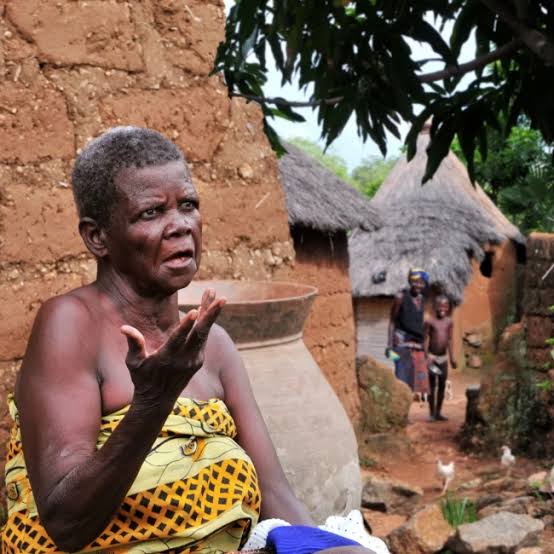
Gender Advisor at Oxfam in Ghana, Thelma Hayford, who has visited three alleged witches’ camps, including the Gambaga Witches’ Camp, shared firsthand experiences of the conditions and vulnerabilities of women living in the camps.
She described witchcraft accusations as an issue that is not discussed enough, despite the serious consequences for the women involved.
According to her, approximately 250 women are at the Gambaga camp, which she explained serves as a safe haven for women accused of witchcraft, many of whom flee their communities to escape possible harm.
Ms. Hayford noted that most of the women are widows, women experiencing menopause, and elderly persons, some of whom suffer from dementia or other forms of mental distress, making them particularly vulnerable to accusations and social exclusion.
She explained that, for many of these women, the camps offer a form of protection from threats and violence they may face in their communities.
The panelists further observed that religion and superstition may not be the sole drivers of witchcraft accusations, suggesting that the issue requires a deeper examination of the social, cultural and other factors that contribute to the practice.
The discussion highlighted the need for stronger legal protection, community sensitisation and engagement with traditional authorities to safeguard the rights, dignity and safety of women who continue to face accusations of witchcraft.