


By Ernest Bako WUBONTO
Africa is at risk of becoming the world’s biggest workforce or its largest criminal force by 2030, if job creation fails to keep pace with the continent’s teeming youth population, an employment and labour expert has cautioned.
With Africa’s youth population projected to be the largest in the world by 2030, comprising over 40 percent of the global youth and 60 percent of the continent’s labour force, the need for more opportunities targeted at economic independence cannot be overemphasised.
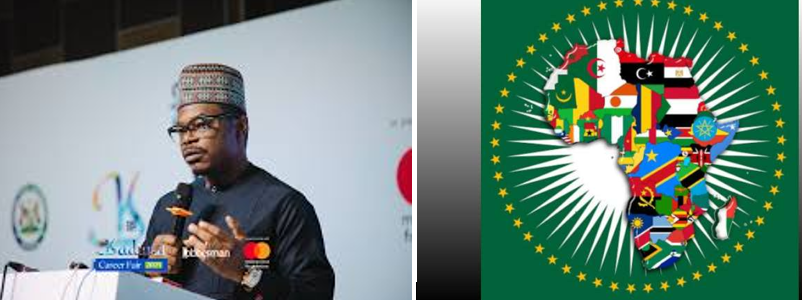
Head of Programmes Impact and Partnerships at The African Talent Company (TATC), Ahmed Alaga, in an interview with the B&FT, asserted that if economies don’t expand fast enough to absorb this demographic surge, the continent could face a dual-edged scenario: either becoming the world’s biggest workforce or, if left idle, a breeding ground for instability and organised crime.
Unemployment and underemployment, he noted, are already pushing young people into informal or illicit economies, from cybercrime to human trafficking.
Every year, millions of young Africans enter the labour market, but job creation lags far behind. Similarly, cities are swelling, yet industries and services aren’t scaling at the same pace. “Unemployment is one of the biggest problems in Africa and it cannot be solved alone.
It requires both state and non-state actors. In the next couple of years, more than 60 percent of the continent’s population will be youth, but between Africa and Europe, whilst the youthful population is increasing on this side, it is dwindling on the other side.
“What that present is two things, that by 20230, whether we are the largest workforce in the world or the largest criminal force. So, we need interventions that ensure that we do not suffer such a catastrophe,” he said.
Africa’s demography
According to the Worldometer, Africa’s total population is approximately 1.58 billion becoming the continent with the youngest population in the world. Around 60 percent of all Africans are under the age of 25 and over 65 percent are under the age of 35. Young Africans are projected to account for about 42 percent of the world’s youth by 2030. Currently, 45.6 percent of the population of Africa is urban, representing about 722 million people in 2026.
How to avert the risk
To mitigate the security and economic risks, Mr. Alaga outlined structural pillars that African nations must prioritise. He urged African countries to accelerate industrial diversification, moving beyond raw commodity exports into manufacturing, agribusiness and the creative industries.
Stressing that leveraging Africa’s strong adoption of mobile and fintech to create scalable digital jobs, especially in an era of global digital expansion, would be a key intervention. On skills development, he called for aligning education with market needs through vocational training, coding academies, renewable energy programmes and hospitality skills.
Governments, he added, must rethink policy frameworks to incentivise small and medium-sized enterprises (SMEs), protect startups and lower barriers to intra-African trade. Whilst the creative arts & sports sectors are often overlooked, they can absorb youth talent while boosting cultural diplomacy and tourism, he added.
UN Office of the Special Adviser on Africa
The UN Office of the Special Adviser on Africa indicated that by 2035, more young Africans will enter the workforce annually compared to the rest of the world combined, hence investing in water and sanitation is essential, given the heavy dependence of Africa’s key economic sectors and impending rapid urbanisation on these two resources.
Reliable and well-managed water and sanitation systems are central to Africa’s economic growth and urbanisation. It also mentioned that Africa is entering a decisive century of urban and economic development. Its population is rapidly urbanising, with the number of urban residents projected to double from around 700 million to 1.4 billion by 2050, making Africa the world’s second-largest urban region after Asia. This transformation, spanning more than 11,000 urban agglomerations, offers major opportunities for industrialisation, job creation and regional integration, but with the right policy interventions and investment.
The ‘Associates Programme
Touting the transformative intervention of the ‘Associates Programme,’ an initiative designed by the Mastercard Foundation in partnership with Jobberman, targeted at supporting young professionals aged 18 to 34 in accessing job opportunities and advancing their careers, Mr. Alaga stressed the importance of such initiatives across the continent to tackle unemployment.
The initiative aims to reduce youth unemployment and underemployment by placing young professionals in paid internships across five West African countries, including Nigeria, The Gambia, Liberia, Sierra Leone, and Ghana. The programme, which moves beyond the traditional internship model, positions itself as a strategic solution not only to place professionally prepared young graduates into 12-month paid roles across various sectors, but to integrate skills training, mentorship and inclusive hiring practices.
Post Views: 3
Discover more from The Business & Financial Times
Subscribe to get the latest posts sent to your email.