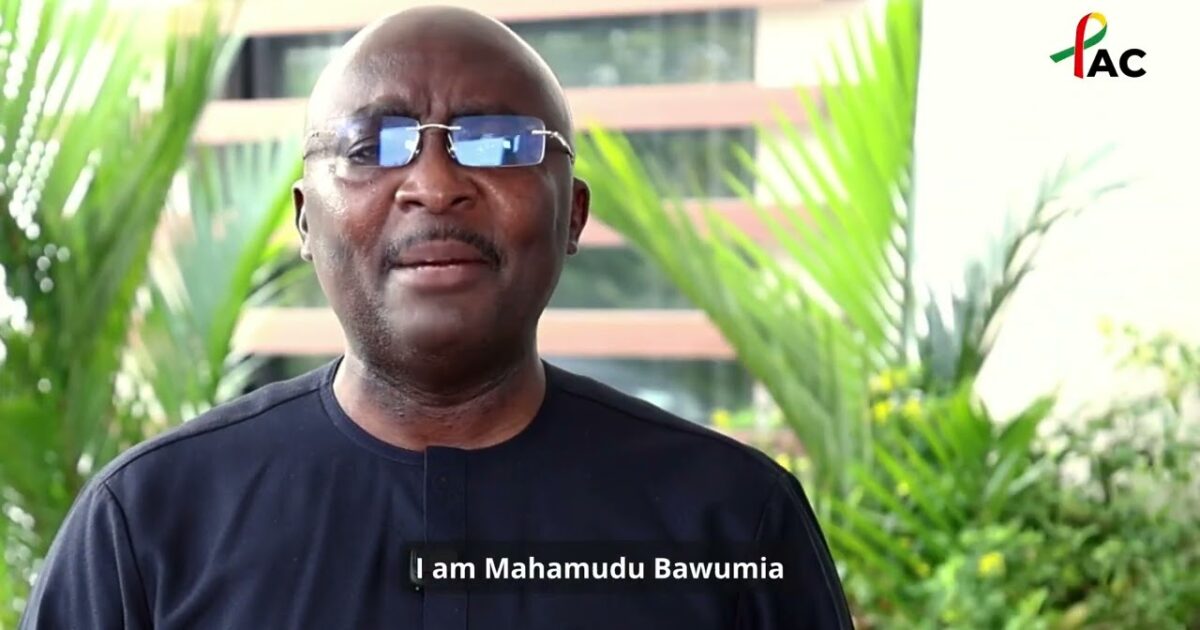
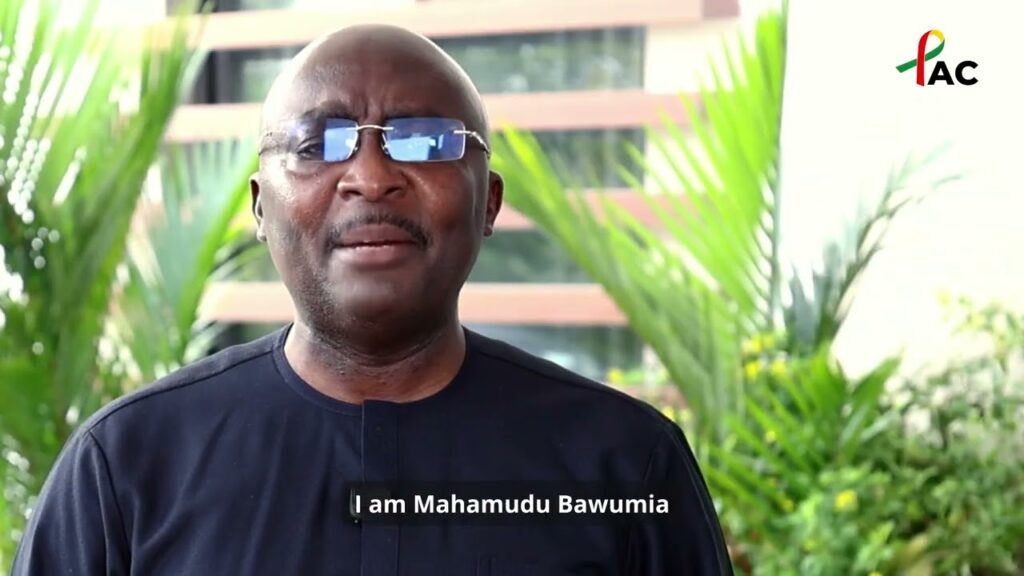
Former Vice-President and New Patriotic Party (NPP) presidential candidate, Dr Mahamudu Bawumia, has criticised the National Democratic Congress (NDC) government over the economic conditions facing Ghanaians, describing the situation as a tale of two economies: a paper economy and a pocket economy.
Dr Bawumia made the remarks during the NPP’s National Thanksgiving Service at the Church of Pentecost in Sunyani, where he argued that despite the government’s claims of declining inflation and a stronger cedi, many Ghanaians continued to face mounting cost-of-living pressures.
He questioned the benefits of economic improvements if they did not translate into better living conditions for ordinary citizens.
“As you can all attest, things are not going well. Things are really hard for the people. And when you ask them what they have done, they will tell you that inflation is down and the dollar is down,” he said.
He explained that the purpose of reducing inflation and the exchange rate was to ease the cost of living and improve people’s welfare.
“But if inflation and dollar go down and the people are suffering, is that how we want it?” he asked.
Dr Bawumia argued that economic stability should be measured not only by economic indicators but also by its impact on people’s daily lives.
“You cannot have a stable economy with people suffering. The stability should be a way of improving the lives of the people. So what is the use of the stability they are talking about when the people are suffering?” he questioned.
Dr Bawumia questioned whether farmers and public sector workers had benefited from the government’s policies, pointing to what he described as unmet promises to cocoa and cashew farmers, other crop producers, teachers and healthcare professionals.
“Have cocoa farmers benefited? They were told they would be paid GH¢6,000 per bag. Has that happened? Have cashew farmers benefited? They were encouraged to acquire land and expand their farms with the promise of higher payments, but that has not happened. Soybean, rice and maize farmers have also been let down. The same applies to teachers, nurses and doctors,” he said.
Dr Bawumia also pointed to electricity and water bills, petrol prices and transport fares, arguing that increases in these costs had added to the financial pressures facing households.
On education, Dr Bawumia said the government had failed to deliver on its promises regarding the Free Senior High School (Free SHS) programme, the abolition of the double-track system and teacher licensure examination, as well as the posting of teachers.
He described these issues as part of the broader concerns surrounding the government’s delivery on its campaign promises.
The NPP flagbearer also raised concerns about the government’s approach to galamsey and the implementation of its 24-hour economy policy.
“Galamsey is even worse. Maybe when they mentioned 1:3:3 they meant galamsey because galamsey has now more than tripled. Dr Sam Jonah said our river bodies now look like chocolate milk. They said they would end galamsey within one month, but they have failed,” he said.
He also questioned the implementation of the government’s 24-hour economy policy, its employment commitments under the “1:3:3” proposal and the promised completion of hospitals under the Agenda 111 initiative, arguing that these pledges had yet to yield the expected results.
“They promised Ghanaians a new economy called a 24-hour economy. We have been waiting for nearly two years to see it, but it has not happened. Clearly, they did not even understand what they were talking about. It was campaign propaganda to deceive Ghanaians. They said 1:3:3 — one job for three people — and the question Ghanaians are asking is, where are the jobs? They also promised to complete Agenda 111 hospitals, but they have failed,” he added.
According to him, the policy had been presented as a means of creating employment and expanding economic opportunities, but its implementation had not met public expectations.
Explaining his description of Ghana’s economic situation, Dr Bawumia said the country was experiencing two contrasting realities, which he described as the “paper economy” and the “pocket economy”.
“One is a paper economy; they say inflation is down and the exchange rate is down. The second economy is the pocket economy: the high cost of living and your sufferings. That is more important to the people of Ghana. The stability of the economy is meaningless if it cannot be linked to the liberation of the suffering of our people,” he said.
He maintained that economic stability would have little meaning if it did not lead to improvements in living standards and reduce the hardships faced by citizens.
Looking ahead to the 2028 general election, Dr Bawumia said the NPP would focus on presenting policies that were practical, workable and supported by clear costing rather than making promises it could not fulfil.
He said the party intended to campaign on proposals designed to address the country’s challenges and deliver tangible results for Ghanaians.
“We are going with ideas, costed ideas, practical ideas, workable ideas,” he stressed.
DISCLAIMER: The Views, Comments, Opinions, Contributions and Statements made by Readers and Contributors on this platform do not necessarily represent the views or policy of Multimedia Group Limited.
DISCLAIMER: The Views, Comments, Opinions, Contributions and Statements made by Readers and Contributors on this platform do not necessarily represent the views or policy of Multimedia Group Limited.
Source link