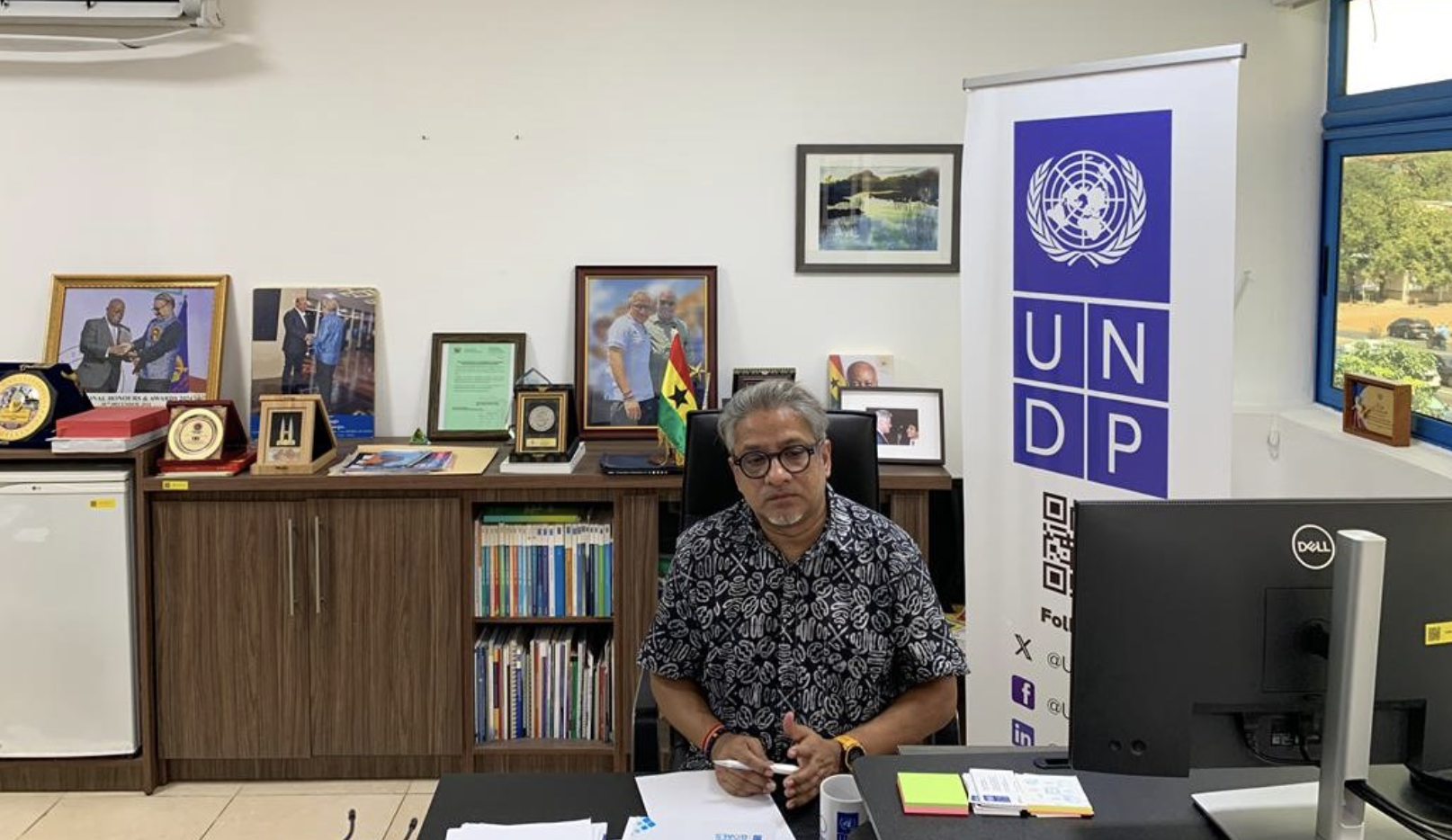
The United Nations Development Programme (UNDP) has urged Ghana to prioritise youth employment, warning that rising joblessness could undermine economic gains, peace and security.
The agency said unemployment among young people risked fuelling social unrest, radicalisation and conflict despite Ghana’s reputation for stability.
Mr Niloy Banerjee, UNDP Resident Representative in Ghana, said this in an interview with the Ghana News Agency on Tuesday.
“In a country where young people are fully employed and busy – they are not agitated, fighting or picking up arms.”
Data from the Ghana Statistical Service show unemployment fell from 13.7 per cent in the first three quarters of 2024 to 12.8 per cent in 2025, but about 1.3 million people aged 15 to 24 remained out of work, education or training.
Mr Banerjee said youth employment should be treated as a national security priority, particularly as parts of West Africa and the Sahel region faced instability.
“We have a strong interest in peace and security because if the whole growth trajectory of Ghana, the dream it is trying today could easily get appended or hijacked if the peace and security situation deteriorates. If peace and security do not hold, all of this dreaming and building and creating is in jeopardy,” he stated.
Mr Banerjee said sustained peace was essential to protect progress in entrepreneurship, digital transformation, and macroeconomic management.
He called for stronger support for small and medium-sized enterprises to expand job opportunities, alongside policies linking community-level initiatives with national development strategies.
Mr Banerjee also urged institutional vigilance and autonomy, highlighting the role of bodies such as the central bank and electoral authorities in maintaining economic stability through political transitions.
“Protecting institutional autonomy ensures continuity of sound economic management even during electoral transitions,” he said.
Mr Banerjee advocated a combined approach of law enforcement, community engagement, institutional strengthening and youth empowerment.
“Economic inclusion of young people is directly tied to maintaining peace and preventing instability. Youth empowerment as a peace strategy – By engaging disillusioned youth in entrepreneurship and innovation, the risk of unrest is reduced,” he said.
Mr Banerjee said UNDP youth programmes in Ghana had reached 12,000 participants through training, mentorship and enterprise support, exceeding an initial target of 6,000.
DISCLAIMER: The Views, Comments, Opinions, Contributions and Statements made by Readers and Contributors on this platform do not necessarily represent the views or policy of Multimedia Group Limited.
DISCLAIMER: The Views, Comments, Opinions, Contributions and Statements made by Readers and Contributors on this platform do not necessarily represent the views or policy of Multimedia Group Limited.
Source link