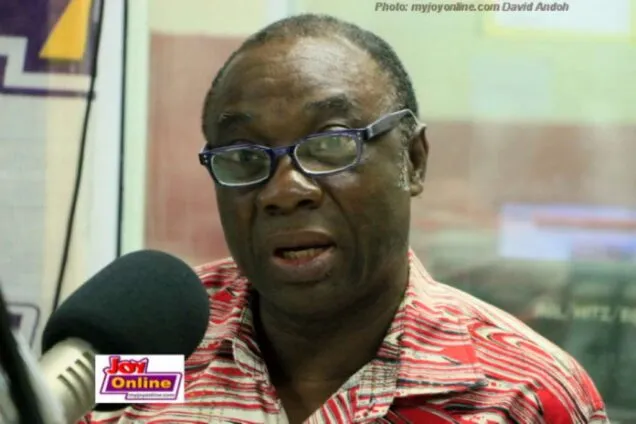
Private legal practitioner and social activist Oliver Barker-Vormawor says former Minister of Power, Dr Kwabena Donkor, has categorically denied receiving any money from former Goldman Sachs banker Asante Kwaku Berko, whose conviction in a United States bribery case has triggered calls for investigations into the Ghanaian side of the deal.
Dr Donkor, according to Mr Barker-Vormawor, also denied ever interacting with Mr Berko.
Mr Barker-Vormawor disclosed the former minister’s position in a Facebook post on Monday following what he said was a telephone conversation between the two men over the fallout from Mr Berko’s conviction.
He said Dr Donkor told him that, as a cadre committed to the ideals of the revolution, he would not betray Ghana by engaging in such conduct.
The lawyer further revealed that Dr Donkor welcomed the prospect of an investigation into the matter, expressing confidence that a probe would clear his name.
Mr Barker-Vormawor said the former minister explained that his lawyers had advised him against commenting publicly on the matter for now, but indicated that a statement would soon be issued.
Berko conviction
A federal jury in Brooklyn, New York, convicted Mr Berko on August 6, 2026, on charges arising from a scheme to bribe Ghanaian officials in connection with a power plant project involving Turkish energy company Aksa Enerji Uretim A.S.
Mr Berko, a dual Ghanaian-American citizen and former executive director in the investment banking division of Goldman Sachs, had been responsible for securing and managing the deal between Aksa and the Republic of Ghana.
The US Department of Justice said the scheme involved payments to Ghanaian officials to help secure the Turkish company’s bid to build and operate the power plant.
The case has since raised questions in Ghana about which officials were allegedly targeted and whether any of the money was actually received by persons identified in the US proceedings.
$1m payment question
Mr Barker-Vormawor drew attention to what he described as an important distinction in the US authorities’ public account of the case.
He said the FBI statement referred to Berko and his co-conspirators having “discussed paying $1 million to the Minister of Power”, but did not state in that particular passage that the $1 million was actually paid to the minister.
By contrast, he noted that the US authorities were more categorical about other payments.
The US Department of Justice’s earlier account of the case stated that five Ghanaian officials received $5,000 each during an all-expenses-paid trip to Turkey to inspect equipment for the proposed power plant. It also referred to subsequent discussions concerning payments to individuals connected to the Ministry of Power.
Mr Barker-Vormawor, however, cautioned that the public statements should not be treated as a substitute for the evidence presented during the trial.
He said the US side of the case had now been determined, making it important for Ghanaian authorities to establish what happened locally.
Ghana investigation
The development comes after Ghanaian authorities indicated that they would examine the Ghanaian dimension of the case.
Mr Barker-Vormawor said the Attorney-General had indicated that Ghana would work with US authorities to investigate the local aspects of the transaction.
The Office of the Special Prosecutor (OSP) has separately disclosed that it provided investigative and evidentiary assistance to the US Federal Bureau of Investigation (FBI) through Ghana’s mutual legal assistance framework.
The OSP said the US Department of Justice had acknowledged its assistance as “significant” to the prosecution.
The agency’s disclosure has further intensified calls for a full investigation into the allegations involving Ghanaian officials.
Donkor’s denial
Mr Barker-Vormawor said he initially suspected Dr Donkor when he first heard of the allegations because he associated the Ministry of Power with the former minister.
He said he was personally disappointed by that initial assumption because he had regarded Dr Donkor as an example of ethical public leadership.
He recalled Dr Donkor’s decision to promise to resign if he failed to resolve an energy crisis and said the former minister had followed through on that commitment.
Mr Barker-Vormawor said Dr Donkor’s denial and willingness to subject the matter to investigation should therefore be taken seriously.
He also said the former minister had shared some views about what could have happened, but he would not disclose those details because they were matters for investigators to establish.
Mr Barker-Vormawor stressed that the matter should not be allowed to disappear without a thorough investigation.
He expressed the hope that the Ghanaian side of the case would now receive the same attention as the US proceedings.
DISCLAIMER: The Views, Comments, Opinions, Contributions and Statements made by Readers and Contributors on this platform do not necessarily represent the views or policy of Multimedia Group Limited.
DISCLAIMER: The Views, Comments, Opinions, Contributions and Statements made by Readers and Contributors on this platform do not necessarily represent the views or policy of Multimedia Group Limited.
Source link