

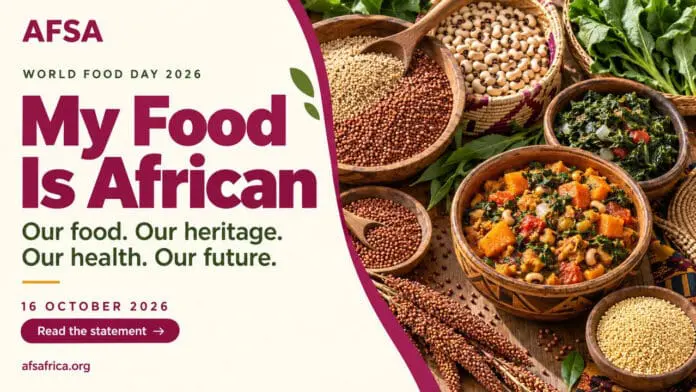
African chefs used World Food Day, 16 October 2026, to close a week promoting indigenous ingredients, as Alliance for Food Sovereignty in Africa (AFSA) urged governments to back traditional diets.
The My Food Is African Chefs Network ran the first continent-wide chefs week from 12 to 16 October. Chefs shared stories from their kitchens, farms and markets about indigenous seeds, soils and traditional ways of preparing food. The week ends with an online meeting of chefs, farmers, seed keepers and journalists, who will consider adopting a charter for the network.
The campaign comes as Africa carries the world’s heaviest hunger burden. According to the United Nations’ State of Food Security and Nutrition in the World 2026 report, about 309 million Africans, or one in five, faced hunger in 2025. That is more than in Asia, where 292 million people went hungry. Africa’s hunger rate eased slightly, from 20.3 percent to 20.0 percent, the first break in its upward trend since 2017. Two in three Africans, 66.6 percent, could not afford a healthy diet.
AFSA argues that part of the answer lies in Africa’s own food. It says industrial agriculture, the spread of ultra-processed foods and changing eating habits are eroding traditional food systems and the knowledge behind them. It also says traditional dishes are often dismissed as backward. Smallholder farmers, women and the people who save and share seed get too little recognition or support, the alliance says.
The alliance wants farming to shift towards agroecology, which relies on natural processes rather than synthetic inputs to restore soil fertility. It says this approach protects biodiversity, keeps seed in farmers’ hands and helps crops withstand climate change. It links poorer diets to the growing consumption of ultra-processed food, and says reviving indigenous grains, legumes, vegetables and fruits would help protect nutrition.
The group made specific demands of African governments. It wants them to treat food sovereignty as a basis for development and to protect seed systems run by farmers. It also wants indigenous foods built into national nutrition strategies, school curricula and public food buying. AFSA asked chefs, restaurants and catering schools to buy from local agroecological producers, preserve traditional recipes and introduce young people to African dishes.
The network grew out of a meeting AFSA held in Addis Ababa, Ethiopia, in July 2025, which drew participants from 23 countries. Their declaration identified a deep stigma that presents African food as unfit for modern hospitality. It also called on legislators to align climate, agriculture and education policies with indigenous food systems.
This year’s World Food Day theme, set by the Food and Agriculture Organization (FAO), is “Innovate today. Nourish tomorrow.” AFSA says innovation in Africa should build on indigenous crops, traditional preservation methods and farmers’ own knowledge.
The FAO-led report projects that between 510 million and 520 million people worldwide will still face hunger in 2030, and that 56 percent of them will live in Africa.