
By Kizito CUDJOE
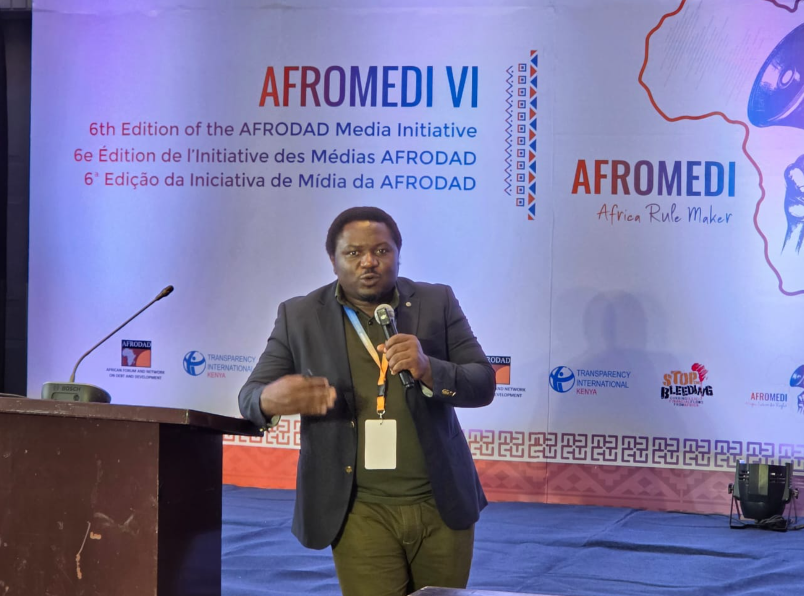
African journalists have been urged to intensify scrutiny of the continent’s mounting debt burden, illicit financial flows and governance failures as the sixth edition of the AFRODAD Media Initiative (AFROMEDI VI) opened in Nairobi, Kenya.
The three-day forum, organised by the African Forum and Network on Debt and Development (AFRODAD) in partnership with Transparency International Kenya and the Stop the Bleeding Campaign, has brought together about 45 journalists and finance experts from 29 African countries to examine the growing links between debt, corruption, extractive-sector financing and socio-economic inequality across the continent.

Opening the conference, the Acting Director of AFRODAD, Dr. Yungong Theophilus Jong, said the media remains one of the continent’s strongest accountability tools at a time when African economies are grappling with rising debt distress, fiscal pressures and widening development gaps.
He said decisions surrounding public borrowing often occur far from public scrutiny despite their far-reaching consequences on healthcare, education and livelihoods.
“Only a journalist can make that connection visible to the people who need to understand it most,” he stated.
According to him, accountability becomes possible when citizens understand the implications of borrowing decisions made in their name.
“When the public watches, things change. When voters ask questions, politicians answer. And when journalists illuminate what would otherwise remain hidden, the powerful can no longer act with impunity,” he added.
Dr. Jong urged African journalists to help shape a continent that “tells its own story, sets its own terms, and holds its own leaders and the world accountable”.
Held under the theme: “Partnering with Media to Advance Socio-Economic Justice and Africa’s Common Position on Debt,” the programme seeks to strengthen journalists’ capacity to interrogate sovereign debt structures, private creditor influence and global financial systems that continue to shape Africa’s development trajectory.
Organisers said the initiative is also intended to deepen understanding of how historical extraction, structural inequalities and illicit capital outflows continue to undermine fiscal stability and economic progress across the continent.
Since its launch in 2021, AFROMEDI has trained more than 600 journalists from 37 African countries, contributing to growing media engagement on debt justice, economic governance and development financing.
The programme aligns with the African Borrowing Charter, the African Union’s Common African Position on Debt under the Lomé Declaration and the broader aspirations of the African Union (AU) Agenda 2063.

The Head of Programmes at Transparency International Kenya, Gibson Mwaita, warned that corruption and weak accountability systems continue to deepen Africa’s debt and development challenges.
Citing findings from the 2025 Corruption Perceptions Index, he noted that Sub-Saharan Africa remains the lowest-performing region globally, with an average score of 32 out of 100.
He said only four of the region’s 49 countries scored above 50, while 10 have deteriorated significantly since 2012.
Africa, he stressed, continues to lose substantial resources through illicit financial flows, opaque contracting arrangements, tax abuse and corruption.
“This shows us that the debt crisis we face in Africa cannot be separated from governance and transparency challenges,” he said.
Mr. Mwaita added that journalists remain central to efforts to strengthen accountability systems and safeguard public resources across the continent.
“Media practitioners are not merely observers of economic events; they are active actors in shaping reform conversations,” he said.
Post Views: 12
Discover more from The Business & Financial Times
Subscribe to get the latest posts sent to your email.