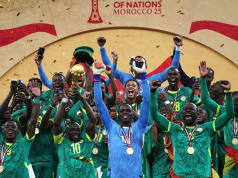
The Court of Arbitration for Sport’s (CAS) decision to restore Senegal as 2025 Africa Cup of Nations champions has raised fresh questions about the Confederation of African Football’s (CAF) handling of the disciplinary process surrounding the controversial final against Morocco.In a unanimous ruling on Tuesday, CAS upheld the appeal by the Senegalese Football Federation (FSF), set aside the CAF Appeal Board’s decision and reinstated the CAF Disciplinary Board’s original ruling. The 1-0 victory recorded by Senegal in Rabat on January 18 therefore stands.The verdict is a major setback for CAF’s appeals process, particularly because its Appeal Board had overturned the initial disciplinary decision in March and awarded Morocco a 3-0 victory after ruling that Senegal had forfeited the final.Morocco’s case was built around the actions of Senegal’s players, who temporarily left the pitch following the award of a late penalty to the hosts. The Royal Moroccan Football Federation (FRMF) argued that the walk-off breached Articles 82 and 84 of the AFCON Regulations and should have resulted in the match being ended prematurely.CAF’s Appeal Board accepted that position, changing the outcome of a final that Senegal had won 1-0 after extra time. The decision effectively transferred the continental title to Morocco, who had lost the match on the pitch.However, CAS found that the referee’s decision to resume the game was within his sole authority. The panel ruled that, by allowing play to continue, referee Jean-Jacques Ngambo Ndala had determined that the conditions for restarting the match had been met, with both teams back on the pitch and willing to play.The tribunal also concluded that the referee’s decision fell under the field of play doctrine and could not be reviewed through the disciplinary route pursued by Morocco. It further explained that Articles 82 and 84 were intended to determine the outcome of a match when a team’s conduct leads the referee to abandon it permanently. That did not happen in Rabat.CAS also rejected the argument that the referee had acted arbitrarily, stating that his decision did not appear to have been influenced by factors external to the game.The ruling raises questions about the reasoning behind CAF’s Appeal Board decision and how the organisation interpreted its own competition regulations. Although CAS did not declare CAF’s entire disciplinary system flawed, its decision to overturn the Appeal Board’s ruling places the interpretation of the AFCON regulations under scrutiny.The distinction between the decisions of CAF’s two disciplinary bodies is particularly important. The Disciplinary Board’s original ruling was reinstated, while the Appeal Board’s subsequent decision to award Morocco the title was set aside. The case therefore raises questions about how consistently CAF’s internal bodies apply the same regulations when reviewing major tournament incidents.The consequences extend beyond the final result. CAF’s disciplinary and appeals structures are central to maintaining confidence in the administration of its competitions. When an internal decision that changes the winner of Africa’s biggest national team tournament is overturned by an external sports tribunal, questions about the quality of the original legal assessment are difficult to avoid.CAS did not, however, rule that Senegal’s conduct during the final was acceptable. The tribunal’s decision focused on the referee’s authority to resume the match and the applicability of the relevant AFCON regulations. Senegal’s Football Federation, coach Pape Thiaw and certain players had also received sanctions from CAF in separate disciplinary proceedings, which were not erased by Tuesday’s verdict.The ruling also leaves CAF with the task of dealing with the institutional consequences of a dispute that lasted several months and saw the title awarded to one country before being restored to another. The credibility of its disciplinary decisions will depend not only on the outcome of this case but also on the consistency and clarity of its processes in future competitions.The outcome of the 2025 final has now been settled, with Senegal restored as champions and Morocco losing the title awarded to them by CAF’s Appeal Board. However, the CAS verdict has brought renewed attention to how CAF reaches and reviews decisions in cases involving major tournament controversies.
Source link


- Advertisement -