
By Elizabeth PUNSU, Kumasi
The Ghana Leather and Footwear Manufacturers Association (GLFMA) has sounded an alarm over what it describes as the growing takeover of the footwear market by cheap imported products from China.
According to the association, more than 70 percent of footwear sold in the country between 2024 and 2025 was imported from China, with import value exceeding US$40million while Ghana’s footwear exports remained below US$1million.
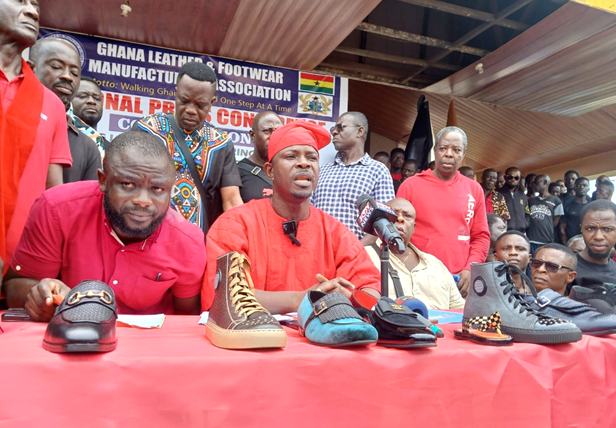
Addressing a press conference in Kumasi, President-GLFMA Gilbert Akwasi Ntim warned that the trend is crippling local manufacturers and threatening thousands of jobs.
He described the situation as “a national economic concern” rather than merely a business issue.
He said the influx of low-cost imports has severely weakened the domestic leather and footwear sector, wiped out over 30 percent of market share for locally made footwear over the past decade and forced many small-scale producers in Kumasi, Accra and Takoradi out of business.
“This industry feeds thousands of families and sustains local economies, yet it is facing deliberate and systematic economic sabotage,” he said.
The Association also accused some importers of exploiting loopholes within the Customs system to import finished footwear under the guise of raw materials or rubber waste to evade higher import duties.
“Some import syndicates are allegedly declaring the products as ‘rubber scrap/waste’, enabling them to pay only five percent import duty,” he alleged.
Mr. Ntim claimed that while local manufacturers importing raw materials such as synthetic rubber sheets, glue and leather chemicals are subjected to what he described as a compounded 36.1 percent tax burden through the Integrated Customs Management System (ICUMS), importers of finished products continue to enjoy unfair cost advantages.
“The situation has worsened youth unemployment, particularly among vocational graduates trained in leatherwork and shoe production, while creating a footwear trade deficit estimated at US$40million annually,” he highlighted.
GLFMA maintained that although imported Chinese footwear is often cheaper, many of the products are of low durability and poor quality compared to locally manufactured leather footwear.
“While imported Chinese shoes are often cheaper, they are mostly of low durability and poor quality, providing little long-term value to consumers. Meanwhile, Ghanaian-made footwear – built from genuine leather and local craftsmanship – remains strong, long-lasting and supports our economy,” he stressed.
Recommendations
To revive the sector, the Association is calling on the Ministry of Trade and Industry, Ghana Revenue Authority Customs Division, Ghana Export Promotion Authority, Ghana Investment Promotion Centre, Ghana EXIM Bank and the Association of Ghana Industries to urgently intervene.
Among its proposals are increased tariffs on finished synthetic and leather goods imported from outside the AfCFTA zone, stricter port enforcement to stop the misclassification of imported shoes and giving zero percent import duty for selected raw materials used by local manufacturers.
“This will immediately lower our production costs by 60%, allowing ‘Made in Ghana’ products to compete fairly on price,” Mr. Ntim emphasised.
The Association is also demanding a mandatory local procurement policy requiring the Ghana Armed Forces, Police Service and Ghana Education Service to source footwear exclusively from certified local manufacturers.
It further proposed a nationwide ‘Buy Ghana Made Footwear’ campaign and affordable financing support for local producers through the Ghana EXIM Bank.
GLFMA warned that failure to address this issue could compel the association to intensify public advocacy and consider peaceful demonstrations to defend local jobs and production capacity.
Post Views: 1
Discover more from The Business & Financial Times
Subscribe to get the latest posts sent to your email.