


By Joshua Worlasi AMLANU
Construction cost inflation edged higher in May 2026, driven by rising equipment and specialised building input costs even as declines in cement and steel prices continued to moderate overall cost pressures across the sector.
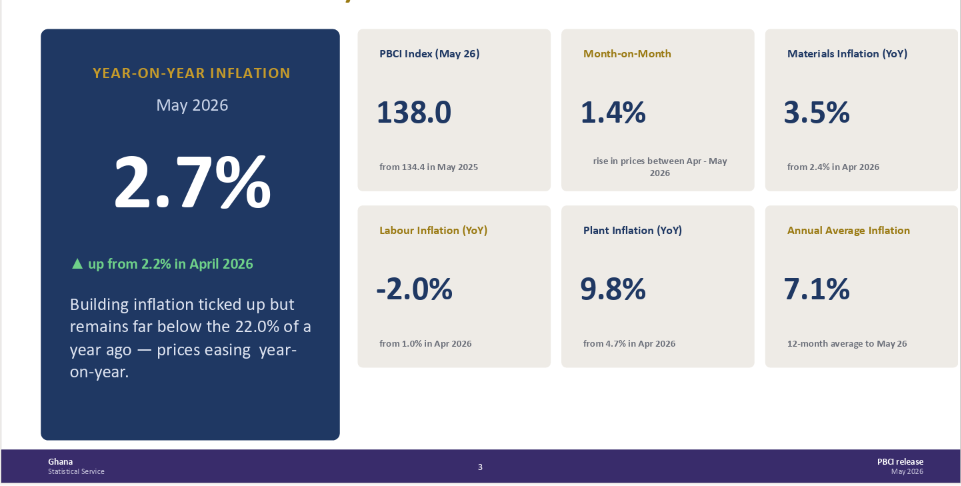
Data from Ghana Statistical Service (GSS) showed that the year-on-year Prime Building Cost Index (PBCI) inflation rate increased to 2.7 percent in May 2026 from 2.2 percent in April. The increase marks a modest acceleration in building cost inflation after months of deceleration, although this rate remains significantly below the 22 percent recorded a year earlier.
The latest figures point to diverging cost trends within the construction industry. While prices for key bulk materials such as cement and steel continued to fall, higher costs for equipment, specialised materials and selected construction inputs exerted upward pressure on the overall index.

The PBCI tracks changes in the cost of constructing buildings using materials, labour and plant equipment. On a month-on-month basis, building costs increased by 1.4 percent, extending a run of monthly increases that began at start of the year.
Materials remained the dominant source of inflationary pressure, accounting for virtually all the headline increase. The materials component, which carries a weight of 76.5 percent in the basket, recorded year-on-year inflation at 3.5 percent in May, up from 2.4 percent in April.
Within the materials category, plumbing costs posted the steepest increase, rising 22.8 percent year-on-year. Roofing sheets followed at 19.9 percent while glazing costs increased by 18.5 percent. Electrical works, metalwork and reinforcement materials also registered double-digit inflation.
However, the overall rise in materials inflation was partially offset by continued declines in price for some of the sector’s most heavily weighted inputs. Cement prices fell 14.5 percent year-on-year in May while steel prices declined by 8.1 percent. These two categories exerted the largest downward influence on the overall index.

The data show that electrical works emerged as the single largest contributor to construction inflation, accounting for more than 63 percent of year-on-year inflation. Glazing, metalwork, plumbing and tiles were also among the strongest contributors to rising costs.
A second major development was the sharp acceleration in plant inflation. Costs associated with equipment and construction tools increased 9.8 percent year-on-year in May, more than double the 4.7 percent recorded in April.
Small tools recorded inflation of 12.6 percent while equipment costs rose 6.2 percent. On a monthly basis, plant prices increased by 4.7 percent – highlighting growing cost pressures linked to machinery and operational equipment used by contractors.
The rebound in equipment-related costs contrasts with broader easing across the sector over the past year and could become a key area of concern for developers and contractors if sustained.
Meanwhile, labour costs moved into deflationary territory. Labour inflation fell to negative 2 percent in May from positive 1 percent in April, making it the principal factor moderating overall building inflation.
Skilled labour costs declined 1.7 percent year-on-year while unskilled labour costs fell 2.6 percent. Labour prices also contracted, by 0.6 percent on a monthly basis.
According to GSS, labour’s negative contribution offset part of the upward pressure from materials and plant costs. The agency noted that persistent swings in labour costs may point to structural challenges within the construction workforce, including skills availability and labour market conditions.
The latest data suggest that the country’s construction sector is entering a period of relative cost stability after the sharp inflationary cycle experienced in 2024 and early 2025. Annual average building inflation stood at 7.1 percent in May, considerably lower than levels seen a year ago.
Post Views: 1
Discover more from The Business & Financial Times
Subscribe to get the latest posts sent to your email.