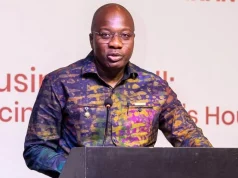
Majority Chief Whip and Member of Parliament for South Dayi, Rockson-Nelson Dafeamekpor, and Member of Parliament for Manhyia South and a member of Parliament’s Constitutional and Legal Affairs Committee, Nana Adjei Baffour Awuah, engaged in a debate on Channel One TV over the conviction and sentencing of NPP Ashanti Regional Chairman Bernard Antwi Boasiako, popularly known as Chairman Wontumi.
The discussion focused on the legal basis of the High Court‘s decision, particularly the use of circumstantial evidence to convict Wontumi on illegal mining-related offences.
Nana Adjei Baffour Awuah questioned the judgment, arguing that the prosecution failed to produce any written agreement or direct evidence proving that mineral rights had been assigned to third parties. He maintained that the absence of documentary evidence created reasonable doubt and that the arrangement on the mining concession was intended for land reclamation rather than mining.
Rockson-Nelson Dafeamekpor, however, defended the court’s reasoning, stating that Ghanaian law recognises circumstantial evidence where the facts irresistibly point to the guilt of an accused person. He argued that the trial judge correctly relied on established legal principles in concluding that the activities on the concession amounted to illegal mining.
According to Dafeamekpor, the court found that Wontumi had permitted unauthorised persons to undertake mining activities on his concession and rejected the reclamation explanation as an afterthought that was inconsistent with the evidence before the court.
The debate also revisited earlier concerns raised by the Ministry of Lands and Natural Resources, the Minerals Commission, Members of Parliament and civil society organisations over the operations of Wontumi’s mining company before the prosecution commenced.
While Baffour Awuah maintained that the conviction raises important questions about the standard of proof in criminal cases, Dafeamekpor argued that the judgment demonstrates that circumstantial evidence, when compelling and consistent, can satisfy the legal standard of proof beyond reasonable doubt.
The discussion comes after the High Court sentenced Wontumi to 20 years’ imprisonment following his conviction on illegal mining-related offences under the Minerals and Mining Act. The case is expected to proceed to the Court of Appeal, where the conviction and sentence are likely to be challenged.
Dafeamekpor, Baffour Awuah debate Chairman Wontumi conviction on Channel One TV
Majority Chief Whip and Member of Parliament for South Dayi, Rockson-Nelson Dafeamekpor, and Member of Parliament for Manhyia South and a member of Parliament’s Constitutional and Legal Affairs Committee, Nana Adjei Baffour Awuah, engaged in a debate on Channel One TV over the conviction and sentencing of NPP Ashanti Regional Chairman Bernard Antwi Boasiako, popularly known as Chairman Wontumi.
The discussion focused on the legal basis of the High Court’s decision, particularly the use of circumstantial evidence to convict Wontumi on illegal mining-related offences.
Nana Adjei Baffour Awuah questioned the judgment, arguing that the prosecution failed to produce any written agreement or direct evidence proving that mineral rights had been assigned to third parties. He maintained that the absence of documentary evidence created reasonable doubt and that the arrangement on the mining concession was intended for land reclamation rather than mining.
Rockson-Nelson Dafeamekpor, however, defended the court’s reasoning, stating that Ghanaian law recognises circumstantial evidence where the facts irresistibly point to the guilt of an accused person. He argued that the trial judge correctly relied on established legal principles in concluding that the activities on the concession amounted to illegal mining.
According to Dafeamekpor, the court found that Wontumi had permitted unauthorised persons to undertake mining activities on his concession and rejected the reclamation explanation as an afterthought that was inconsistent with the evidence before the court.
The debate also revisited earlier concerns raised by the Ministry of Lands and Natural Resources, the Minerals Commission, Members of Parliament and civil society organisations over the operations of Wontumi’s mining company before the prosecution commenced.
While Baffour Awuah maintained that the conviction raises important questions about the standard of proof in criminal cases, Dafeamekpor argued that the judgment demonstrates that circumstantial evidence, when compelling and consistent, can satisfy the legal standard of proof beyond reasonable doubt.
The discussion comes after the High Court sentenced Wontumi to 20 years’ imprisonment following his conviction on illegal mining-related offences under the Minerals and Mining Act. The case is expected to proceed to the Court of Appeal, where the conviction and sentence are likely to be challenged.