By Osei-Tutu Esther Kumah
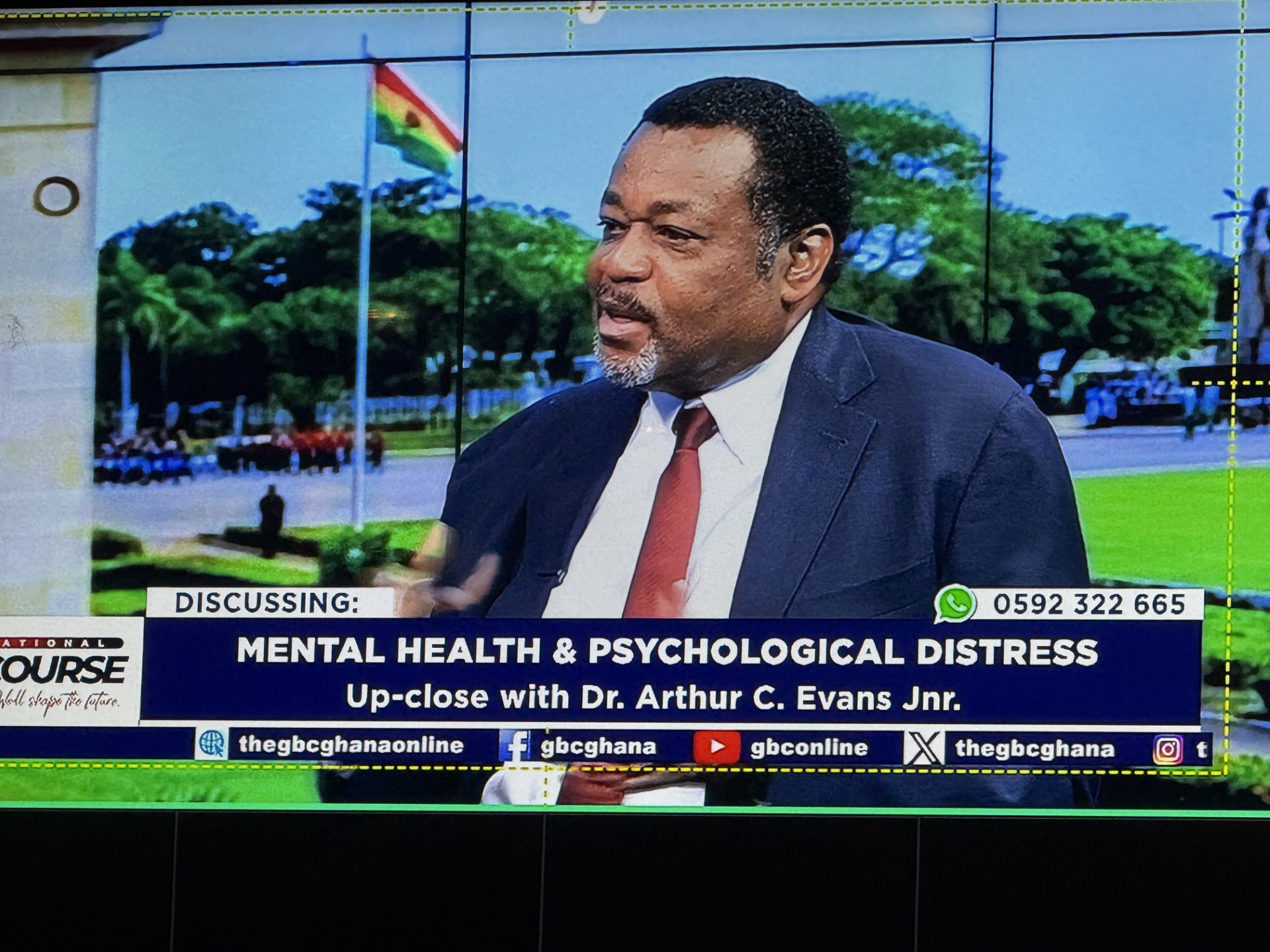
Clinical psychologist, Dr Arthur C. Evans Jr. has called for a community based approach to mental health care, urging stronger collaboration among mental health professionals, religious leaders, families and community institutions to improve access to treatment and reduce stigma.
Speaking on GBC’s National Discourse programme on Wednesday, October 21, 2026, under the theme “Mental Health and Psychological Distress,” Dr Evans stressed that effective mental health care must go beyond treating individuals to address the social and community environments in which they live.
He noted that stigma remains a major obstacle to people seeking help, regardless of where they live.
“There’s no place in the world that doesn’t have stigma around mental health.”
Dr Evans explained that although mental health services may be available, they cannot make the desired impact if people are afraid or ashamed to access them.
He said conversations about mental health should be approached in ways that help people recognise that experiences such as depression, anxiety and trauma can affect anyone.
He also emphasised the importance of involving families in mental health care, explaining that patients return to their homes and social environments after receiving treatment. According to him, lasting progress requires attention not only to the individual but also to the family, available services and the wider community.
Dr Evans called for greater involvement of churches, schools and workplaces in promoting mental health awareness.
He said pastors, teachers and employers could help people understand mental health conditions and guide those who need professional support towards appropriate services.
On the relationship between faith and mental health, he encouraged practitioners to understand and respect the religious and cultural beliefs of the people they serve.
He acknowledged that in some African communities, including Ghana, mental health challenges may be interpreted through spiritual or cultural beliefs. He argued that mental health professionals should engage respectfully with these perspectives rather than dismissing them, while encouraging collaboration between faith communities and trained practitioners.
Drawing on his experience in public policy and community mental health, Dr Evans also highlighted the need for solutions that respond to the different needs of individuals and communities.
He cited efforts to address homelessness in Philadelphia, where some people had lived on the streets for many years while experiencing mental health conditions or substance use challenges.
He explained that progress required housing support, appropriate services, policy changes and creative financing rather than relying on a single intervention.
Dr Evans maintained that communities should be involved in developing solutions to their own challenges instead of having interventions imposed on them.
“Inherent in every community is the wisdom to solve its own problems.”
He added that community engagement and open conversations could help identify effective ways to address mental health challenges and make support more accessible.
The discussion underscored the need for a coordinated approach that combines professional treatment, family support, community participation and public education to reduce stigma and improve mental health outcomes.