

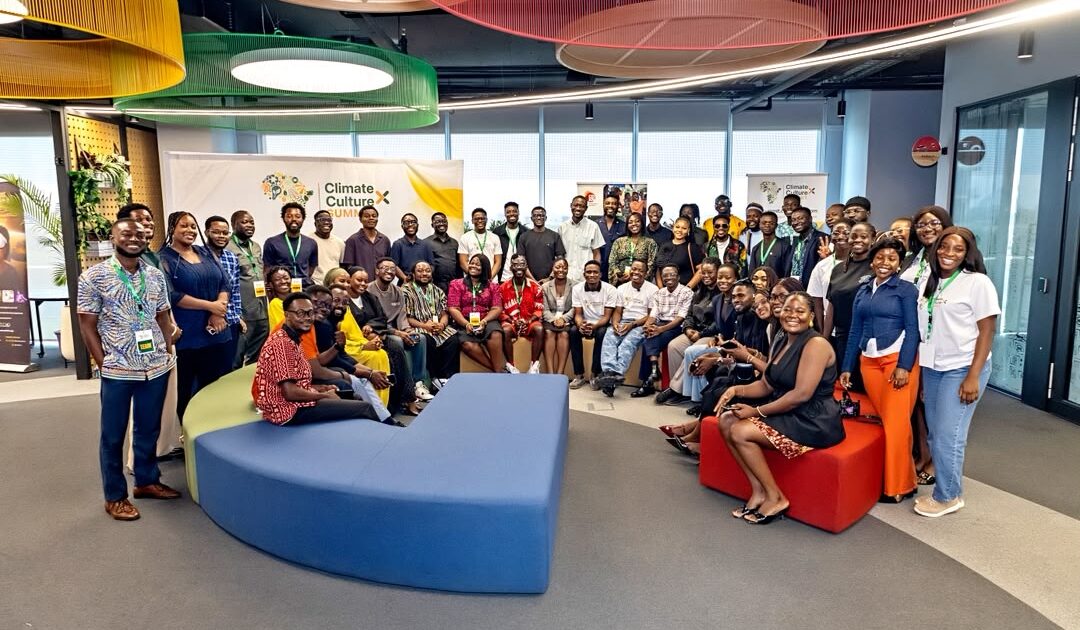
The inaugural Climate x Culture Summit 2026 has brought together climate practitioners, creative industry leaders, researchers, media professionals, financial sector representatives and technology innovators to explore how culture and creativity can contribute to climate action and sustainable development in Africa.
Held on Thursday, October 22, at the Google AI Community Centre in Accra, the summit was organised by CultureJoint in partnership with the Office of the Minister of State in charge of Climate Change and Sustainability at the Office of the President.

Under the theme “Designing Sustainable Creative Experiences for Africa,” the event sought to expand climate conversations beyond traditional environmental and policy spaces, examining how music, the arts, cultural heritage, storytelling and technology can influence public attitudes and encourage more sustainable practices.
The summit opened with remarks from CultureJoint founder and Climate x Culture Summit Lead, Kenneth Awotwe Darko, followed by a keynote address from Ruth Dzokoto, representing the Ministry of Climate Change and Sustainability.

Messages of solidarity were delivered by renowned media executive and culture entrepreneur Ruddy Kwakye and Priscilla Adomaah Nsonwaah of the Centre for CSR, West Africa.

The opening ceremony was followed by a musical performance from Eli Six30, also known as The Village Boy, setting the tone for discussions on the role of creative expression in climate awareness and action.

The first panel, “The Big Picture: Climate × Culture — Why Creativity Matters in the Climate Decade,” examined the potential of culture, indigenous knowledge and creative communication to strengthen public engagement with climate issues.

Moderated by Derick Ashilevi, the panel featured Dr Enoch Bessah, Lead for Climate Change and Ecosystem Services Monitoring at the DIPPER Lab, Kwame Nkrumah University of Science and Technology (KNUST); Valerie Kplorm Nutakor, Programme Coordinator at the Climate and Development Knowledge Network (CDKN); musician and climate activist Okyeame Kwame; and Betty Osei Bonsu Adjei, Director of Operations and Programmes at the Green Africa Youth Organization (GAYO).

Dr Bessah highlighted the value of combining scientific research with indigenous knowledge to help communities respond to changing weather patterns. He also pointed to the Smart Indigenous Weather App (SIWA), developed through the DIPPER Lab’s work, as an example of how traditional forecasting knowledge can inform practical climate solutions.
Okyeame Kwame emphasised the importance of culturally relevant climate communication, highlighting the potential of music, poetry, drumming, dance and festivals to communicate environmental messages and preserve indigenous practices.
Valerie Kplorm Nutakor and Betty Osei Bonsu Adjei also contributed perspectives on climate action and the role of creative-sector stakeholders in advancing sustainability.
The discussion underscored the need to connect scientific evidence with the cultural experiences and knowledge systems that influence how communities understand and respond to environmental change.
The summit’s second panel shifted attention to the environmental footprint of festivals, concerts and other creative experiences.
Titled “Designing Sustainable Creative Experiences: Greening Ghana’s Events and Creative Industry,” the session was moderated by Randy Walker.
Panellists included Joseph Zotoo, Senior Business Development Lead at The Or Foundation; Nii Noi Kofi Omaboe, Engagement Manager at the Ghana National Plastic Action Partnership (GNPAP); culture strategist Peter Ansah; and energy expert Benjamin Nsiah.
The discussion examined the importance of integrating sustainability into event planning, production and resource management, including decisions involving energy, materials, plastics and waste.
The session also highlighted the potential for collaboration between event organisers, environmental organisations, production professionals and other stakeholders to develop more responsible approaches to delivering creative experiences.
With festivals and live entertainment serving as important platforms for cultural expression, employment and business activity, the conversation placed emphasis on pursuing sustainability without undermining the quality and appeal of the experiences audiences value.
Access to finance and the resources required to implement sustainable practices featured prominently in the third panel, “Financing the Green Creative Economy: Financing Climate Innovation in Africa’s Creative Economy.”
Moderated by Daryl Kwawu, the panel brought together Eva Ackuaku, Head of Sustainable Financing at CBG Bank; Robert Klah, Head of Public Relations at Charterhouse; Kofi Adjei, Head of Research at Multimedia Group; and African art curator Nuna Adisenu-Doe.
The session considered the opportunities and challenges involved in financing climate-conscious innovation across Africa’s creative industries.
Discussions focused on the need to connect creative ideas with investment, sustainable financing mechanisms and partnerships that can support businesses seeking to adopt more environmentally responsible practices.
The panel reinforced the importance of treating sustainability not only as an environmental responsibility but also as an opportunity to develop viable businesses, strengthen creative enterprises and support innovation.
Storytelling, artificial intelligence and behaviour change
The fourth panel, “Storytelling for Behaviour Change & AI: From Content to Change,” examined how media, creative content and emerging technologies can influence public understanding and encourage meaningful action.
Moderated by Kwame Dadzie, the session featured playwright Chief Moomen; Samuel Boateng, technology creator at Interesting Digital Trends; and Ekow Quandzie, Head of Sustainability and Public Relations at Global Media Alliance.
The discussion explored the potential of storytelling, digital platforms and artificial intelligence to make climate information more accessible and engaging while encouraging audiences to move beyond awareness towards behavioural change.
It also placed the creative and media sectors within a wider conversation about responsible communication and the opportunities for technology to support climate engagement.
The summit’s musical programme included performances by Eli Six30 and the Restoration Artistes Network, adding a creative dimension to discussions that brought together environmental responsibility, cultural expression and innovation.
Technology and collaboration take centre stage
Technology was also represented through an exhibition by Dobiison, a company that provides immersive infrastructure across industries.
The company showcased its AI-powered immersive digital platforms in the venue’s lobby, demonstrating how digital experiences can make African environments, cultural heritage and enterprise spaces accessible to wider audiences.
The exhibition complemented the summit’s wider examination of how technology can support creative experiences, storytelling and new forms of engagement.
The event brought together partners including the Minister of State for Climate Change and Sustainability at the Office of the President, World Resources Institute (WRI) Africa, CultureJoint Media, the Centre for CSR, West Africa, CDKN, GAYO, 365Mustang, Dobiison, JoyNews and Myjoyonline.com.
A goodwill message was delivered by Eric Lartey, Landscape Restoration Manager for the Ghana Cocoa Belt at WRI, while the Restoration Artistes Network provided a musical performance.
From conversations to sustained action
The summit was convened against the backdrop of growing calls for stronger collaboration between Africa’s creative economy and the climate movement.
For CultureJoint, the initiative reflects an effort to connect its work in arts, culture and creative-economy storytelling with the need to promote environmental responsibility and sustainable development.
The summit’s proposed follow-up initiatives include the development of an Accra Climate Culture Accord and a Sustainable Event Production Guide for Ghana’s creative and events industries.
The summit opened discussions across several areas for further collaboration, including greener event production, climate storytelling, responsible uses of technology and financing for climate-conscious creative businesses.
The next phase will involve building on the discussions and developing practical recommendations through further engagement with relevant stakeholders.
By bringing together people from the creative, environmental, financial, media and technology sectors, the inaugural Climate x Culture Summit sought to demonstrate that climate action extends beyond environmental institutions and policy frameworks.
It is also shaped by the industries, cultural practices, stories and experiences that influence how people live, work, consume and relate to the natural world.
The summit’s longer-term significance will depend on how the conversations translate into sustained partnerships, practical initiatives and measurable progress towards a more sustainable creative economy in Ghana and across Africa.
DISCLAIMER: The Views, Comments, Opinions, Contributions and Statements made by Readers and Contributors on this platform do not necessarily represent the views or policy of Multimedia Group Limited.
DISCLAIMER: The Views, Comments, Opinions, Contributions and Statements made by Readers and Contributors on this platform do not necessarily represent the views or policy of Multimedia Group Limited.
Source link