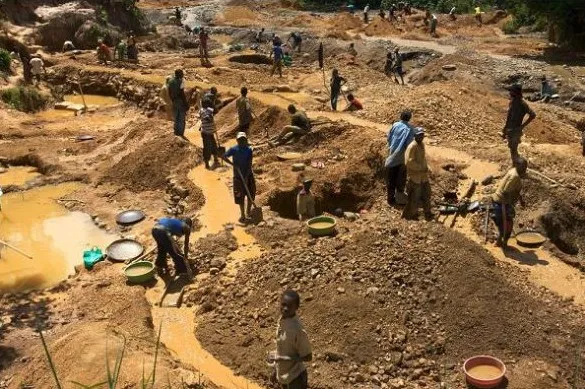
The General Overseer of Action Chapel International, Archbishop Nicholas Duncan-Williams, says the Church has a responsibility to educate Ghanaians about the environmental and social consequences of illegal mining and irresponsible exploitation of the country’s gold resources.
He said prayers alone would not be enough to address the galamsey menace, arguing that religious institutions must also create awareness and help citizens understand the importance of responsible mining and environmental protection.
Speaking on Joy FM’s Super Morning Show on Monday, August 17, 2026, Archbishop Duncan-Williams said education was one of the key interventions the Church could pursue alongside prayer.
Asked what the Church could do beyond praying about the galamsey crisis, he responded:
“Education. That is why I am bringing up this subject.”
He said the Church needed to help its members understand that the fight against illegal mining was not necessarily about preventing people from engaging in mining, but about ensuring that mining was conducted responsibly and in accordance with the law.
“I feel I have a responsibility to educate the church so that we don’t politicise everything and realise that nobody, from my perspective, is telling people you cannot mine, but do it in a responsible way and be accountable,” he said.
According to the Archbishop, the environmental consequences of irresponsible mining should be a major part of the national conversation.
He warned that the financial benefits of mining would mean little if the destruction of the environment left communities without safe water, productive farmland or a healthy environment for future generations.
“After having all this money, you can’t drink the water, you can’t bathe in the water, and the land that produces our food is poisonous; you are putting mercury in people’s bodies,” he said.
He therefore called for greater awareness of the long-term consequences of activities that pollute water bodies and degrade agricultural land.
“Nobody is telling you don’t do this, but do it the right way, and while you are doing it the right way, have the environment in mind,” he added.
‘The people who come to church are the citizens’
Archbishop Duncan-Williams said the Church was particularly well placed to contribute to the campaign because of its reach and influence in communities across the country.
He noted that the people who attend churches are themselves citizens who participate in the economy, politics and public life, making religious institutions an important platform for civic and environmental education.
“The people who come to church are the citizens. They do everything in the country. They run the country,” he said.
He argued that educating church members about the consequences of galamsey could help influence behaviour beyond places of worship and into homes, communities and workplaces.
“If we can educate them, create the awareness and help them to understand that nobody is telling you don’t do this but do it the right way and while you are doing it the right way, have the environment in mind,” he said.
The Archbishop said his advocacy was also informed by what he described as a spiritual dimension to the galamsey crisis, which he believes requires prayer alongside practical interventions.
He maintained, however, that the Church’s responsibility should extend beyond spiritual intervention to helping citizens understand their obligations to society and the environment.
His comments come amid continued national concern over the environmental damage associated with illegal mining, particularly the pollution of water bodies, destruction of farmland and the potential health consequences of exposure to substances such as mercury.
Archbishop Duncan-Williams urged the Church to use its influence to promote responsibility, accountability and environmental stewardship, arguing that protecting Ghana’s natural resources should be seen as a responsibility to present and future generations.
Listen to the interview below.
DISCLAIMER: The Views, Comments, Opinions, Contributions and Statements made by Readers and Contributors on this platform do not necessarily represent the views or policy of Multimedia Group Limited.
DISCLAIMER: The Views, Comments, Opinions, Contributions and Statements made by Readers and Contributors on this platform do not necessarily represent the views or policy of Multimedia Group Limited.
Source link