

By Kizito CUDJOE
The country is pushing to unlock new climate financing through carbon markets, betting on its forest resources and emerging policy frameworks to attract investment – but gaps in technical capacity risk slowing progress.
The Minister of State for Climate Change and Sustainability, Baba Seidu Salifu, said weaknesses in project development, measurement, reporting and verification (MRV) systems, as well as regulatory frameworks, remain key constraints even as government moves to deepen participation in global carbon trading.
This comes as the country positions carbon markets as part of a broader strategy to diversify climate finance sources at a time when access to concessional funding is tightening.
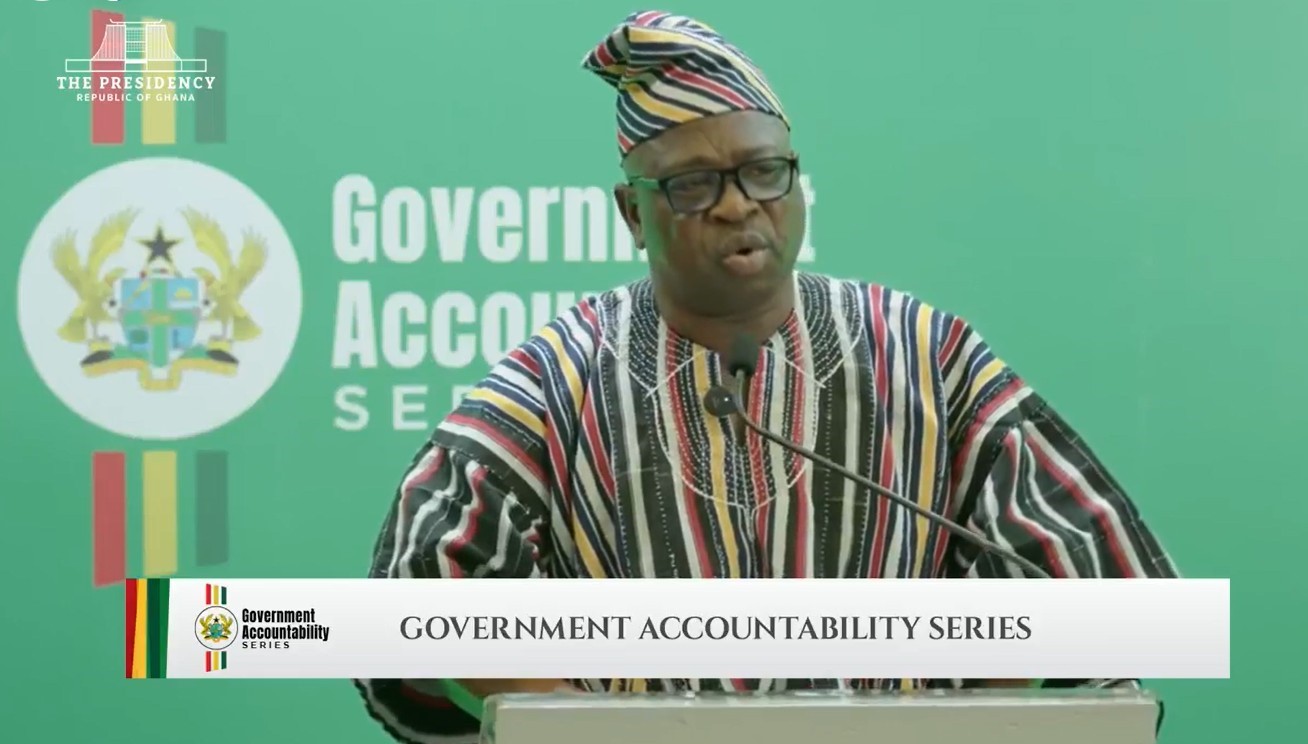
Speaking at the Government Accountability Series in Accra, Mr. Salifu said deepening carbon market participation is among the country’s near-term priorities alongside scaling up renewable energy deployment and climate-resilient infrastructure.
“Our focus has not only been on accessing funding but also building the institutional systems required for Ghana to sustainably attract, manage and deploy climate finance,” he said, pointing at efforts to strengthen accreditation processes, develop project pipelines and advance carbon market readiness.
Ghana has already taken initial steps into the market. In 2023, the country signed an Article 6 agreement with Switzerland under which it is expected to supply internationally transferred mitigation outcomes (ITMOs) through emissions-reduction projects, particularly in areas such as clean cooking and waste management.
The deal, one of the first of its kind in Africa, is seen as a test case for how developing countries can monetise emissions reductions under the United Nations Framework Convention on Climate Change framework.
The country has also been advancing REDD+ programmes aimed at reducing emissions from deforestation and forest degradation, with payments already secured under results-based financing arrangements supported by the World Bank and other partners. These initiatives have begun to generate carbon credits tied to forest conservation, though volumes remain modest relative to potential.
Even so, the minister acknowledged that scaling up such gains will depend on how quickly the country can close technical gaps.
“Limited capacity in carbon markets, particularly in project development, measurement, reporting and verification systems and regulatory frameworks, constrains our ability to fully participate and benefit,” Mr. Salifu said.
Carbon markets are increasingly viewed by developing economies as an alternative source of financing, particularly as traditional funding channels tighten. Mr. Salifu noted that donor fatigue and declining grant-based support are forcing countries to explore new instruments.
“There remains a heavy reliance on loan-based climate finance, which raises concerns around debt sustainability and fiscal pressure,” he said, highlighting the need to shift toward more grant-based and concessional funding.
To strengthen its position, he said, government has initiated partnerships covering climate finance mobilisation, renewable energy, sustainable infrastructure and carbon market development. These include a set of non-binding cooperative agreements aimed at laying the groundwork for future investment flows.
The Office has also facilitated engagements between local financial institutions – including the Ghana Infrastructure Investment Fund (GIIF) and Ghana Investment Promotion Centre (GIPC) – and international partners to build a pipeline of bankable climate projects across sectors such as renewable energy, agriculture and climate-resilient infrastructure.
But it is observed that translating these early-stage frameworks into tradable carbon assets will depend on credibility of the country’s MRV systems and the speed at which regulatory clarity is established, particularly as competition for carbon finance intensifies across Africa.
The minister also pointed to slow and complex accreditation processes for accessing major climate finance mechanisms such as the Green Climate Fund and the Adaptation Fund, which continue delaying access to funding.
“These realities underscore the urgency of reform and innovation,” he said.
Looking ahead, he indicated that government plans to strengthen monitoring and reporting systems, accelerate accreditation to global climate funds and deepen participation in carbon markets as part of its broader economic transformation agenda.
“Climate action is not charity. It is a strategy. It is an investment in Ghana’s future stability, resilience and prosperity,” Mr. Salifu said.
Post Views: 25
Discover more from The Business & Financial Times
Subscribe to get the latest posts sent to your email.