By Adams Everstone SALIFU (Baba), New York, USA
There is a particular kind of pain that comes with watching your people evacuated from a neighboring country — not as refugees fleeing war, but as professionals, workers, and families displaced by mob violence that their host government was slow to condemn.
When Ghana’s government chartered flights to bring its citizens home from South Africa earlier this year, it was not merely a diplomatic incident. It was a reminder of how fragile regional relationships can become when the protection of human dignity is not guaranteed.
Ghana sends its sons and daughters to South Africa. South Africa sends its mining corporations to Ghana.
That asymmetry — one country exporting people, the other exporting capital — is precisely the framework that Ghana now has an opportunity to rethink. The vehicle for that rethinking sits in the Tarkwa district of the Western Region. It is the Tarkwa Mine. It produces more than 400,000 ounces of gold annually and generates revenues that can approach US$1 billion at prevailing gold prices. Its current lease is due to expire in 2027.
The Damang signal was not subtle
In April 2025, the government rejected Gold Fields’ application to renew its lease at the Damang mine — a long-standing operation in Ghana’s mining sector. Operations were subsequently halted and the asset returned to the state pending a competitive process.
In April 2026, after a competitive tender process, the Damang mining lease was awarded to Engineers and Planners Company Limited — a wholly Ghanaian-owned firm. This development signals a growing policy emphasis on indigenous participation in strategic extractive assets.
While it is still early in the transition process, what is already clear is that Ghana has demonstrated a willingness to re-examine long-held assumptions about ownership and control in its mining sector. The key issue now is not symbolism, but execution, sustainability, and governance.
The government has also signalled that future decisions regarding mining leases will not follow automatic renewal patterns. Lands and Natural Resources Minister Emmanuel Armah Kofi Buah has indicated that renewals will be assessed on a more rigorous framework, including local value creation, technology transfer, and community development. That approach is both timely and necessary.
What Tarkwa represents — and what is at stake
Tarkwa is not a marginal asset. It is one of Ghana’s most significant gold-producing operations and a key contributor to national export earnings and fiscal revenues.
The central question Ghana must confront is not simply who operates these assets, but how much value is retained within the economy. How much of the wealth generated from Ghana’s mineral resources translates into domestic industrial growth, local enterprise development, pension fund participation, and long-term national capital formation?
These are the considerations that should guide the Tarkwa decision — not routine renewal assumptions, external lobbying pressure, or short-term diplomatic sensitivities.
Ghana’s Minerals Commission Chief Executive has outlined a clear policy direction emphasizing three pillars: local value creation, technology transfer, and community development. That framework, if applied consistently, has the potential to reshape the mining sector in a more inclusive direction.
The case for indigenous participation
A familiar argument will be made by critics of any non-traditional lease outcome: that regulatory uncertainty undermines investor confidence and that large-scale mining requires established multinational operators.
That argument deserves consideration. Ghana’s mining sector has historically benefited from foreign capital, technical expertise, and global market integration. Stability and predictability remain essential pillars of investment attractiveness.
However, the more relevant question is whether Ghana has developed sufficient indigenous capacity to participate meaningfully in large-scale mining operations alongside global firms.
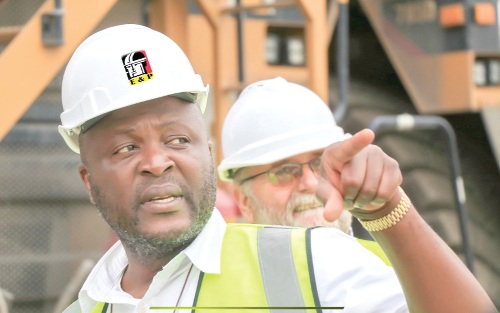
Engineers and Planners Company Limited offers an important case study in that regard. Founded in 1997 by Ibrahim Mahama, the company has grown into one of West Africa’s leading indigenous mining and construction firms, with operations across multiple countries and a workforce numbering in the thousands.
Over the years, the company has expanded its capabilities in contract mining, equipment operations, and infrastructure development, while also accessing significant structured financing from reputable financial institutions. These developments reflect a growing level of institutional maturity within Ghana’s private sector.
The award of the Damang lease to Engineers and Planners marks a notable moment in Ghana’s mining policy evolution. While it is still too early to assess long-term operational outcomes, it does demonstrate that indigenous firms are increasingly being considered for roles previously dominated by multinational companies.
What matters now is ensuring that such transitions are governed transparently, competitively, and in a manner that maintains operational efficiency while expanding local participation.
Africa is watching — and so is the diaspora
Across West Africa, countries are increasingly re-evaluating the structure of their extractive industries, with greater emphasis on local participation, value retention, and state capacity.
Ghana has the opportunity to contribute to that continental shift in a balanced and credible manner — not by excluding foreign investment, but by strengthening the role of capable domestic actors where they exist.
There is also a growing diaspora constituency observing these developments closely. Many Ghanaians abroad who have built successful careers and enterprises are increasingly evaluating the conditions under which they might reinvest in Ghana’s productive sectors. Policy signals matter. Predictability matters. And so does the perception that domestic capability is recognised and supported.
A consistent and transparent application of mining policy principles — particularly in high-value assets such as Tarkwa — will influence how both local and diaspora capital engage with Ghana over the long term.
A final word to policymakers
Ghana’s mining policy is at a critical juncture. The decisions taken regarding major lease renewals will shape perceptions of the country’s investment climate for years to come.
The challenge is not to choose between foreign and local participation in absolute terms. It is to ensure that Ghana extracts maximum long-term value from its natural resources while maintaining regulatory credibility and operational efficiency.
Damang represents an important shift in policy direction. Tarkwa presents a larger test of how that direction is sustained and institutionalised.
The gold beneath Ghanaian soil must continue to generate wealth for Ghana. The question is how that wealth is structured, retained, and reinvested in the country’s long-term development.
That is the conversation Ghana now needs — one grounded not in sentiment, but in strategy, capability, and national interest.
About the Author
Adams Everstone Salifu (Baba) is a Ghanaian-born entrepreneur and the Founder and Chief Operating Officer of Everstone Industries LLC, a New York-based defense supply and strategic procurement firm operating within the United States defense industrial base. Adams serves the U.S. Navy, U.S. Air Force, and the Defense Logistics Agency, specializing in the sourcing and supply of critical components for military platforms. A product of the Ghanaian diaspora who built his enterprise from New York, Adams writes on African economic sovereignty, diaspora investment, and the role of indigenous capital in shaping the continent’s industrial future. He can be reached at [email protected].
Post Views: 49
Discover more from The Business & Financial Times
Subscribe to get the latest posts sent to your email.