
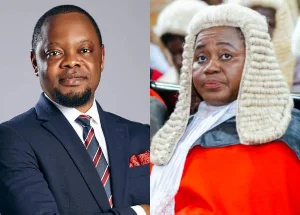
The Attorney-General has opposed an application by former Chief Justice Gertrude Araba Esaaba Sackey Torkornoo seeking a review of the Supreme Court’s ruling of May 28, 2026, in the consolidated constitutional cases relating to proceedings connected to her removal from office.
In an affidavit in opposition filed on June 25, 2026, Assistant State Attorney John Enchill, acting on behalf of the Attorney-General, urged the Supreme Court to dismiss the application, arguing that no exceptional circumstances had been established to justify the exercise of the court’s review jurisdiction.
The application challenges earlier rulings of the apex court in the consolidated suits involving the Centre for Citizenship, Constitutional and Electoral Systems (CenCES) and the Attorney-General, as well as other related proceedings involving the former Chief Justice and other respondents.
The Attorney-General contends that neither the applicant nor her counsel, led by former Abuakwa South MP Samuel Atta Akyea, can rely on alleged ignorance of court proceedings to justify a review.
According to the affidavit, counsel who was representing the applicant in related proceedings failed to properly file a notice of change of solicitors after being expected to take up representation in the consolidated matter, a lapse the Attorney-General says cannot later be relied upon as an exceptional circumstance.
It further argues that the applicant also failed to file her statement of case in one of the constitutional actions within the required time frame, despite the matter having been due for over a year.
“The Applicant may not claim the consequences thereof as an exceptional circumstance,” the affidavit stated in reference to procedural defaults attributed to the defence team.
The Attorney-General further maintains that the applicant and her lawyers had actual knowledge of developments in the case, including the withdrawal of previous counsel, but failed to take steps to regularise representation before the court.
It argues that where a party has actual notice of proceedings, technical complaints about service cannot be used to invalidate the process or reopen matters already determined.
In one of its strongest assertions, the Attorney-General stated that no exceptional circumstances arise where a party to court proceedings “feigns ignorance of court processes and proceedings.”
The affidavit also rejected claims of denial of fair hearing, insisting that the right to be heard is satisfied where a party has notice and the opportunity to participate, even if they choose not to do so.
On issues of service, the Attorney-General maintained that court processes were properly served on counsel Kwabena Adu-Kusi in his professional capacity, adding that service at a lawyer’s chambers constitutes valid service regardless of the lawyer’s physical location.
The Attorney-General therefore urged the Supreme Court to summarily dismiss the application, arguing that it fails to meet the legal threshold for review jurisdiction.
Former Chief Justice Torkornoo is seeking to set aside parts of the Supreme Court’s May 28, 2026 ruling, which she argues resulted in a miscarriage of justice and affected her constitutional right to a fair hearing.
However, the Attorney-General insists the application is unmeritorious and should be dismissed.