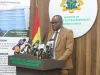


…for ESG excellence, climate resilience and sustainable transformation
By: Frank Adu Anim
Ghana’s sustainability and climate governance conversation received a significant boost following the successful hosting of the 3rd Discovery ESG & Climate Change Summit 2026, a high-level national platform that brought together policymakers, academia, regulators, corporate leaders, sustainability practitioners, development partners, financial institutions, and environmental experts to advance practical discussions on climate resilience, ESG excellence, responsible business conduct, renewable energy investment, environmental governance, and sustainable economic transformation.

Held at the Alisa Hotel in Accra under the compelling national theme: “Resetting the National Agenda for Climate Resilience and ESG Excellence: Confronting Galamsey, Leveraging AI and Sustainable Innovation in Banking and Energy for Economic Growth,” the Summit reaffirmed the growing importance of Environmental, Social and Governance (ESG) integration as a strategic pathway for Ghana’s long-term economic resilience, climate action, responsible governance, and sustainable development.
Organized by Discovery Leadership Consulting in collaboration with the newly launched Chamber of ESG
& Sustainability Leadership Ghana, the Summit served as a major national convergence platform for multisectoral dialogue on the urgent environmental, economic, technological, and governance challenges confronting Ghana today.
The event particularly focused on the devastating impact of illegal mining (galamsey), climate vulnerabilities, renewable energy transition, sustainable finance, AI governance, responsible business leadership, environmental restoration, and ESG compliance systems required to reposition Ghana for a more resilient and sustainable future.
Delivering one of the lead presentations at the Summit, Prof. Kwadwo Owusu of the Center for Climate Change and Sustainability Studies, University of Ghana, addressed participants on the topic: “Ghana’s National Climate Agenda: Policy Leadership, Accountability and Sustainable Growth.”
In his presentation, Prof. Owusu emphasized the need for Ghana to move beyond fragmented environmental interventions toward a coordinated national climate governance framework capable of strengthening policy implementation, institutional accountability, environmental protection, and sustainable growth. He stressed that climate change has become both a national development challenge and an economic risk requiring stronger political commitment, scientific research integration, and institutional collaboration.
According to him, Ghana’s climate future will depend significantly on the country’s ability to mainstream ESG principles into national planning systems, economic development frameworks, natural resource governance, and corporate leadership structures. He further noted that environmental sustainability and economic growth should no longer be viewed as competing interests but as interconnected pillars necessary for long-term national resilience.
Representing the Vice Chancellor of Pentecost University, Prof. Joseph Buerty delivered the Summit’s curtain-raiser presentation on the subject: “Strengthening Sustainable Resource Governance: Climate Risk Disclosure as a Catalyst for ESG Investment in Ghana.”
His presentation highlighted the increasing role climate risk disclosure and sustainability reporting now play within global investment systems and financial markets. He explained that investors across the world are increasingly prioritizing institutions capable of demonstrating strong ESG governance, environmental accountability, risk transparency, and climate resilience.
Prof. Buerty noted that Ghanaian businesses and institutions must begin to reposition themselves strategically through sustainability disclosures, governance reforms, and ESG compliance systems capable of improving investor confidence and attracting sustainable financing opportunities.
He further stressed that climate risk disclosure is no longer simply a compliance requirement but has evolved into a strategic business imperative capable of influencing investment flows, institutional reputation, corporate competitiveness, and long-term economic sustainability.
One of the most anticipated presentations at the Summit came from Ing. Michael Sandow Ali, Head of Mining Department at the Environmental Protection Agency (EPA), who addressed participants on:
“Enhancing Environmental Governance and Regulatory Enforcement through a National Action against Galamsey.”
His presentation tackled the growing environmental destruction caused by illegal mining activities across Ghana, particularly the devastating impact on water bodies, forests, agricultural lands, biodiversity systems, and community livelihoods.
Ing. Michael Sandow Ali underscored the urgent need for stronger national coordination, regulatory enforcement, technology-driven monitoring systems, community participation, and political accountability in confronting galamsey. He explained that illegal mining has evolved beyond an environmental issue into a national security, economic and public health challenge requiring sustained institutional action.
He further emphasized the importance of environmental governance reforms, responsible mining systems, and stronger stakeholder collaboration in protecting Ghana’s natural resources and ensuring long-term ecological sustainability.
The Summit also explored opportunities within the circular economy and sustainable industrial transformation. Addressing participants on the topic: “Circular Economy Models for Inclusive Growth: Turning Waste into Opportunity,” Ing. Dr. Glenn Gyimah, General Manager of the Jospong Green Transition Office, explained how waste management, resource recovery, recycling innovation, and circular economy systems could significantly contribute toward job creation, environmental protection, climate resilience, and economic inclusion.
He highlighted the growing importance of waste-to-energy systems, sustainable waste management infrastructure, recycling investments and green innovation ecosystems in addressing Ghana’s environmental challenges while simultaneously creating economic opportunities for local communities and young entrepreneurs.
According to Ing. Dr. Glenn Gyimah, Ghana’s sustainability future will depend heavily on the country’s ability to transition from linear consumption systems toward regenerative and circular economic models capable of reducing waste, conserving resources, and promoting environmental sustainability.
The Summit also paid significant attention to Ghana’s energy transition and renewable energy financing agenda. The Managing Director of Matrix Gas Ghana, Mr. Ahmed Saeed Lakho delivered a strategic presentation on: “Financing Renewable and Clean Technology: Unlocking Investment for Power-Sector Transformation.”
The presentation examined how Ghana can mobilize sustainable finance and investment into renewable energy systems, clean technology innovation, climate-smart infrastructure, and sustainable power generation. The Managing Director emphasized that financing remains one of the biggest barriers limiting renewable energy expansion across many African economies.
He noted that stronger public-private partnerships, sustainable financing structures, climate investment incentives, and ESG-aligned financial systems will be critical in accelerating Ghana’s transition toward cleaner and more resilient energy systems.
He further stressed that renewable energy investments should not only be viewed from an environmental perspective but also as strategic economic investments capable of driving industrial growth, job creation, technological advancement, energy security, and national competitiveness.
Standing in for the Minister of Lands and Natural Resources, Dr. Gordon Sarfo-Adu delivered the Summit’s keynote presentation on: “Restoration and Regeneration: Rehabilitating Degraded Mining areas for Climate Resilience.”
His address focused on Ghana’s growing environmental restoration agenda and the urgent need to reclaim degraded lands destroyed by illegal mining activities. He outlined the Ministry’s commitment toward land reclamation, afforestation initiatives, environmental restoration programmes, and sustainable mining governance systems aimed at rebuilding damaged ecosystems and restoring community livelihoods.
Dr. Sarfo-Adu noted that restoring degraded lands is not only an environmental responsibility but also a national development priority linked to food security, water sustainability, climate resilience, biodiversity protection, and long-term economic recovery.
One of the most historic moments of the Summit was the official launch of the: CHAMBER OF ESG & SUSTAINABILITY LEADERSHIP GHANA. The Chamber was launched as a national platform dedicated to promoting ESG excellence, sustainability leadership, climate action, responsible business conduct, policy advocacy, ESG training, certification, stakeholder engagement, and sustainable economic transformation across Ghana and the ECOWAS region.
The launch ceremony was led by Rev. Lawyer Daniel Koomson, Head of Legal Department, Pentecost University, who formally unveiled the Chamber and its governance framework before a distinguished gathering of policymakers, regulators, corporate leaders, academia, and development institutions.
The Chamber’s vision is: “To be the leading national platform championing ESG and Sustainability excellence for economic resilience, responsible business and sustainable development in Ghana and West Africa.” Its mission focuses on advancing ESG practices through collaboration, policy advocacy, standards development, education, capacity building, sustainability leadership, and institutional transformation.
The Chamber is expected to play a critical role in Promoting ESG best practices and standards across Ghana’s industries; advocating for sustainable policies and regulatory reforms, supporting ESG education, training, and certification, strengthening collaboration among stakeholders and positioning Ghana as a regional ESG leadership hub within ECOWAS.
The Summit also announced the upcoming CHAMBER OF ESG & CLIMATE RESILIENCE
AWARDS scheduled for November this year. The Awards initiative seeks to recognize organizations, institutions, and individuals demonstrating exceptional leadership, innovation, accountability, and impact within ESG and climate resilience practices.
According to the Chamber of ESG’s objectives, the Awards have been designed to recognize excellence in ESG leadership, innovation, and impact, promote transparency, accountability, and responsible business conduct, encourage peer learning and benchmarking across sectors, inspire national commitment to sustainability and climate resilience and showcase Ghanaian ESG champions locally and globally.
The award categories announced include: Social Impact & Human Development Award covering: Driving Social Change; Social Impact Business Leader and Social Impact Business. Economic Stewardship & Development Award covering: Data-Driven Business Excellence; Sustainability in AI Excellence and Product Development and Innovation. Organizational Governance & Leadership Award covering: Diversity, Equity & Inclusion Initiative; Responsible Business and ESG Innovation (SMEs). Environmental Stewardship & Sustainability Award covering: Energy & Waste Management; Sustainability Trailblazer; Energy Efficiency Initiative; and Sustainable Procurement & Logistics.
The Chamber of ESG emphasized that the Awards initiative is intended to encourage responsible leadership, institutional accountability, sustainability innovation, and ESG integration across both public and private sector institutions in Ghana.
The success of the Discovery ESG & Climate Change Summit 2026 was made possible through the strong support and sponsorship received from several institutions and strategic partners. Special recognition was given to: Matrix Gas Ghana as title Sponsor; Ghana Water Company Limited; Electricity Company of Ghana (ECG); Environmental Protection Agency (EPA); Center for Climate Change and Sustainability Studies, University of Ghana; Jospong Green Transition Office; ADH Investment; Forestry Commission and Ministry of Lands and Natural Resources.
The summit also acknowledged the immense contribution of media partners including: Business & Financial Times; UTV, GTV, Net2 TV and several other media platforms supporting ESG advocacy and climate awareness in Ghana.
Speaking at the close of the Summit, the Host and Lead Convener, Frank Adu Anim, reiterated the urgent need for stronger ESG integration across Ghana’s public and private sectors. He noted that the future resilience and competitiveness of Ghana’s economy will increasingly depend on how effectively institutions integrate sustainability into governance systems, investment decisions, operational strategies, and national development planning.
He further called on Corporate Ghana, policymakers, financial institutions, regulators, academia, development partners, and civil society organizations to collectively champion responsible business practices, climate action, sustainable innovation, and ESG accountability.
The Discovery ESG & Climate Change Summit 2026 ultimately succeeded in positioning ESG not merely as a compliance requirement, but as a strategic national development framework capable of driving sustainable economic growth, climate resilience, responsible governance, environmental protection, and inclusive transformation.
As Ghana continues to confront climate vulnerabilities, environmental degradation, energy transition challenges, and evolving global sustainability expectations, the Summit has clearly established itself as one of the country’s leading platforms shaping the future of ESG leadership and climate resilience.
The author is the CEO, CHAMBER OF ESG & SUSTAINABILITY GHANA)
Email: [email protected] Tel: +233-0241824033/+233-0501324604
Post Views: 1
Discover more from The Business & Financial Times
Subscribe to get the latest posts sent to your email.