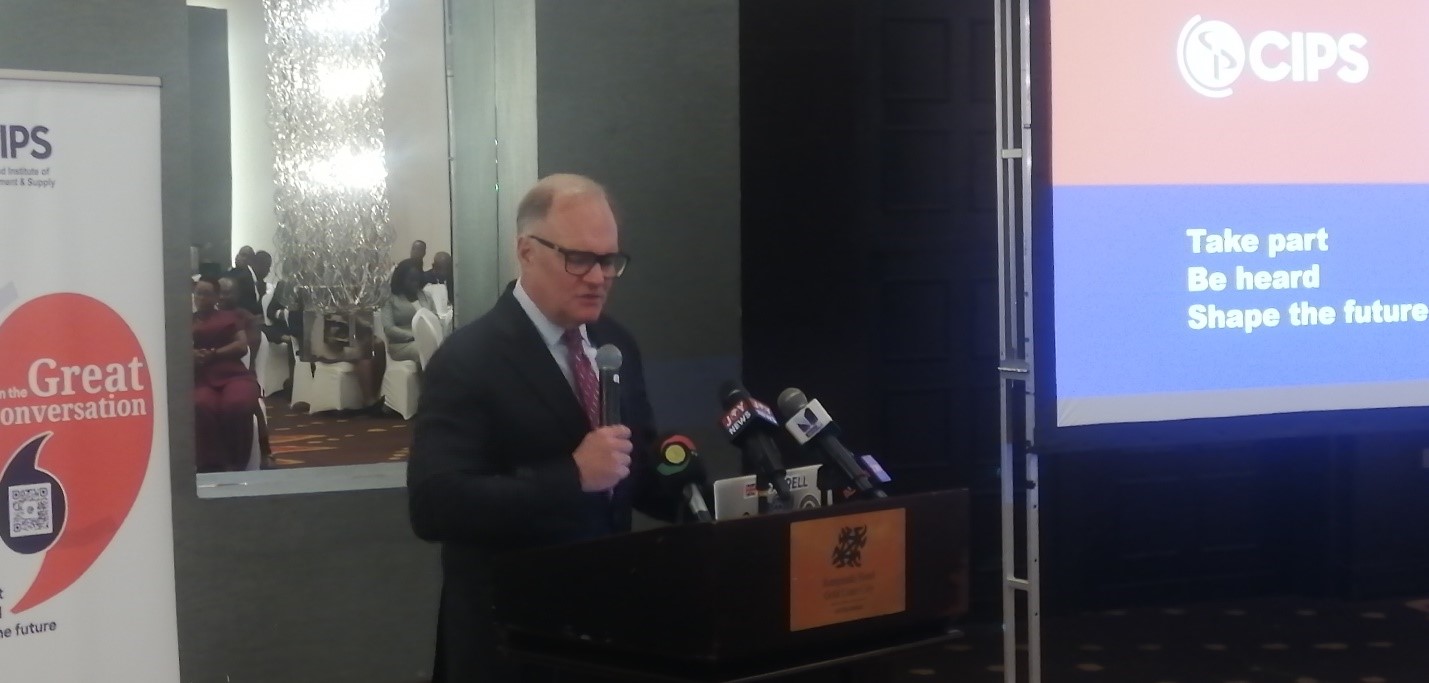
Corruption in procurement is weakening trust, discouraging investment and undermining economic growth across many African countries, Global Chief Executive Officer of the Chartered Institute of Procurement and Supply (CIPS), Mr. Benedict Farrell, has said.
In a post-event interview with the B&FT at “Great Conversation” leadership engagement session held in Accra, Mr. Farrell said countries must strengthen ethical standards, transparency and accountability within procurement systems if they want to attract investment and build stronger economies.
“At the heart of everything we do must be trust and ethical best practice. In many African countries, governments tell me corruption in procurement remains a major concern and they want help addressing it. Corruption contaminates nations, weakens investor confidence and slows economic growth. The real path to national prosperity is to root it out,” he said.

The engagement session formed part of CIPS’ global “Great Conversation” initiative, which brings together policymakers, procurement professionals, institutions and business leaders to discuss the future of procurement and supply chains.
The Accra meeting focused on issues including value-for-money, public accountability, procurement reforms, infrastructure delivery, supply chain resilience and professional development.
Mr. Farrell said procurement professionals around the world were operating under increasing pressure due to geopolitical tensions, tariff uncertainties, global conflicts and supply chain disruptions that emerged strongly after the COVID-19 pandemic.
Additionally, he said procurement was no longer simply an administrative function but had become central to governance, economic growth and institutional efficiency. He further noted that while its professionals were often blamed for corruption, the bigger problem in many countries was external influence over the award of contracts and the acquisition of goods and services.
Mr. Farrell said stronger ethical standards, supported by technology and artificial intelligence, could help improve transparency and accountability within procurement systems, adding that countries also needed to invest more in training and professionalising procurement practice to improve efficiency and value-for-money within the public sector.
“There is a massive opportunity to drive procurement best practice and economic growth at the same time. We need to strengthen professionalism, improve accountability and make sure procurement systems deliver real value to citizens,” he said.
He further stressed the importance of clear governance structures within procurement institutions, saying accountability often weakened when responsibilities were not properly defined.
He also indicated that discussions with government officials would focus on public procurement strategies, inward investment opportunities and ways of strengthening procurement capacity across the country.
Country Director of Harley Reed Ghana, Madam Edith Uyovbukerhi, said the company’s partnership with CIPS was helping to strengthen procurement and supply chain professionalism across Africa. She added it operated in several African countries and delivered CIPS-accredited training programmes, advisory services and competency development initiatives.
In a welcome address delivered on behalf of Ghana Branch Chair for CIPS, Professor Innocent Senyo Kwesi Acquah said procurement professionals continued to play a critical role in public sector transformation, infrastructure delivery and resilient supply chain development.
He noted that growing technological disruptions, climate pressures and geopolitical changes were making ethical and sustainable procurement practices even more important.
General Manager for CIPS West Africa, Stella Addo, also described procurement as a strategic function that now sits at the centre of governance, infrastructure development and national resilience.
She said the profession was evolving rapidly and required a new generation of commercially minded, technologically aware and ethically grounded professionals. According to her, procurement systems would remain critical in helping governments protect public resources, improve accountability and manage growing economic and operational risks.
Post Views: 8
Discover more from The Business & Financial Times
Subscribe to get the latest posts sent to your email.