
…as economy grapples with China deficit
By Sandra Agyeiwaa OTOO
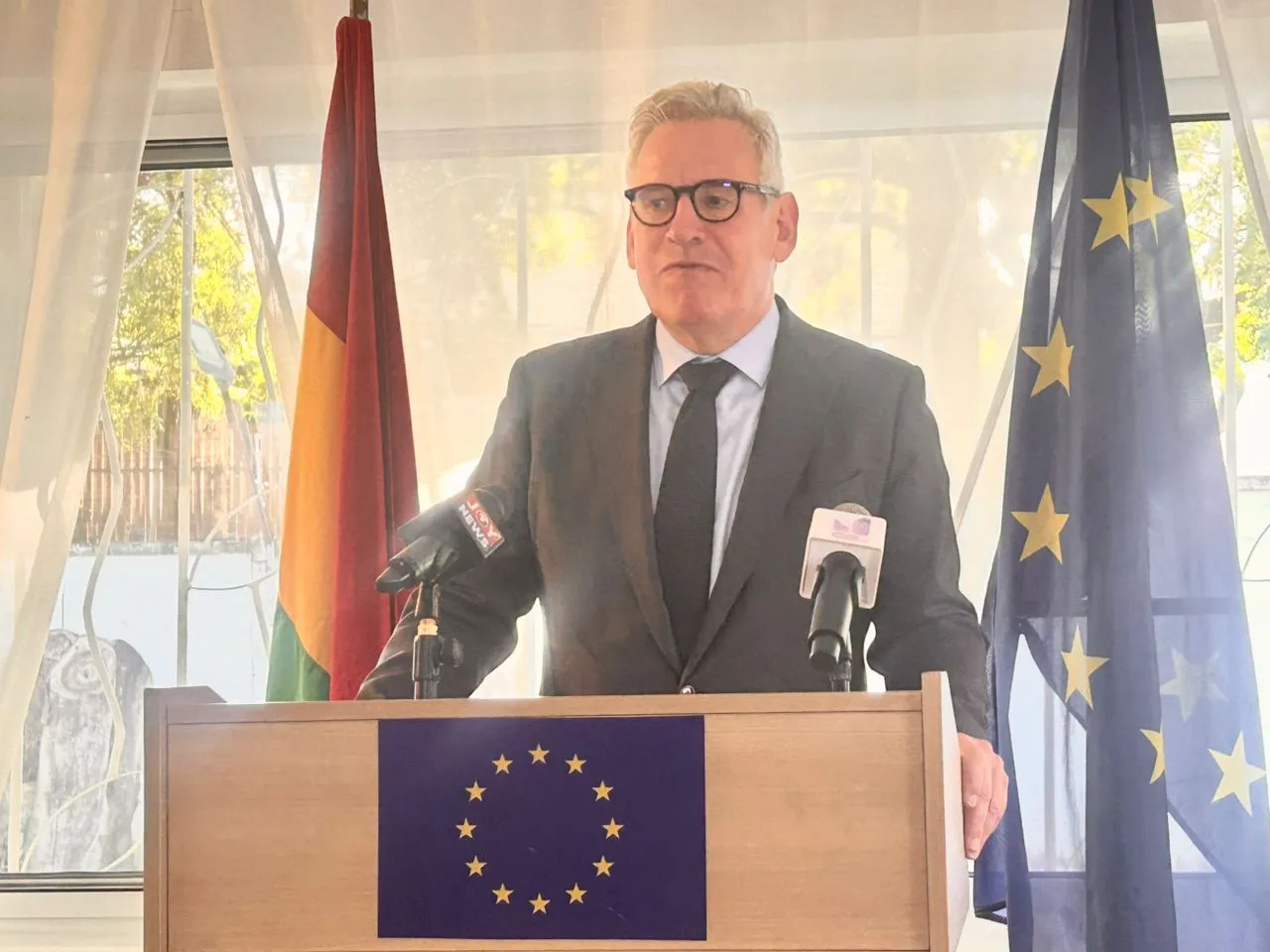
The European Union (EU) Ambassador to Ghana, Rune Skinnebach, has underscored the stark contrast between Ghana’s trade relations with the EU and China – pointing to a significant imbalance with China while describing EU-Ghana trade as largely even.
Speaking at a media engagement to launch Europe Month in Accra, Mr. Skinnebach said Ghana currently exports very little to China but imports extensively; a situation he believes puts pressure on the local economy.
According to him, the country’s trade model with China is contributing to job losses in domestic industries, rising foreign debt, lower GDP growth, currency depreciation and increased dependence on foreign economies.
“The trade balance with China is incredibly skewed because Ghana is exporting virtually nothing to China and is importing everything from China. With the EU, it is almost balancing. So we are importing almost as much from Ghana as we are exporting to Ghana and that’s a huge and significant difference that affects the Ghanaian economy,” he pointed out.
He contrasted this with Ghana’s trade arrangement with the EU, which he said is supported by the Economic Partnership Agreement (EPA). The agreement allows duty-free and quota-free trade, helping to maintain a more balanced exchange of goods between both sides. According to him, this framework ensures that the country’s exports to the EU remain competitive and consistent.
What the figures say?
The Ghana-EU trade and investment partnership is anchored in the EPA, which ensures stability, predictability and legal certainty for economic operators.
Since its implementation in 2016, Ghana’s total trade with the EU has increased by 40 percent, reaching €6billion in 2023 while EU FDI stock in Ghana has grown by 64 percent to approximately €4billion.
Earlier years saw Ghana importing significantly more from the EU than it exported, driven largely by demand for machinery, vehicles, pharmaceuticals and industrial inputs. However, export earnings from key commodities such as cocoa, gold and oil-related products have improved periodically, helping to moderate the overall deficit.
Recent data indicate a gradual move toward more balanced trade flows, particularly as Ghana’s export revenues strengthen in line with global commodity price movements.
By 2025, available estimates suggest EU exports to Ghana stood at about US$3.74billion while imports from Ghana reached approximately US$4.09billion – pointing to a near-balanced position in goods trade, depending on classification coverage.
Meanwhile, Ghana’s trade with China over the past five years has been heavily skewed in China’s favour, reflecting a persistent structural trade deficit. The imbalance is driven by Ghana’s relatively low export volumes to China compared with its significantly higher import bill, which is dominated by machinery, electronics, vehicles, iron and steel and manufactured goods.
On the export side, Ghana’s shipments to China are concentrated in a narrow range of primary commodities including mineral fuels, ores, gold and cocoa, which remain highly sensitive to global price fluctuations.
Recent trade data underscore the scale of this imbalance. In 2023, Ghana exported about US$1.38billion worth of goods to China while imports from China stood at roughly US$3.07billion, widening the deficit to around US$1.7billion.
The gap remained substantial into 2024, with bilateral trade expanding further but still weighted heavily toward Chinese exports to Ghana. Overall, the trend over the five-year period points to a consistently widening trade deficit – reinforcing concerns about import dependence and limited export diversification, according to tradingeconomics.com
EU as a reliable partner
Ambassador Skinnebach further positioned the EU as Ghana’s most reliable long-term partner, particularly in development and trade cooperation. While acknowledging that the EU may not always move as quickly as other global players, he stressed that its engagement is built on stability, transparency and mutual respect.
“Ghana is certainly our preferred partner. We may not be the most agile or fastest among the partners and offers available, but we are the most reliable,” he stated.
He added that the European Union remains committed to partnerships that support regional stability and sustainable development.
He added that the bloc prioritises responsible engagement by promoting lawful and sustainable economic practices, including in sectors such as fisheries and mining, while maintaining predictable development cooperation and trade relations with partner countries.
According to him, this track record reflects the EU’s reliability as a partner. He noted that the EU intends to build on this foundation by expanding trade, deepening cooperation and identifying shared priorities with Ghana – including tackling transnational crime, climate change and other global challenges.
On Ghana’s economic performance, the ambassador commended ongoing reforms and noted that recent indicators show progress, with targets under international support programmes being met faster than expected.
However, he cautioned that the current growth is heavily dependent on external factors, particularly high gold prices and debt restructuring efforts.
“The economy is doing great but it is based on a very fragile pillar, gold prices and possibly even the use of significant gold reserves to maintain exchange rates. It is a development we are following closely and it is positively surprising everyone, including the IMF, with targets under the extended credit facility being reached faster than anticipated,” he mentioned.
“However, we must ensure this remains sustainable, as the success is not only based on reforms but also on gold prices and debt restructuring… which cannot be relied on repeatedly,” he cautioned.
He also highlighted challenges in key sectors such as cocoa and petroleum, warning that these pressures could affect long-term stability if not addressed. In addition, he pointed to inefficiencies in domestic revenue mobilisation, calling for improved and more predictable tax collection systems across the country.
The ambassador explained that the conference was convened to mark 50 years of the European Union’s physical presence in Ghana, a milestone being commemorated with a series of activities.
These include a major reception scheduled for next Thursday, as well as a symbolic seven-day bike-ride from Tamale to Accra involving EU ambassadors and cycling teams.
He added that sporting and engagement events are planned as part of the celebration. Reflecting on the partnership, he noted that the EU has maintained a strong presence in Ghana over the decades and remains the country’s largest development and security partner, its biggest investor and a leading export market.
Post Views: 1
Discover more from The Business & Financial Times
Subscribe to get the latest posts sent to your email.