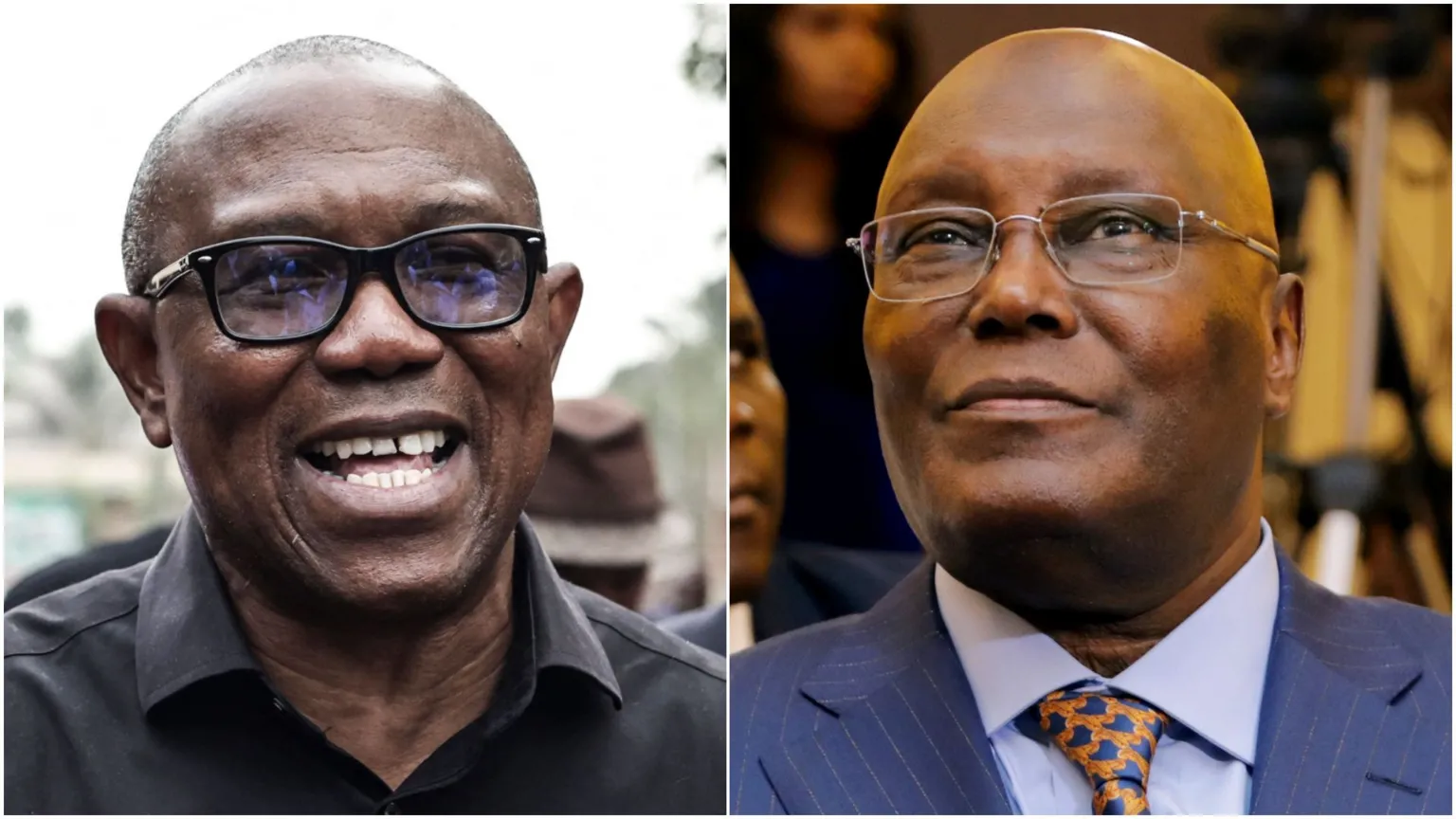
The Nigerian opposition’s hopes of mounting a strong challenge to President Bola Tinubu at elections next January have been shaken after two leading figures – Peter Obi and Rabiu Kwankwaso – quit a newly formed coalition, citing legal wrangles and internal divisions.
Obi and Kwankwaso, who placed third and fourth in the 2023 presidential election, had joined forces with the main opposition leader and former vice president, Atiku Abubakar and several influential politicians under the African Democratic Congress-led alliance.
The grouping was billed as the most ambitious opposition realignment in Nigeria in more than a decade.
The alliance agreed on April 25 to back a single presidential candidate, aiming to deny Tinubu the advantage of a divided opposition field.
But in a statement seen by Reuters late on Monday, Obi, a southerner who energised young voters in 2023, said he had left over “endless court cases, internal battles, suspicion, and division” within the ADC. Kwankwaso, an influential northern politician, also exited, with both men joining another opposition grouping, the Nigeria Democratic Congress.
“Under the present circumstances that we find ourselves in, the Ibadan Declaration, which canvassed a single presidential candidate from these willing participating parties, will have to be reviewed,” ADC spokesperson Bolaji Abdullahi said.
The departures underscore the difficulty of forging opposition unity in Africa’s most populous nation, where religious and ethnic considerations loom large in politics.
The opposition’s agreement to field a single candidate “is now on life support,” said Cheta Nwanze, a partner at Lagos-based SBM Intelligence.
“The feared scenario has materialised: a fractured opposition that will cannibalise its own votes,” he said.
Tinubu won the last presidential election with about 35% of the vote. Opposition candidates collectively secured roughly 60%, a split the ADC-led alliance had hoped to overcome.
Even before the split, analysts said rival ambitions threatened the coalition’s cohesion. Atiku, a perennial northern contender, and Obi command loyal but competing constituencies that have proved hard to reconcile on a single ticket.
Presidency spokesperson Bayo Onanuga was scathing of Obi’s departure from the opposition alliance.
“The political nomad is on the move again. Ignore all those puerile reasons he gave in these illogical musings, a self-serving letter to his mob. Peter Obi is a politician made of jelly, an opportunistic fellow. He can’t fight Atiku or Amaechi for the ADC ticket.
He pursues the easy road, which will only lead him to doom, like in 2023,” he wrote on X, referring to Abubakar and former transport minister Rotimi Amaechi, another leading figure in the ADC.
The opposition’s problems give Tinubu a familiar edge. The veteran political dealmaker enjoys the advantages of incumbency and a deeply entrenched party machine.
Nigeria has seen an incumbent president lose only once, in 2015, when Goodluck Jonathan conceded defeat to the late Muhammadu Buhari following an opposition merger.
DISCLAIMER: The Views, Comments, Opinions, Contributions and Statements made by Readers and Contributors on this platform do not necessarily represent the views or policy of Multimedia Group Limited.
DISCLAIMER: The Views, Comments, Opinions, Contributions and Statements made by Readers and Contributors on this platform do not necessarily represent the views or policy of Multimedia Group Limited.
Source link