By Nana Karikari, Senior Global Affairs Correspondent
Ugandan authorities have launched a murder investigation after a former Rwandan army sergeant major, who became an outspoken critic of President Paul Kagame, was found beheaded in neighbouring Uganda.
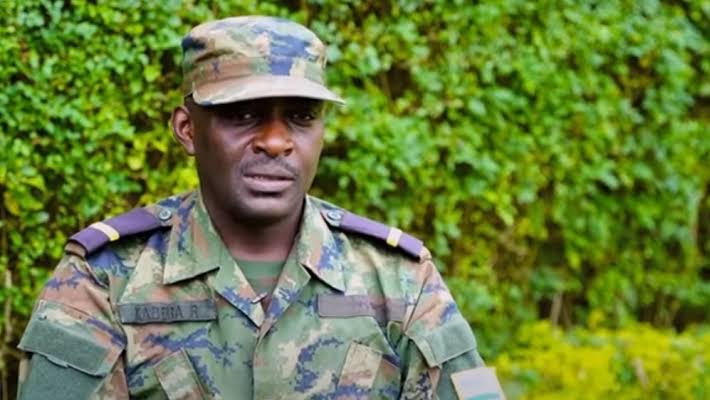
Local residents and family members identified the decapitated body as that of 50-year-old Sgt. Maj. Robert Kabera after the remains were discovered on Saturday in a bush in the Kamengo area of Mpigi district, roughly 45 kilometers outside the capital, Kampala. Police publicly announced the discovery on Monday.
Superintendent of Police Lydia Tumushabe confirmed the discovery to reporters, noting that detectives have not yet established a clear motive. “The head, up to now, is still missing,” Tumushabe said.
National police spokesperson Rusoke Kituuma addressed Kabera’s military background during a press briefing, emphasizing that investigators are examining all angles. “There are those who allege that he was previously a serving soldier,” Kituuma told reporters. “Whatever. All that we shall establish in the course of investigations.”
From Military Musician to Online Dissident
Before fleeing Rwanda, Kabera was a well-known public figure, gaining prominence as a musician with the Army Jazz Band, according to a 2008 profile published by the local New Times newspaper.
His life took a dramatic turn in late 2020 when he fled across the border into Uganda. Shortly after his departure, the Rwandan military issued a public statement in November 2020 announcing investigations into allegations that Kabera had unlawful sexual contact with a family member, adding that “efforts to trace the fugitive are underway.”
Kabera denied the allegations, telling members of the Ugandan press that he escaped his homeland to avoid what he described as political persecution. Upon securing asylum in Uganda, he established a substantial online presence.
His YouTube channel, Major Robert TV, amassed more than 144,000 subscribers and featured over 800 videos, many containing sharp critiques of the Kagame administration. Observers noted that his presentations were widely seen by some Rwandans as hurtful to the image of Rwanda’s government.
Family Grief and Rising Fear
Family members stated that Kabera had traveled to inspect a local construction site roughly 45 kilometers outside Kampala shortly before his death. His murder has left his surviving relatives living in acute fear.
His widow, Jeanne d’Arc Rwigema Uwizeye, expressed her anguish and vulnerability in a written message to BBC Great Lakes. “It is scary. I feel crazy, the children and I don’t have security,” she said.
The Rwandan government has issued no public comment regarding Kabera’s death. Officials in Kigali have consistently denied allegations of targeting political opponents abroad or at home.
Echoes of Transnational Repression
The circumstances surrounding Kabera’s murder have intensified concerns among Rwandan dissidents living in exile. The opposition group Rwanda National Congress called for a thorough investigation and for those responsible to be brought to justice.
In a statement on X, the RNC expressed the mounting dread among dissidents. “Today, his family is grieving, his voice is gone, and Rwandans in exile are confronting a terrifying question: where can we be safe?” the group posted.
The case brings renewed scrutiny to previous high-profile incidents involving Rwandan exiles. In 2014, Patrick Karegeya, a former Rwandan intelligence chief who helped set up the RNC, was found strangled in a hotel room in Johannesburg, South Africa. Karegeya had fallen out with President Kagame and was arrested twice, serving an 18-month prison sentence for insubordination and desertion before fleeing to South Africa in 2007, where he became a vocal critic of the government. South African authorities subsequently issued arrest warrants for two Rwandan nationals in 2019 in connection with Karegeya’s murder.
Following Karegeya’s death in 2014, President Kagame delivered public remarks widely seen as a warning to political adversaries. “Any person alive who may be plotting against Rwanda, whoever they are, will pay the price. Whoever it is, it is a matter of time,” he said.
A Legacy of Rebuilding and Controversy
President Kagame has led Rwanda as its de facto leader or president since the end of the 1994 genocide. Supporters credit his administration with transforming the nation from chaos after the genocide, rebuilding infrastructure, fostering economic growth, and maintaining social stability following catastrophic national trauma.
However, human rights organizations and foreign governments maintain persistent criticisms of Kagame’s political record. Rights groups cite widespread abuses, the suppression of domestic political opposition, and the muzzling of independent media outlets. Several former military officers who broke ranks with the government have fled into exile, with some dying in prison or alleging that their lives were endangered. Kagame and his administration continue to deny all accusations of authoritarian overreach and unlawful targeting of critics.
Ugandan detectives continue to sweep the Kamengo bushland for critical evidence and the missing remains as human rights organizations monitor the probe. The investigation now faces international pressure to deliver answers while regional leaders maintain an official silence on the escalating fears among the exile community.