
By Kizito CUDJOE
A climate finance expert has called on government to establish a dedicated national fund to address the country’s recurring floods, mounting waste management challenges and other climate-related risks, arguing that existing financing mechanisms remain fragmented and inadequate.
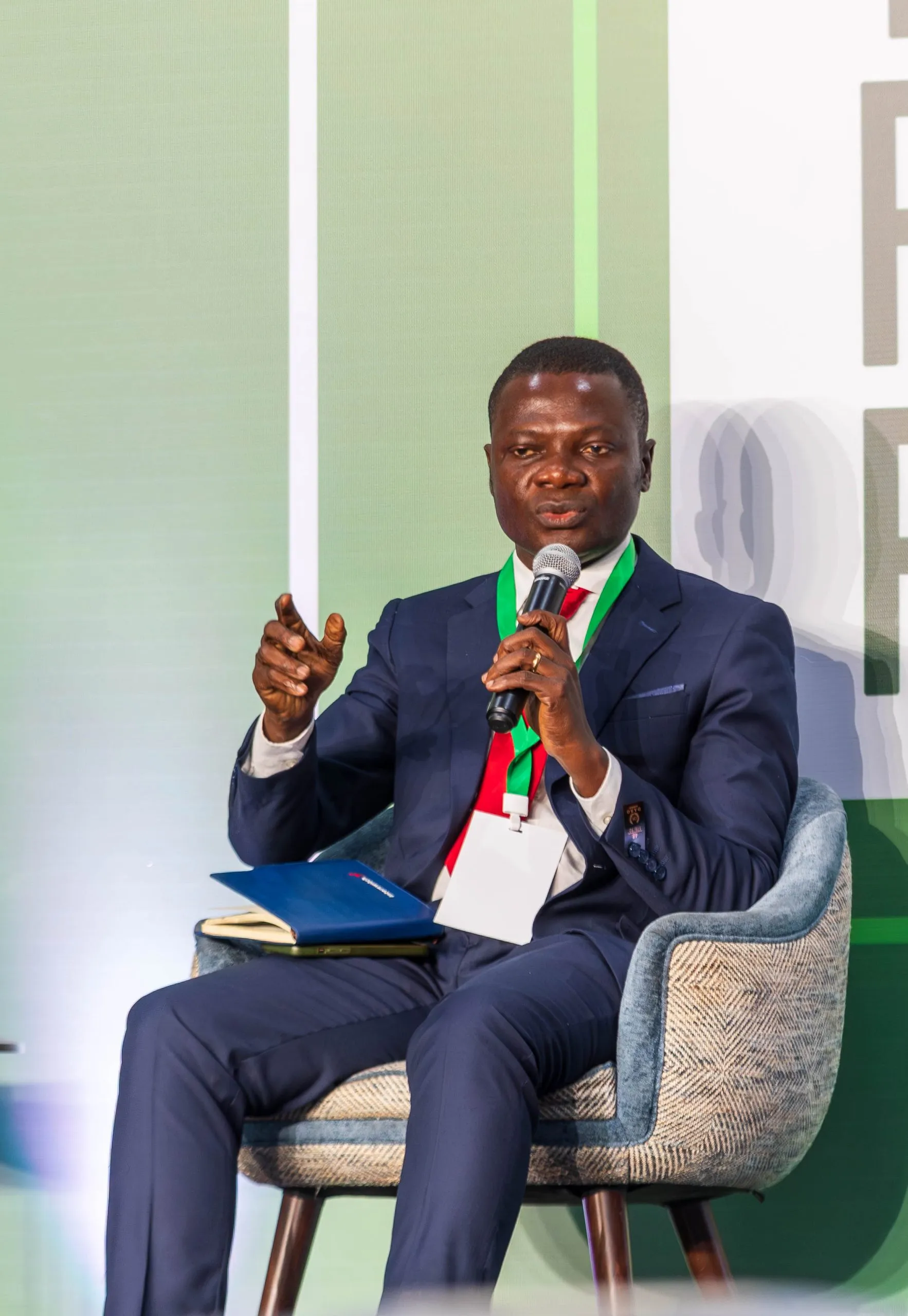
The General Manager for Green Transition at the Jospong Group, Dr. Glenn Kwabena Gyimah, proposed the creation of a National Climate Resilience and Climate Economy Infrastructure Facility by June 2027 to mobilise at least US$500million in blended finance for critical climate and environmental infrastructure.
The proposed facility, he said, should be spearheaded by the Ministry of Works and Housing, Ministry of Local Government, Chieftaincy and Religious Affairs, Ministry of Environment, Science and Technology and the National Development Planning Commission (NDPC).
Speaking during a plenary session on ‘Financing sustainability: Unlocking green investments and climate finance’ at the Environmental Sustainability Summit (ESS) in Accra, Dr. Gyimah said the fund should focus on flood control systems, waste management infrastructure, recycling and composting projects, urban resilience initiatives and waste-to-energy developments.
Despite years of investment and multiple interventions, he noted that the country lacks a dedicated financing vehicle specifically ringfenced to address these interconnected challenges.
“We have various interventions and funding streams, but there is no dedicated source of financing focused solely on flood control, waste management, recycling, composting, urban resilience and waste-to-energy infrastructure,” he said.
Dr. Gyimah argued that significant climate finance resources remain underutilised globally and could be tapped through a well-structured national facility capable of attracting concessional funding, development finance and private-sector capital.
“There are substantial funds available within the climate finance space. If we establish a dedicated institution – whether independent or operating under the Ministry of Climate Change and Sustainability – to manage this facility, Ghana can position itself to leverage those resources and accelerate investment in climate-resilient infrastructure,” he said.
His appeal comes as the country continues to grapple with annual flooding in major urban centres, including the capital city of Accra, while authorities face growing pressure to improve waste collection, recycling and environmental sanitation systems amid increasing climate-related vulnerabilities.
This year’s Environmental Sustainability Summit, an annual event organised by the Business and Financial Times (B&FT), was held under the theme ‘Inspired by Nature. For Climate. For Our Future’.
During the plenary session, other discussants also highlighted weaknesses in the country’s flood management strategy, among other issues, which they cautioned are leaving communities increasingly vulnerable despite years of public investment.
Climate governance and land-use planning expert at the University of Energy and Natural Resources (UENR), Dr. Michael Addaney, asserted that many interventions remain heavily focused on infrastructure procurement and pay insufficient attention to community resilience.
“Climate change affects everyone, but it affects people differently depending on their access to resources, awareness and preparedness,” he said.
According to him, many flood mitigation projects are designed through top-down approaches that often fail to reflect the experiences and needs of communities most exposed to climate risks.
He argued that local populations should play a greater role in shaping adaptation strategies, saying solutions are more likely to succeed when they emerge from the realities of affected communities rather than being imposed from above.
Post Views: 1
Discover more from The Business & Financial Times
Subscribe to get the latest posts sent to your email.