
By Hannah Dadzie
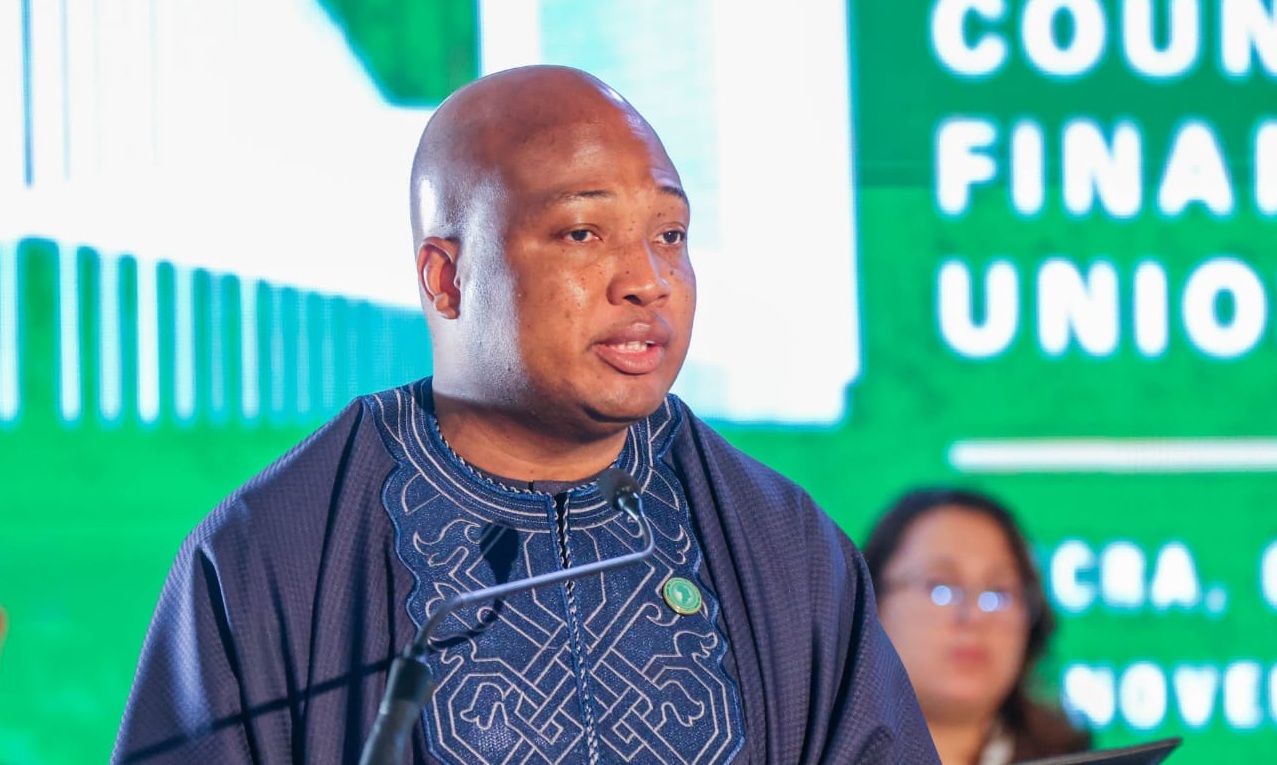
Minister of Foreign Affairs, Samuel Okudzeto Ablakwa, has called on African Union (AU) Member States to take urgent steps towards financial independence, warning that the continent cannot continue to depend on external partners to finance its development priorities.
He said Africa must mobilise its own resources, implement agreed funding mechanisms and strengthen its financial institutions to support the continent’s ambitions.
Speaking at the opening of the 27th Extraordinary Session of the AU Executive Council on Financing the Union in Accra on Friday, November 13, Mr Ablakwa said Africa’s financial independence was essential to achieving its long-term development goals.
He noted that although Member States are projected to finance nearly 99 per cent of the AU’s operational budget in 2027, they are expected to contribute only about four per cent of the programme budget and 12 per cent of the peace and security budget.
The situation, he said, exposes the Africa’s continued dependence on external financing to implement programmes that directly affect its people.
“We pay for the lights, but we ask others to pay for the work,” he said, describing the funding imbalance as a challenge to Africa’s ownership of its development agenda.
Mr Ablakwa also expressed concern that only 18 of the AU’s 55 Member States had implemented the 0.2 per cent levy on eligible imports that was agreed upon in 2016 as a predictable source of funding for the Union.
He urged countries yet to implement the levy to act without further delay, adding that Ghana would strengthen its domestic implementation efforts and report progress to the Council.
The Minister called for the adoption of an integrated approach to AU financing and institutional reforms, arguing that increased funding must be accompanied by more efficient resource allocation.
He proposed measures including a unified programme-based budget, a medium-term expenditure framework and the principle of one programme per budget line to address duplication and improve accountability.
On peace and security, Mr Ablakwa said African countries must prioritise conflict prevention rather than wait for crises to escalate before intervening.
He advocated stronger early-warning systems, preventive diplomacy and mediation, while supporting an increase in the AU Peace Fund’s endowment target from $400 million.
The Minister further called for greater use of African financial resources through partnerships with the Alliance of African Multilateral Financial Institutions.
The proposed partnership seeks to double the capital and financing capacity of participating institutions within three to five years and mobilise an additional 200 billion dollars in financing, investment, insurance, guarantees and risk mitigation over the next decade.
Mr Ablakwa also announced that Ghana intends to deposit its instruments of ratification for the establishment of the African Central Bank, African Monetary Fund and African Investment Bank by 2027.
He called on other Member States to take at least one concrete step towards ratification before their next meeting.
The Minister further announced plans for Ghana to host an Extraordinary Summit on African Financial Institutions in Accra in 2027, when the country assumes the Chairmanship of the African Union.
AU Commission Chairperson calls for collective action
Chairperson of the African Union Commission, Mahmoud Ali Youssouf, said financing the Union should not be viewed as an end in itself but as a reflection of Africa’s confidence in its collective ability to achieve its ambitions.
He said the continent had set out ambitious development objectives under Agenda 2063, including accelerating integration, developing infrastructure and strengthening collective security.
“We are gathered here today to discuss the financing of our Union. The financing of our Union is not the ultimate goal in itself. It is primarily the reflection of our confidence in Africa’s collective capacity to realise its ambition,” he said.
Mr Youssouf observed that Africa was confronted with multiple challenges, including humanitarian crises and epidemics, which were occurring simultaneously and exceeding the capacity of individual countries to address.
He said the situation required stronger cooperation among Member States and a fundamental shift in how the continent approached its collective responsibilities.
“The effectiveness of our collective actions, it is incumbent on us to translate that ambition into genuine paradigm shift,” he said.
He urged African countries to work together to advance the objectives they had collectively adopted and secure the continent’s rightful place in the international community.
The Extraordinary Session is expected to deliberate on sustainable financing arrangements and institutional reforms to strengthen the African Union’s capacity to deliver on its continental development and integration agenda.