By: Benjamin Nii Nai Anyetei
A banknote may pass through hundreds of hands in a single day, paying for food at the market, transportation, school fees, business transactions and other everyday needs. But beyond its purchasing power, a country’s currency can also tell the story of its people, history, struggles and aspirations.
In Ghana, that story is taking a new form with the introduction of the Ghana Cedi Heritage Series, a redesigned collection of banknotes unveiled by the Bank of Ghana on November 12, 2026. The new notes represent more than a change in appearance. They introduce a fresh way of celebrating individuals whose contributions have shaped Ghana’s political, educational, religious, cultural and diplomatic history.
Under the theme, “The Cedi, Our Future: Secure, Designed to Last,”the new series combines national personalities, historical significance and cultural symbolism in an effort to reconnect Ghanaians with the history behind their currency. The unveiling, attended by President John Dramani Mahama and other national dignitaries at the Bank of Ghana, marks an important chapter in the evolution of the country’s monetary identity.

President of Ghana H.E John Dramani Mahama, said the new notes will run side by side with the old notes but not replace the current currency. The banks will withdraw the old notes gradually until the new notes take over completely.

Eight denominations, eight stories of Ghana
The Heritage Series retains the eight existing denominations, from GH¢1 to GH¢200. However, the redesigned notes move away from the collective portrait of the Big Six, which has featured prominently on previous banknotes, towards individual personalities recognised for their contributions to national development. Each denomination presents an opportunity to understand a different aspect of Ghana’s history.

H¢1 – Agnes Oforiwa Tagoe-Quarcoopome: A symbol of women’s economic participation
The GH¢1 note features Agnes Oforiwa Tagoe-Quarcoopome, a woman whose story is connected to the history of banking and women’s participation in Ghana’s economy. She is recognised as the first woman trader at Makola Market to open a bank account with the then Standard Bank of West Africa, now Standard Chartered Bank. Her inclusion is significant because it draws attention to the contribution of women in commerce and the informal economy, particularly market women who have historically played an important role in sustaining households, creating livelihoods and supporting economic activity.
Makola Market has long been one of Accra’s major commercial centres, with generations of women traders contributing to the movement of goods and money. By featuring Tagoe-Quarcoopome, the new currency recognises a dimension of national development that is often overlooked: the contribution of ordinary citizens, particularly women, to economic progress.
Her story also offers an important reminder that financial inclusion is not only about banks and financial institutions but also about ensuring that people engaged in everyday economic activities have access to formal financial services.

GH¢2 – Cardinal Peter Porekuu Dery: Faith, service and leadership
The GH¢2 note features Cardinal Peter Porekuu Dery, one of Ghana’s most distinguished religious figures. Born in the Upper West Region, Cardinal Dery became a prominent Catholic leader whose influence extended beyond religious activities into education, community development and social service. His recognition on the new banknote highlights the contribution of religious institutions and faith leaders to Ghanaian society.
Across the country, religious organisations have played significant roles in establishing schools, health facilities and other social support systems. Cardinal Dery’s inclusion therefore represents the connection between faith, leadership, service and the development of communities.
It also recognises the contribution of northern Ghana to the country’s national story.

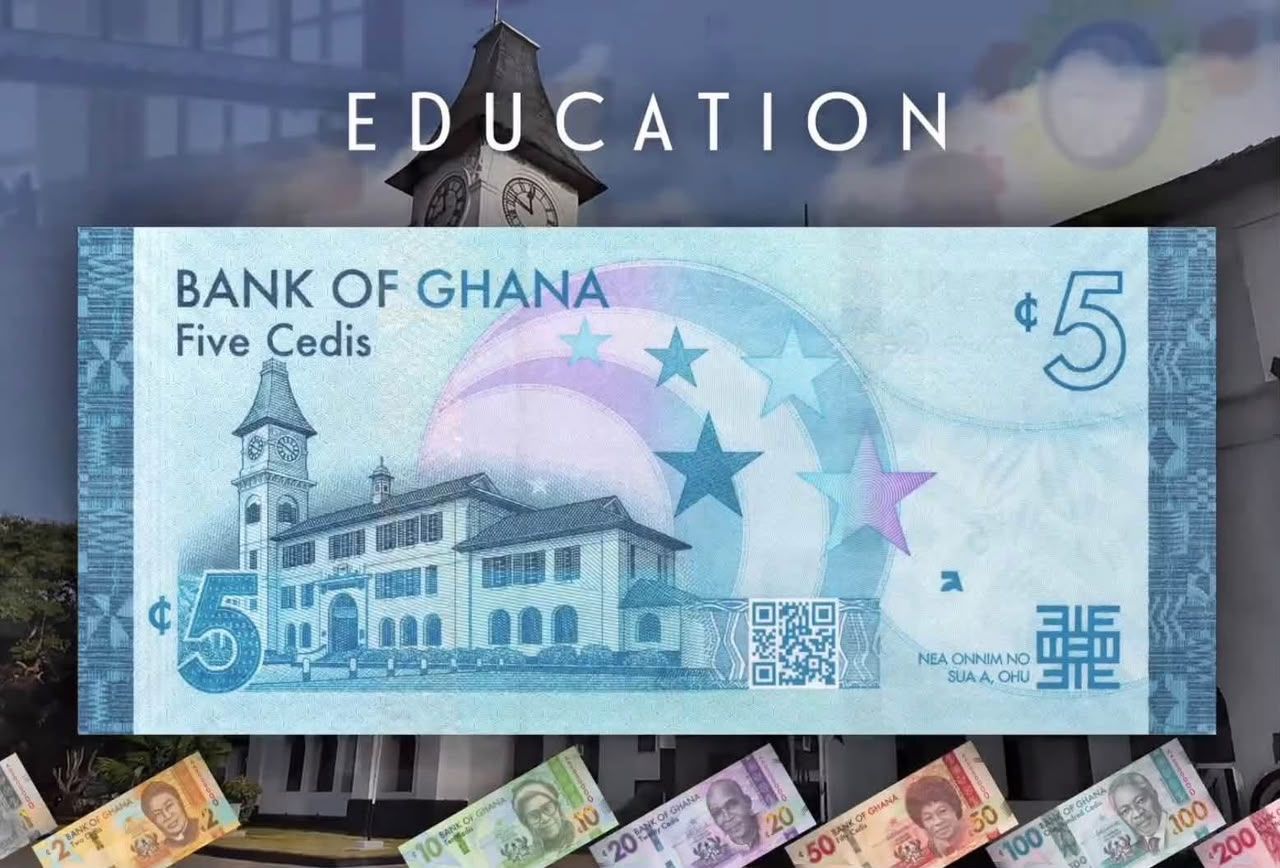
GH¢5 – James Emmanuel Kwegyir-Aggrey: Education as a tool for transformation
The GH¢5 note features James Emmanuel Kwegyir-Aggrey, widely remembered for his contribution to education and his belief in the transformative power of knowledge.
Kwegyir-Aggrey was an educationist who advocated for access to education, particularly for Africans during the colonial period.
He believed that education was essential to individual advancement and the development of society. His legacy is closely associated with Achimota School, an institution whose establishment was influenced by his educational vision.
His appearance on the new note reinforces the importance of education in building a knowledgeable and empowered population. At a time when Ghana continues to grapple with questions of educational quality, access, infrastructure and skills development, his recognition carries a message that national progress must be supported by investment in human capital.

GH¢10 – Justice Annie Jiagge: Breaking barriers for women
The GH¢10 note features Justice Annie Jiagge, a pioneering Ghanaian jurist who made history as the first woman in Ghana and the Commonwealth to become a judge. Her professional journey represents determination, excellence and the breaking of barriers in institutions traditionally dominated by men.
Justice Jiagge also played an important role in advancing women’s rights and promoting gender equality. Her contributions extended beyond the courtroom. She served internationally and was involved in efforts to address discrimination against women.
Her inclusion on the new currency is particularly significant because it recognises the role of women in shaping Ghana’s legal and institutional development. It also provides a powerful example for young girls and women aspiring to leadership positions in law, governance and public service.

GH¢20 – Dr Ephraim Amu: Preserving Ghanaian identity through music
The GH¢20 note features Dr Ephraim Amu, a renowned Ghanaian composer, musicologist and educator. He is widely celebrated for his contribution to Ghanaian music and the promotion of indigenous cultural expressions.
Among his most recognised contributions is the Twi version of the national anthem, Yɛn Ara Asaase Ni, which celebrates Ghana’s land, identity and collective responsibility. Amu believed in the importance of preserving African cultural traditions and incorporating indigenous music into formal education and national life.
His inclusion on the banknote highlights the importance of culture as an essential part of national identity. Music, language and artistic expression are powerful ways through which societies preserve their history and pass values from one generation to another.
The GH¢20 therefore recognises the contribution of creative minds to the making of Ghana, reminding citizens that national development is not measured only through infrastructure and economic growth but also through the preservation of cultural heritage.

GH¢50 – Theodosia Salome Okoh: The woman behind Ghana’s national flag
The GH¢50 note features Theodosia Salome Okoh, the Ghanaian artist and designer who created the national flag. The red, gold and green colours, together with the black star at the centre, have become among the most recognisable symbols of Ghana’s independence and sovereignty.
Okoh’s design has represented the country at international events, sporting competitions and diplomatic engagements, making her contribution visible far beyond Ghana’s borders.
The colours of the flag carry important national meanings. Red represents the blood shed by those who fought for independence, gold symbolises the country’s mineral wealth, while green represents its forests and natural resources. The black star represents African freedom and emancipation.
By featuring Okoh, the new currency acknowledges the creative contribution behind one of the country’s most enduring national symbols. Her recognition also draws attention to the role of women in shaping the country’s identity, often through contributions that become part of everyday national life.

GH¢100 – Kofi Annan: Ghana’s voice on the global stage
The GH¢100 note features Kofi Annan, Ghana’s former diplomat and the seventh Secretary-General of the United Nations. Annan served as UN Secretary-General from 1997 to 2006 and became one of the most internationally recognised Ghanaian personalities.
His leadership at the United Nations was marked by efforts to promote international cooperation, peacekeeping, human rights and sustainable development. He was awarded the Nobel Peace Prize in 2001, jointly with the United Nations, in recognition of their work for a better-organised and more peaceful world.
Annan’s inclusion on the GH¢100 note represents Ghana’s contribution to international diplomacy and global leadership. His story demonstrates that a Ghanaian can rise from local beginnings to occupy one of the world’s most influential diplomatic positions.
It also reflects the country’s potential to contribute to discussions and decisions affecting the international community.

GH¢200 – Dr Kwame Nkrumah: The foundation of Ghana’s independence
The GH¢200 note features Dr Kwame Nkrumah, Ghana’s first President and one of the leading figures in Africa’s struggle against colonial rule. Nkrumah led Ghana to independence on March 6, 1957, making the country the first sub-Saharan African nation to gain independence from colonial rule.
His leadership helped establish Ghana as an important voice in the Pan-African movement, promoting African unity, self-determination and liberation from colonial domination. He also championed industrialisation, infrastructure development, education and the establishment of institutions intended to support national development.
His appearance on the highest denomination gives prominence to the country’s independence struggle and the political foundations of the modern Ghanaian state. Interestingly, Nkrumah is the only member of the famous Big Six whose portrait has been retained in the new Heritage Series.
His placement on the GH¢200 represents a shift from the previous currency design, where the collective image of the Big Six featured prominently.

The Big Six: A significant departure from the old currency
One of the most noticeable changes in the Heritage Series is the absence of five members of Ghana’s Big Six.
The Big Six were central figures in the struggle for independence from British colonial rule. They became prominent following their arrest by colonial authorities in 1948 after disturbances in Accra. The group comprises Dr Kwame Nkrumah, Dr Joseph Boakye Danquah, Ebenezer Ako-Adjei, Edward Akufo-Addo, Emmanuel Obetsebi-Lamptey and William Ofori Atta.
For many years, their collective portrait served as a defining feature of Ghana’s banknotes and a reminder of the sacrifices and political struggles that preceded independence.
The new design takes a different approach by recognising individuals separately for their contributions across different sectors. While the change broadens the representation of Ghanaian personalities, it also raises an important question about how the country should preserve the collective memory of its independence struggle.
The absence of five members of the Big Six does not erase their historical contributions, but it marks a significant departure from the visual identity Ghanaians have associated with their currency for decades.
It also opens a conversation about who gets represented on national symbols and how Ghana chooses to tell its history to future generations.

Beyond the personalities: The meaning of the Adinkra symbols
The Heritage Series also introduces Adinkra symbols into Ghana’s banknote designs, adding another dimension to the country’s cultural representation. Adinkra symbols are traditional visual expressions associated with the Akan people. They communicate philosophical ideas, moral values, social beliefs and lessons about life.
Their use on the new notes connects the modern financial system with Ghana’s indigenous knowledge and cultural heritage. Rather than serving merely as decorative patterns, the symbols carry meanings that reflect values such as unity, strength, wisdom, responsibility and cooperation.
Their incorporation into the currency provides an opportunity for Ghanaians, particularly younger generations, to become more familiar with traditional symbols and the philosophies behind them.
The inclusion of historical sites and monuments further reinforces the idea that the cedi can serve as a moving representation of Ghana’s national identity.

Why change the cedi now?
Beyond the historical and cultural significance, the Bank of Ghana says the redesign is necessary to improve the quality and security of the national currency. The previous banknote designs had been in circulation for more than two decades, during which technology, payment systems and currency security standards had evolved.
The new series therefore introduces improvements intended to make the notes more resistant to counterfeiting and better suited to everyday transactions. The banknotes retain their cotton-based material but have undergone additional reinforcement to improve durability.

Governor of the bank of Ghana, Dr. Johnson Pandit Asiama said the Heritage Series incorporates enhanced security features to strengthen protection against counterfeiting and help the public identify genuine banknotes more easily.
The redesign also introduces more portable sizes and enhanced features intended to make it easier for people, including those with visual impairments, to identify different denominations.
These changes are expected to improve the lifespan of the notes, reduce the frequency of replacement and support more efficient currency management.
The Bank of Ghana has also introduced the Cedi App to help the public familiarise themselves with the new banknotes and their features.

A reminder of the responsibility to protect the cedi.
The redesign also comes with a renewed appeal from the Bank of Ghana for citizens to handle banknotes responsibly. The central bank has cautioned against practices such as crumpling, writing on, stapling, spraying, showering and using banknotes for decorative purposes, including money bouquets.
Such practices damage banknotes and increase the cost of replacing them.
The Governor of the Bank of Ghana, Dr Johnson Pandit Asiama, has stressed that protecting the integrity of the cedi is a shared responsibility involving the central bank, financial institutions, businesses and the general public.
The Bank is also working with stakeholders on a new Currency Act to modernise the legal framework governing the national currency and strengthen measures against counterfeiting.
More than money: A reflection of Ghana’s journey
Ultimately, the Ghana Cedi Heritage Series presents an opportunity to look at the national currency from a different perspective.
A note bearing the image of Agnes Oforiwa Tagoe-Quarcoopome tells a story of women’s economic participation. Cardinal Peter Porekuu Dery represents religious leadership and service. Kwegyir-Aggrey reminds the country of the power of education, while Justice Annie Jiagge represents the pursuit of equality and professional excellence.
Ephraim Amu and Theodosia Okoh celebrate Ghanaian creativity and cultural identity. Kofi Annan reflects the country’s international influence, while Kwame Nkrumah represents the struggle for independence and the aspirations of a sovereign African nation.
Together, these personalities offer a broader account of Ghana’s development, extending beyond politics to include education, religion, commerce, justice, culture and diplomacy.
Yet, the true value of the new notes will not be determined by their designs alone. Their security, durability, public acceptance and the economic confidence they inspire will matter just as much.
As the new banknotes prepare to enter circulation, one important question remains: will Ghanaians see them simply as a new means of making payments, or will they also recognise the history and national identity they carry?
The cedi may change in appearance, but the stories it represents should remain part of the country’s collective memory.