
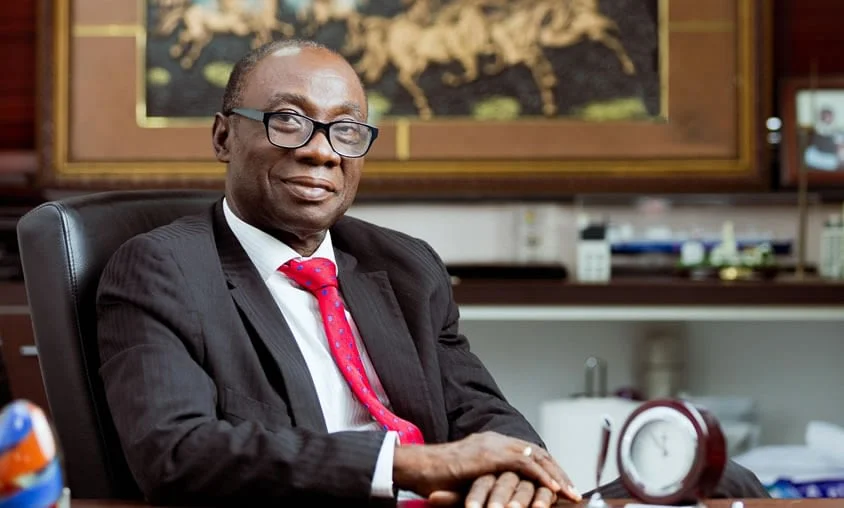
Former Power Minister Dr Kwabena Donkor has denied allegations linking him to a reported $1 million bribery scheme involving convicted former Goldman Sachs banker Asante Kwaku Berko and the Aksa power project.
Dr Donkor, through his lawyers, Cavendish Chambers, said he had never met Mr Berko, demanded money from him or received any personal benefit in connection with the power project.
The statement, issued on Monday, August 10, follows growing speculation on social media about the identity of a former Ghanaian Minister of Power referenced in the United States bribery case involving Mr Berko.
A US federal jury in Brooklyn, New York, convicted Mr Berko on August 6, 2026, over his alleged involvement in a scheme to bribe Ghanaian government officials to secure a power plant project for Turkish energy company Aksa Enerji Uretim A.S.
US prosecutors alleged that Mr Berko, while serving as an executive director in Goldman Sachs’ investment banking division, participated in efforts to secure and manage the deal between Aksa and the Government of Ghana.
Dr Donkor, who was Minister of Power during the period in question, acknowledged that the Ministry of Power negotiated with Aksa Energy to generate electricity in Ghana amid the country’s power crisis, popularly known as ‘dumsor’.
However, he said the negotiations did not involve any personal arrangement between himself and Mr Berko.
According to his lawyers, Dr Donkor maintains that he has never met Mr Berko and never discussed any personal benefit with him or any other person in relation to the project.
He also denied authorising anyone to discuss such matters on his behalf and said he had never received money or any personal benefit from Mr Berko or any other person.
The lawyers further stated that if any individual demanded money in Dr Donkor’s name, that person did so for their own benefit.
Dr Donkor also said he had not seen evidence from the US proceedings linking him personally to any demand for or receipt of money.
His lawyers also addressed reports concerning a trip to Turkey by Ghanaian officials during negotiations for the power project.
They explained that a technical team comprising representatives of various electricity-sector stakeholders travelled to Istanbul to inspect equipment intended for the proposed power generation project.
The trip, they said, was part of the regular pre-shipment inspection process and had no connection to any alleged attempt to solicit personal benefits from the project.
Dr Donkor maintains that he did not meet Mr Berko during the negotiations or at any point thereafter.
The former minister’s lawyers have also rejected attempts to interpret references in the US case to a request for money for a “Senior Ghana Official” as evidence that Dr Donkor personally demanded or received a bribe.
According to the statement, Dr Donkor does not accept that evidence that another person or persons allegedly sought money from their principals for the benefit of a “Senior Ghana Official” establishes criminal wrongdoing on his part.
The US Department of Justice has said Mr Berko and his co-conspirators discussed paying $1 million to the Ghanaian Minister of Power responsible for securing key approvals for the project. The US case also involved allegations of payments to other Ghanaian officials.
Cavendish Chambers said Dr Donkor had instructed the firm to clarify his position and protect his reputation following the allegations.
The lawyers warned that any publication or statement intended to impugn the former minister’s reputation and integrity would attract legal action.
The firm said such conduct would result in immediate legal proceedings.
The development comes amid renewed calls for investigations into the Ghanaian aspects of the bribery case following Mr Berko’s conviction in the United States.
Ghana’s Office of the Special Prosecutor has disclosed that it provided investigative and evidentiary assistance to the FBI during the prosecution, while Ghanaian authorities have indicated that the local aspects of the case require further examination.
Mr Berko faces a maximum sentence of 30 years following his conviction in the United States.