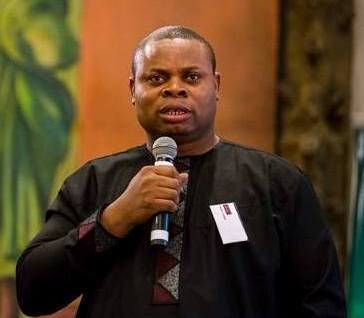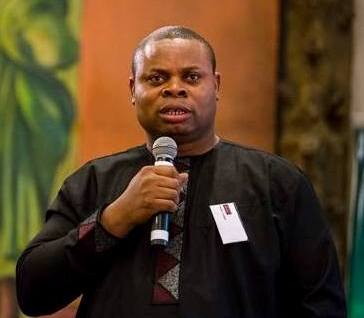
Founding President of IMANI Africa, Franklin Cudjoe, has made a striking argument about Ghana’s recent economic shift and what it signals for the country’s future. At the heart of his position is a clear message: Ghana has not merely “stabilized” in recent times but begun to recover with measurable momentum, guided by discipline, transparency, and a disciplined engagement with the IMF framework the nation inherited.
His annotation is not written in easy-going language. He frames the earlier period as a cycle of waste, mismanagement, and self-inflicted economic injury policies that, in his view, were regressive not only in outcome but in intent. In the same breath, he credits the Mahama-led government on his “version 2.0”—for steering the economy away from the brink and toward a structured path of recovery. Whatever one’s political orientation, Mr. Cudjoe’s intervention challenges citizens to judge governance by results, credibility, and continuity of institutional learning rather than by slogans.
A recovery Ghana has not experienced before
The first core of his claim is bold: he reasons that the fastest economic recovery in Ghana’s history has been recorded and achieved through the current Mahama-led government’s approach. In his view, this recovery is demonstrated across multiple indicators and is not merely a temporary rebound driven by optimism.
The country’s economy is showing signs of recovery, with several key indicators pointing to improved stability and growth. The country has successfully exited its IMF programme with “star-studded honours”, signifying its professionalism and seriousness in handling the engagement. This achievement is complemented by a rapid decline in inflation, which is a key sign that purchasing power and macroeconomic stability are improving.
Ghana’s currency is also gaining confidence, suggesting reduced pressure on currency confidence and more predictable economic expectations. Furthermore, Ghana’s international reserves have been built back better, providing a buffer against economic shocks. One of the most prominent accomplishments is the swift debt reduction, with the debt-to-GDP ratio decreasing from 65% to 45% in just one year, showcasing improved fiscal management and reduced long-term vulnerability. These triumphs validate Ghana’s commitment to economic recovery and stability. However, it’s essential to consider the broader context and potential challenges ahead.
Whether citizens fully agree with the phrasing or not, the essential thrust of Mr. Cudjoe’s argument is that the country has moved from prolonged instability to a structured recovery with visible outcomes. This shift, he implies, is not luck; it is policy, execution, and governance discipline.
Why Franklin Cudjoe emphasizes “learning” instead of “excuses”
Another foremost feature of Mr. Cudjoe’s analysis is his insistence that this recovery is happening in context of inheritance and constraint. He acknowledges that the current administration faced an IMF pathway already bruised by the outcomes of earlier years. In his narrative, the IMF situation was not simply a “new negotiation”—it was a framework distorted by previous decisions, including what he describes as wasteful spending and mismanagement that drained resources and undermined structural progress.
But instead of treating that inheritance as an excuse, Mr. Cudjoe claims the NDC government acted with competence in dealing with the IMF programme it inherited. The emphasis is on “carefully choreographed” implementation, working with the programme’s demands, aligning domestic reforms to improve credibility, and managing the reforms needed for stability.
In this respect, the IMANI boss also draws attention to the record of previous renegotiations. He suggests that earlier administrations missed a large share of structural benchmarks they promised by the end of 2019 before the country was further exposed to destabilizing global shocks such as COVID-19 and, in a limited degree, the Russian war on Ukraine. This part of his argument essentially asks Ghanaians to consider causality: not everything that happened is attributable to external shocks. Domestic governance choices matter enormously.
The Strategic Shift: IMF Exit Plan and the Policy Coordination Instrument
Maybe the most important part of Cudjoe’s praise is what he frames as the government’s strategic exit plan. He argues that stability was achieved through a commitment never to return to the IMF after a defined period described as three and a half years. For him, this is not merely an achievement; it is an act of national confidence.
The IMANI founder explains that the Finance Minister, Dr. Cassiel Ato-Forson and team defended, before Cabinet, a decision to remain bound by IMF strictures for 36 months, extending beyond the general elections in 2028. The political question here is crucial: why accept long discipline when elections are near? His answers that question with investor logic credibility for investors and markets, and enough capital mobilization to invest in critical areas that create jobs, while freeing up domestic resources for the private sector.
This is where Mr. Cudjoe’s argument becomes principally instructive for citizens, as he suggests the administration is trying to avert a classic post-IMF trap—governments that exit and then immediately revert to overspending, waste, and loss of fiscal discipline.
He then introduces the IMF Policy Coordination Instrument (PCI)—a non-financing mechanism that acts as advisory and monitoring structure. In his framing, the PCI functions like a “global seal of approval,” allowing Ghana to design and implement reforms without a financial bailout while still retaining international credibility. This is governance strategy: it signals seriousness to investors while preserving sovereignty over reform design.
A vision that is read, corrected, and signed
The IMANI boss also credits President Mahama directly, describing a culture of attention to detail. He portrays the President as deeply engaged with government documents, reading them and even correcting grammatical mistakes before signing Ghana into IMF-related arrangements. Whether one treats that image literally or metaphorically, the underlying point is clear: He praises leadership commitment and seriousness—leadership that treats economic direction as national duty, not as political theatre.
For supporters and critics alike, this matters. Economic recovery is not only about macro numbers; it is about governance posture: whether the top leadership demands discipline, insists on process, and treats agreements as binding national contracts.
SOEs, resilience, and the future job agenda
Mr. Cudjoe’s commentary does not stop at IMF exit and stabilization. He underscores the next stage: resilience. He calls for reducing losses by State-Owned Enterprises (SOEs), estimating that SOEs cost governments about $2 billion annually. His prescription is decisive: some SOEs should be axed outright, others merged, and others injected with independent, world-class management to return profitability.
He argues strongly that SOEs are enterprises and not social care homes. In other words, public ownership must not become an endless subsidy machine. Citizens should expect performance, accountability, and measurable outcomes from public enterprises.
Why this kind of leadership deserves commendation
IMANI boss’ message ultimately lands on a simple conclusion: Ghana deserves disciplined governance that earns confidence rather than governance that consumes resources without results. His argument urges citizens to commend President John Dramani Mahama for a vision that is credible, structured, and oriented toward building an economy that can sustain itself.
In a democracy, praise must never be blind. But neither should critique be selective or perpetually impatient. If Mr. Cudjoe’s claims about stabilization, recovery indicators, IMF exit credibility, and policy discipline are accepted as the direction Ghana is moving, then leadership recognition is justified. His underlying challenge to Ghanaians is therefore a civic one: assess the evidence, reward seriousness, and support reforms that build institutions stronger than any one election cycle.
The nation’s work now is to protect momentum, strengthen accountability, and ensure the gains of stabilization translate into long-term jobs and prosperity. If “version 2.0” truly delivers that future, then President Mahama’s vision deserves more than applause, it deserves constructive support, scrutiny with fairness, and the trust required to finish a recovery journey that Ghana can finally sustain.
By Innocent Samuel Appiah