

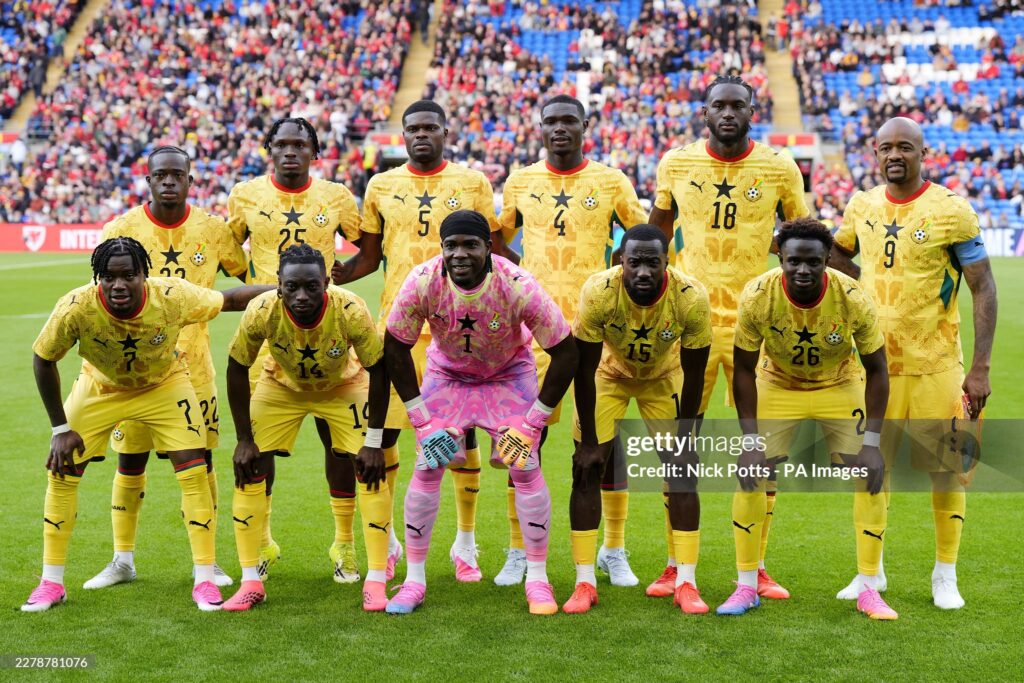
Ghana players pose for a team photo ahead of the international friendly at the Cardiff City Stadium. Picture date: Tuesday June 2, 2026. (Photo by Nick Potts/PA Images via Getty Images)
The FIFA World Cup has always provided a stage for African teams to challenge expectations. Some have come close to making history, others have fallen just short despite promising performances. Ghana belong somewhere in between.
The Black Stars have produced memorable World Cup moments before. Their dramatic run to the quarterfinals in 2010 remains one of the closest any African nation has come to reaching the semifinals. The heartbreak against Uruguay is still discussed today, but it also serves as a reminder of Ghana’s ability to compete on football’s biggest stage.
Heading into the 2026 FIFA World Cup, expectations are more measured. Ghana are not among the favourites, nor are they attracting the same attention as traditional powers. Yet that may work in their favour.
This article has been produced in partnership with Soccer Xtra, a football platform that delivers live scores, statistics, fixtures and breaking football news worldwide. Fans can follow the tournament through the Soccer Xtra app, available on Android and iOS.
A team still searching for consistency
Ghana’s biggest challenge over the past few years has not been talent. It has been consistency.
On certain occasions, the Black Stars have looked capable of competing with strong opposition. On others, they have struggled to control matches against teams they would normally expect to beat. That unpredictability makes them difficult to evaluate ahead of a major tournament.
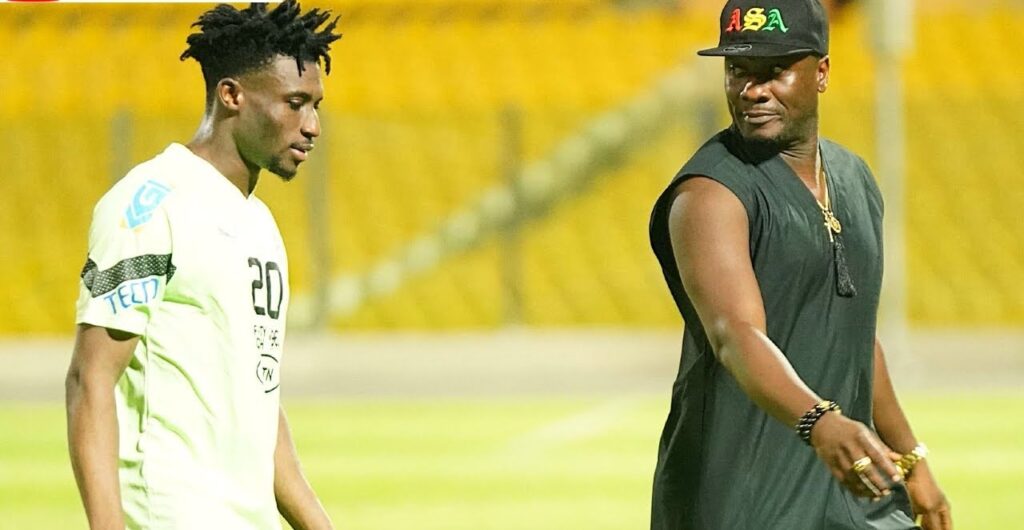
The squad combines experienced international players with a younger generation eager to establish itself. However, the recent injury setback suffered by Mohammed Kudus has created uncertainty around Ghana’s attacking options. Without their most creative player available at full strength, greater responsibility will fall on players such as Antoine Semenyo, Ernest Nuamah and Jordan Ayew to provide attacking inspiration.
The question is whether Ghana can consistently produce their best football over a series of high-pressure matches.
Why Ghana could surprise people
International tournaments often reward organisation and resilience as much as individual quality.
That is where Ghana may find an opportunity.
Unlike some teams that rely heavily on possession, Ghana are comfortable playing without the ball and attacking quickly in transition. They possess physicality, athleticism and enough technical quality to trouble stronger opponents.
Tournament football also tends to favour teams that defend collectively and remain difficult to break down. Ghana have shown in previous World Cups that they are capable of embracing that role.
The expanded 48-team format may also work in their favour. More teams progressing from the group stage creates additional opportunities for nations that might previously have fallen short.
For supporters following every result and fixture during the tournament, the Soccer Xtra app provides real-time updates and detailed match statistics on both Android and iOS
The areas that remain a concern
There are reasons why Ghana are not considered among the tournament’s dark horses.
Defensive concentration has occasionally been an issue, particularly against technically stronger opponents. Small mistakes at World Cup level are often punished immediately, and Ghana cannot afford periods of inconsistency.
There is also the matter of squad depth.
The starting eleven contains enough quality to compete, but injuries or suspensions could quickly expose limitations compared to deeper squads from Europe or South America.
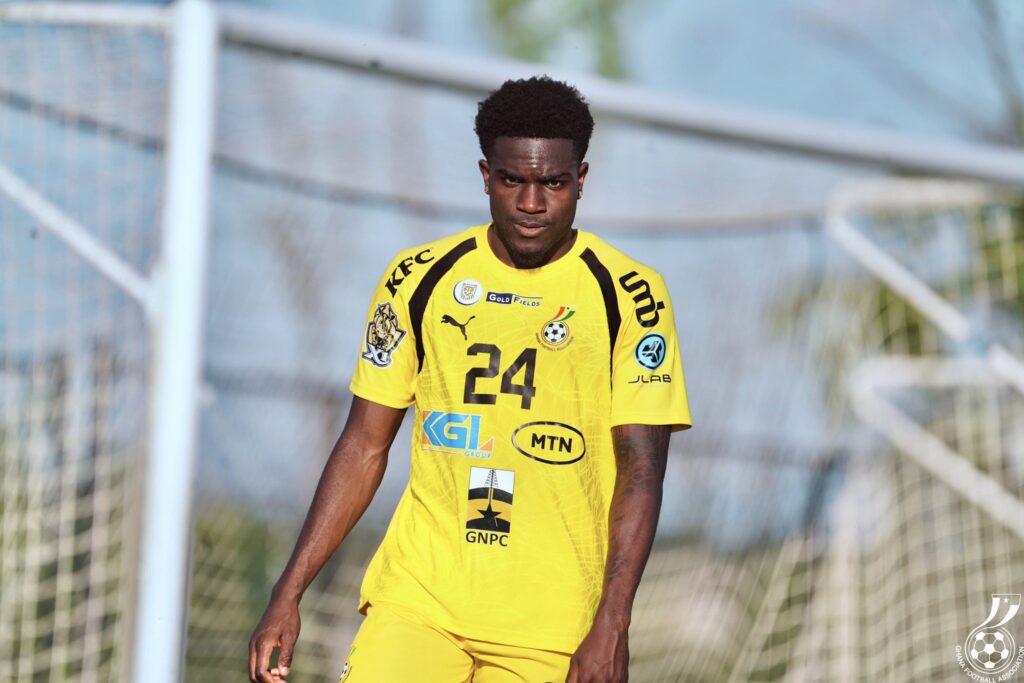
The injury to Kudus further increases concerns about creativity and goal production. While Semenyo, Nuamah and Ayew are capable of producing decisive moments, Ghana do not possess a proven elite goalscorer capable of consistently converting limited opportunities.
In tight knockout matches, that difference can become decisive.
What would count as success?
Expectations should remain realistic.
Winning the World Cup is not a realistic objective for Ghana. Reaching the latter stages would require multiple upsets against stronger opposition.
However, progressing from the group stage is a genuine possibility.
Once a team reaches the knockout rounds, circumstances can change quickly. A favourable draw, a strong defensive performance or a penalty shootout can completely alter a tournament trajectory.
For Ghana, reaching the Round of 16 would represent a solid campaign. Advancing to the quarterfinals would be viewed as a major success and one of the country’s best World Cup achievements since 2010.
Ghana at a glance
| Category | Assessment |
| Biggest strength | Athleticism and attacking transitions |
| Key players | Antoine Semenyo, Ernest Nuamah |
| Supporting threats | Jordan Ayew, Mohammed Salisu |
| Main concern | Lack of creativity without Kudus |
| Realistic target | Round of 16 |
| Best-case scenario | Quarterfinals |
| World Cup outlook | Competitive outsider |
The World Cup rarely follows a predictable script. Every tournament creates space for a team that exceeds expectations and takes advantage of the right circumstances at the right moment.
Ghana enter 2026 somewhere between ambition and realism. They possess enough talent to challenge opponents, enough experience to compete, and enough uncertainty to keep expectations under control.
The absence of a fully fit Mohammed Kudus undoubtedly weakens their attacking potential, but it may also encourage a more collective approach. That combination may not make them favourites. But it does make them dangerous.
DISCLAIMER: The Views, Comments, Opinions, Contributions and Statements made by Readers and Contributors on this platform do not necessarily represent the views or policy of Multimedia Group Limited.
DISCLAIMER: The Views, Comments, Opinions, Contributions and Statements made by Readers and Contributors on this platform do not necessarily represent the views or policy of Multimedia Group Limited.
Source link