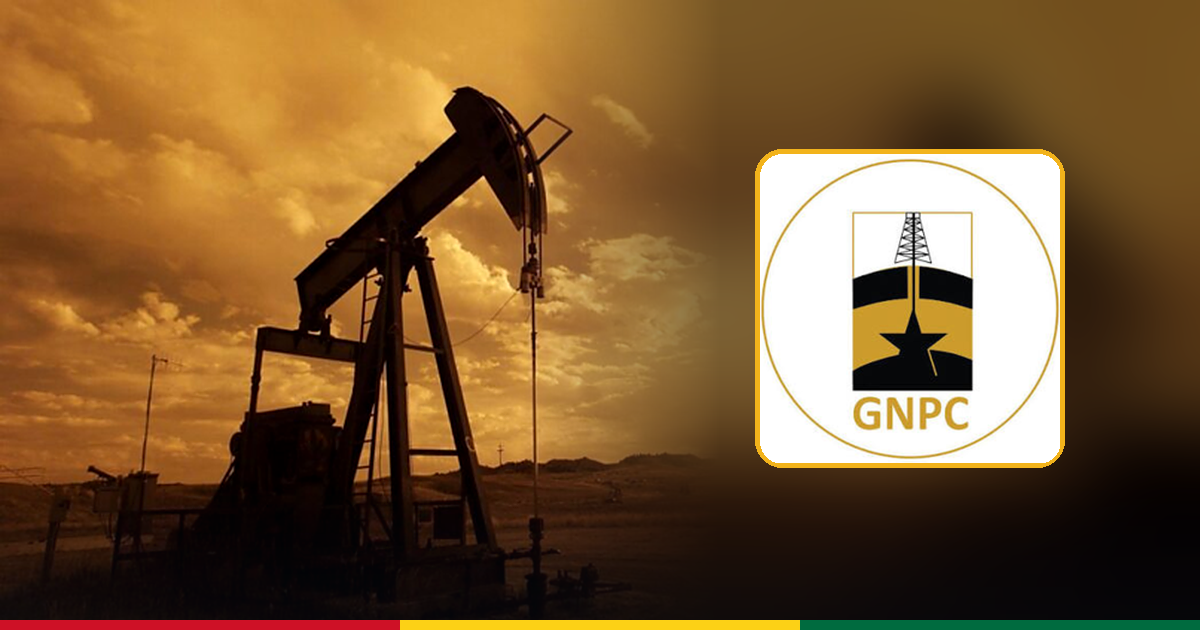
The Ghana National Petroleum Corporation (GNPC) says a rig could be on site by the end of the year. The big question is what happens to Ghana’s oil industry if the three main fields decline, and whether a basin drilled only once in 50 years can help.
Ghana’s oil story has so far been written almost entirely at sea. Jubilee, TEN and Sankofa, the three fields that carry the country’s oil output, are all offshore. Now the national oil company wants to try something different: drilling on land.
At the 2026 Petroleum Commission Local Content Conference, GNPC’s Chief Executive, Kwame Ntow Amoah, said the first piece of well equipment, the conductor casing, has already arrived at the drilling site. The company hopes to finalise its contracts and get a rig there by the end of the year. His reason was blunt: “It is simply too risky to depend on Jubilee, TEN, and Sankofa alone.”
The place GNPC is looking at is the Voltaian Basin. Think of it as a huge underground bowl of rock that may hold oil and gas. It covers about 103,600 square kilometres, roughly 40 percent of Ghana’s land area.
The idea is not new. Geologists began mapping the basin between 1957 and 1969. Soviet teams later drilled at Buipe and found oil and gas shows. In the 1970s, Shell collected seismic data, which works like an underground ultrasound, and drilled a well called Premuase-1 in 1974. After that, the basin went quiet for about 30 years, with only studies and promotions. GNPC began a structured exploration programme in 2005.
GNPC’s 2025 annual report shows how much has been done since then. A gravity survey of the whole basin is complete. Over 6,000 line-km of 2D seismic data has been collected, along with 1,539 soil and rock samples. About US$160 million has been committed, and three exploration licences have been awarded. The report also points to four old boreholes with bitumen shows and two confirmed natural oil seepages, which GNPC says are signs of “an active and working petroleum system”.

But these are hints, not proof. Nobody knows yet whether there is enough oil to produce profitably, and only a well can answer that. The planned well will be the first drilled in the basin in over five decades, and the CEO admits it could come back empty. “Exploration carries uncertainty, but the knowledge and capabilities we build will endure whatever the drilling outcome is,” he said.
That is why the project matters even before any discovery. It is a test of GNPC itself. Richard Ellimah, former PIAC chair and natural resource governance analyst, says that if it succeeds, it would be “the first oil well whose development will be led by our own national oil company”, apart from the decommissioned Saltpond Field. He believes it would show “the readiness of GNPC to take over the upstream petroleum industry”.
It could also change who earns the money. Mr Ellimah argues that in a successful Voltaian operation, Ghana would be the major shareholder for the first time in a significant oil project, so the returns to the national purse would be significant. GNPC’s own engineers would run the field, with no need to depend on foreign expertise.
But, the US$160 million committed so far is only the start, because drilling is expensive. Mr Ellimah says GNPC can raise funds on international markets and is exploring strategic partnerships, though partners usually expect a share of the rewards.
Timing is also unclear. The annual report targets the well for the fourth quarter of 2026, but the CEO’s latest remarks only promise that a rig will be mobilised by the end of the year. Drilling itself could slip into 2027.
Beyond the drilling itself, the project invites a bigger conversation about the future of GNPC. Mr Ellimah suggests listing it on the Ghana Stock Exchange in the long term, so ordinary Ghanaians can own a share. He also suggests it to diversify beyond petroleum and mining, as national oil companies in Indonesia, Saudi Arabia and Brazil have done in areas such as real estate, airlines, shipping and refining. He says this matters because the global energy transition could hurt oil and gas investment over time. Finally, he wants the state to reduce its political influence so GNPC can operate as a purely commercial entity.
Some of this is already moving. Mr Amoah says GNPC is working with the Energy Minister on new subsidiaries for oil and gas trading and shared services, with a possible path to listing on the Ghana Stock Exchange.
The Voltaian Basin is not a sure thing. If the well finds oil, Ghana could gain a second source of petroleum, onshore and under national control. The real test is whether GNPC can run a major project on its own, on time and on budget.
DISCLAIMER: The Views, Comments, Opinions, Contributions and Statements made by Readers and Contributors on this platform do not necessarily represent the views or policy of Multimedia Group Limited.
DISCLAIMER: The Views, Comments, Opinions, Contributions and Statements made by Readers and Contributors on this platform do not necessarily represent the views or policy of Multimedia Group Limited.
Source link