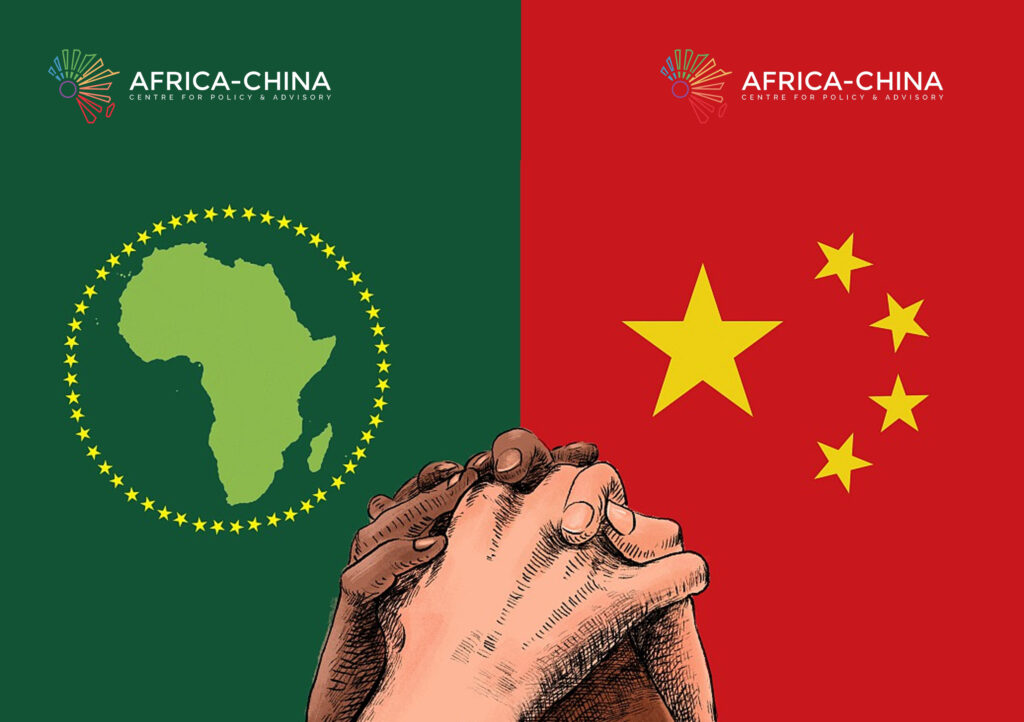
China’s new zero tariff trade policy for Africa, which took effect on May 1, is a springboard for enhanced, two-way value chain integration, international trade experts have said.
During a high-level virtual dialogue on Thursday, on the theme: “Beyond Zero Tariffs: Unlocking Africa’s Strategic Position in China–Africa Trade,” the experts noted that the policy was not only for market access but for economic transformation.
Organised by the Africa-China Centre for Policy and Advisory (ACCPA), and monitored by the Ghana News Agency, the dialogue served as a platform for frank conversation on making the policy a win-win for Africa and China.
Professor Xiaoyang Tang, Chair of the Department of International Relations at Tsinghua University, said the policy could catalyse African countries’ industrial value chain integration with China, stimulating south-south economic cooperation.
He encouraged countries like Ghana, Nigeria, Egypt, South Africa, and Kenya to take advantage of the zero-tariff policy through intentional actions to increase production and semi-processing of cocoa, avocado, textiles, and coffee before export.
“China is not only a consumer market; it is an industrial powerhouse of the world. It has a lot of industries. So, I will not only encourage short term exports of agricultural products but in the long run, establish some of these value chain manufacturing companies,” Prof Tang said.
He explained that the decision to move from 95 per cent tariff-free imports from Africa, as far back as 2009, to a zero-tariff reflected China’s growing confidence in its own agricultural resilience and its willingness to take on greater responsibility in supporting the continent’s trade and export capacity.
The Development Economist who referred to his last month visit to Ghana, expressed optimism about the West African country’s international markets supply capacity, citing active industrial packaging activity in the country.
He cautioned against treating agricultural exports as the end goal, describing such exports as “low-hanging fruit,” and urging policymakers and businesses to work towards the transformative prospect of value chain integration with China’s industrial economy.
“China has extensive manufacturing capacity at multiple levels of the value chain, creating natural opportunities for African countries to supply inputs, components, and intermediate goods that feed directly into Chinese and global production networks. This is industrial complementarity,” he said.
Wang Jinjie, Research professor, National School of Development and Institute of Area Studies, Peking University, said the agreement was not only an opportunity for raw products to benefit immediately, but processed agriculture products.
“There are some growing opportunities in processed agricultural products like green minerals and cultural or creativity products. We see that kind of possibility if they can meet Chinese marketed demands,” she said.
Dr Rosemary Mnongya, Senior Research Fellow at ACCPA, called on African countries to shift from access to advantage, building permanent industrial capacities, especially of the youth.
“For example, Tanzania, we have special economic zones that we focus on. So, instead of exporting raw fruits to China, we process the fruits and then we can export them as avocado oil instead of exporting the sesame seeds,” she added.
Dr Mikatekiso Kubaya, an International Relations and Global Affairs expert, urged African countries to look beyond the export of raw materials, and produce more through innovation, shifting from a net consumer and contributing to the production value chain.
“The development of a much stronger relationship between China and Africa augurs well for Africa’s ambition to be a lot more self-reliant. If we focus on this, we will be capable to absorb future global shocks,” he said.
China offered 95 per cent tariff-free imports from Africa in 2009, expanding that figure to 98 per cent around 2021. By 2024, the policy had extended full zero tariff treatment to 33 least developed African countries.
The new policy, effective, May 1, addresses that remaining gap, bringing the 20 previously excluded countries – many of them among Africa’s more industrialised economies – into the full zero tariff framework.
Source: GNA