As cardio-metabolic diseases claim nearly half of all deaths in the country, health leaders and policymakers are calling for a unified national response — before the window for prevention closes.
Ghana is facing a public health emergency hiding in plain sight. Non-communicable diseases (NCDs) — among them diabetes, hypertension, stroke and heart disease- now account for roughly 45 percent of deaths in the country, and the toll is accelerating. One in five Ghanaian adults lives with hypertension. A significant portion of those affected remain undiagnosed, quietly accumulating health debt that will one day arrive as a medical emergency, and an economic one.
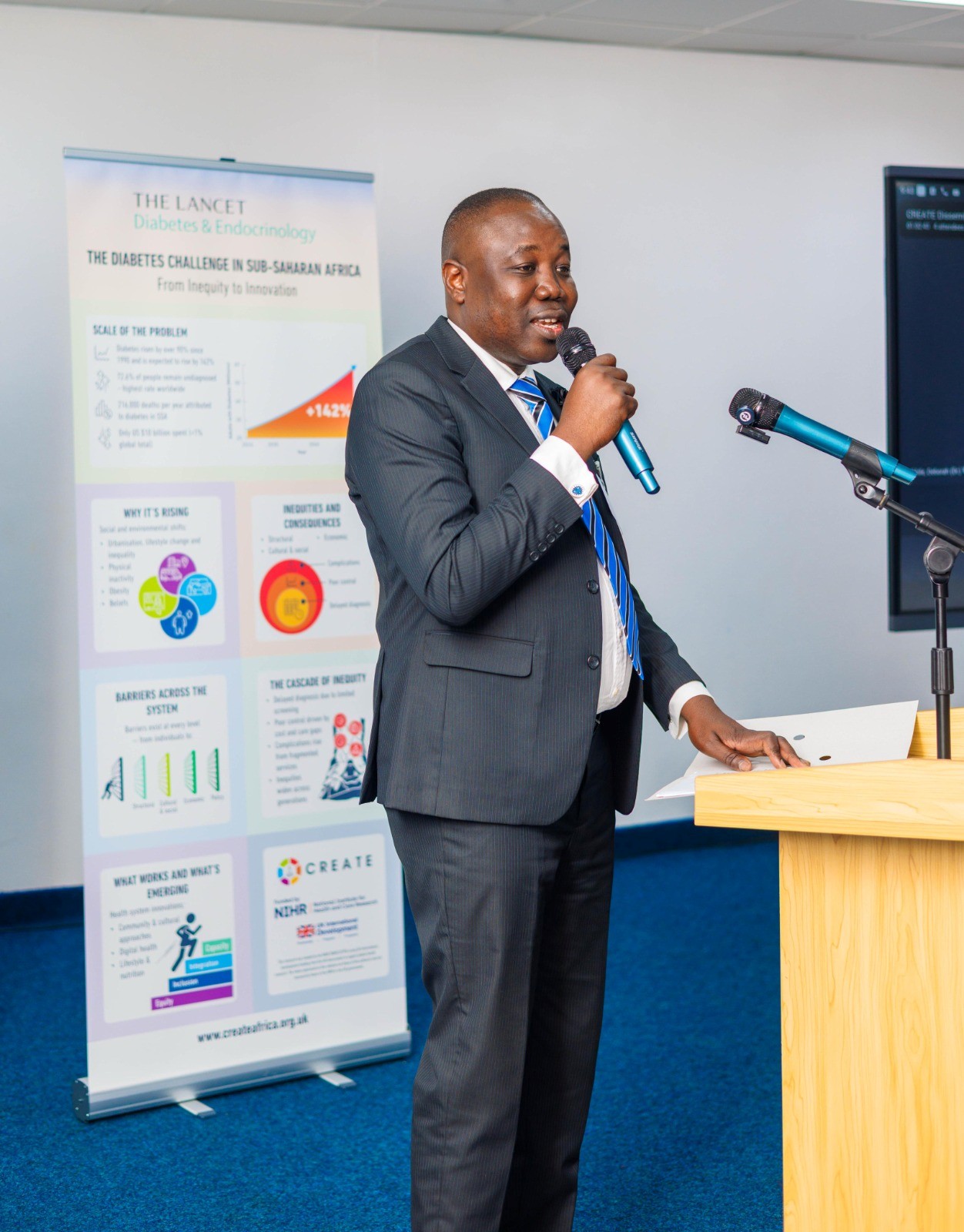
These findings, disseminated at a recent conference in Accra convened by the CREATE programme, prompted a frank and urgent conversation among policymakers, development partners, health professionals, researchers and private sector leaders. The message from the room was unambiguous: Ghana is no longer preparing for a wave of cardio-metabolic disease. The wave has already arrived.
A Healthy Nation Is a Wealthy Nation
Opening the forum, Chief Dr Doli-Wura Zakaria, Managing Director of National Investment Bank (NIB) PLC, made the economic case plainly. The rising burden of NCDs, he argued, is not merely a healthcare problem — it is a drag on national productivity, a strain on household finances and a threat to the country’s long-term development trajectory.
“Beyond the human cost, these conditions constrain national development,” he said. “A healthy nation is indeed a wealthy nation.”
The framing was deliberate. For too long, the conversation around NCDs in Ghana has been confined to clinical settings. What stakeholders at the CREATE forum sought to do was reposition it — to situate population health squarely within the country’s broader economic ambitions and make the case that failing to invest in prevention and treatment today will cost significantly more tomorrow.
Striking at the Most Productive Years
The demographics of Ghana’s NCD crisis make the economic argument even more pressing. Unlike many chronic diseases in high-income countries, which disproportionately affect the elderly, cardio-metabolic conditions in Ghana are cutting down people in the prime of their working lives.
Adjoa Oboubia Darko Opoku, Administrator of the Ghana Medical Trust Fund, spoke to this reality with particular force. “These conditions are affecting people in their most productive years,” she said, “deepening household poverty and exposing gaps in how our systems are designed to respond.”
Her remarks pointed to a structural problem: Ghana’s health system was not built with the long arc of chronic disease management in mind. It was designed, largely, to treat acute illness — a patient arrives, receives care, and is discharged. NCDs demand something different: sustained monitoring, coordinated follow-up, integrated care that bridges prevention, early diagnosis, treatment and long-term management. That kind of care requires not just competent clinicians, but a system designed to support them.
From Fragmented Care to Coordinated Systems
The CREATE programme — whose findings anchored the forum’s discussions — represents one response to this systemic gap. Ms. Opoku described it as a critical shift away from fragmented healthcare delivery toward patient-centred, coordinated care models.
Three priorities, she said, are non-negotiable: integrated care systems that address the full continuum of a patient’s journey; community-centred healthcare delivery that brings services closer to where people actually live; and sustainable financing anchored in genuine public-private partnership.
That third pillar generated significant debate. Participants acknowledged frankly that access to care in Ghana today is too often determined by an individual’s financial capacity. Innovative funding mechanisms — and a more active role from corporate Ghana — will be required to change that. The private sector, stakeholders urged, cannot remain a bystander in a crisis that affects the very workforce it depends upon.
Research Must Lead to Action
The forum also grappled with a challenge familiar to anyone who has worked in global health: the persistent gap between evidence and policy.
Dr. Pascal Mwin, representing development partners, argued that evidence generated through programmes like CREATE must do more than populate journals. It must inform national health strategies, guide service delivery reforms and support the scaling of interventions that are proven to work.
“Building sustainable research capacity, engaging policymakers throughout the research process and ensuring that findings lead to measurable improvements in health outcomes” — these, he said, are the markers of research that actually serves its purpose.
The World Health Organization echoed this, reiterating its commitment to supporting Ghana’s NCD response through technical assistance. Among the tools on offer: expanded essential NCD service packages, improved disease surveillance infrastructure and digital health tools such as national patient registries that would, for the first time, give planners a clear picture of who is sick, where, and what they need.
The Road From Research to Implementation
For all the energy in the room, stakeholders were careful not to mistake a successful conference for a solved problem. The consensus was that isolated interventions, however well-designed, will not be sufficient. What Ghana requires is a whole-of-system response: stronger alignment between research and policy, greater investment in preventive health, expanded community-based care and the kind of sustained multi-sector collaboration that survives changes in government and shifts in donor priorities.
As the CREATE programme now transitions from a research phase into implementation, those involved acknowledge that the hardest work lies ahead. Translating findings into concrete policy decisions, embedding them within Ghana’s health architecture and keeping the momentum alive will test the resolve of every institution at that table in Accra.
The stakes are clear. Get it right, and Ghana builds a health system capable of protecting its people and its economy from a gathering storm. Delay, and the costs — human, social, and financial will compound with each passing year.
The data is in. The question now is whether the will to act will follow.
Post Views: 13
Discover more from The Business & Financial Times
Subscribe to get the latest posts sent to your email.