

Ghana could unlock new funding for agricultural research while strengthening food security if local plant breeders are given stronger protection for their innovations.
The Ghana Industrial Property Office (GHiPO) says protecting new crop varieties will not only encourage scientists to develop climate-resilient crops, but also allow breeders to earn from their innovations and reinvest in further research.
Ghanaian scientists are developing new crop varieties capable of adapting to changing climatic conditions and emerging pests and diseases.
But the absence of adequate intellectual property protection has, over the years, limited the commercial potential of some of these innovations.
The Ghana Industrial Property Office, in collaboration with the CSIR-Crops Research Institute, is strengthening the capacity of local scientists to protect and commercialise their work.
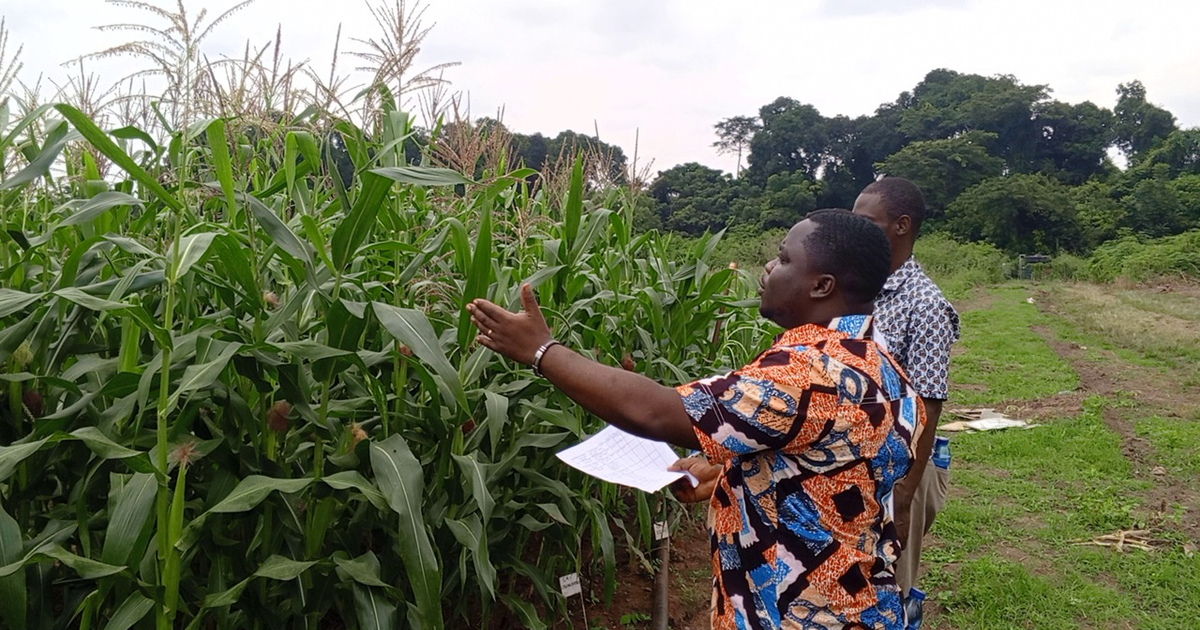
The two institutions are holding the third national training workshop on Distinctness, Uniformity and Stability—DUS—testing for young scientists.
The training is under the implementation of Ghana’s Plant Variety Protection Act, 2020 (Act 1050) and its Regulations (L.I. 2463 of 2022).
The Crops Research Institute, the designated National DUS Testing Centre, has facilitated the workshops since 2024, equipping more than 50 participants with skills in characterizing plant varieties.
The third training session, organised with technical partnership from Naktuinbouw of the Netherlands, aims at equipping participants with the practical skills required to serve as competent DUS Examiners, strengthening plant variety protection and encouraging plant breeding and innovation in Ghana.
DUS Coordinator and Senior Research Scientist at the CSIR-CRI, Dr. Hillary Mireku Botey, emphasized the essence of the training in exposing young scientists to the practicalities of characterizing plant varieties locally.
He believes the technical training for plant breeders would reinforce the country’s food security and sovereignty.
“This would ensure that we have new varieties that would adapt to climate change and pests and diseases. We would then be able to commercialize them. From commercialization, we’d be able to get revenue for research,” he said.

He noted that without the Plant Protection Act, plant breeders from the West could be reluctant to transfer their innovation for further development in the Ghanaian tropical climate.
“The Act offers an opportunity for a broad germplasm or planting materials from international partners to be brought into the country,” he said.
A member of the Intellectual Property Office at the Registrar-General’s Department, Samuel Anum, believes protecting plant varieties could create a cycle of innovation and reinvestment.
He says breeders who obtain protection for their varieties can license their use to others and earn revenue from their innovations.
“When the breeder protects what they’ve developed, they have the exclusive rights in terms of exploitation. So, if another person wants to use it, they have to obtain a license from the original developer, and that in itself generates some revenue. The proceeds could then be used for reinvesting in other research works,” he noted.
The training will allow the country to solely examine its plant variety to meet international standards and provide intellectual property protection for the plants and seeds its local scientists innovatively develop.
DISCLAIMER: The Views, Comments, Opinions, Contributions and Statements made by Readers and Contributors on this platform do not necessarily represent the views or policy of Multimedia Group Limited.
DISCLAIMER: The Views, Comments, Opinions, Contributions and Statements made by Readers and Contributors on this platform do not necessarily represent the views or policy of Multimedia Group Limited.
Source link