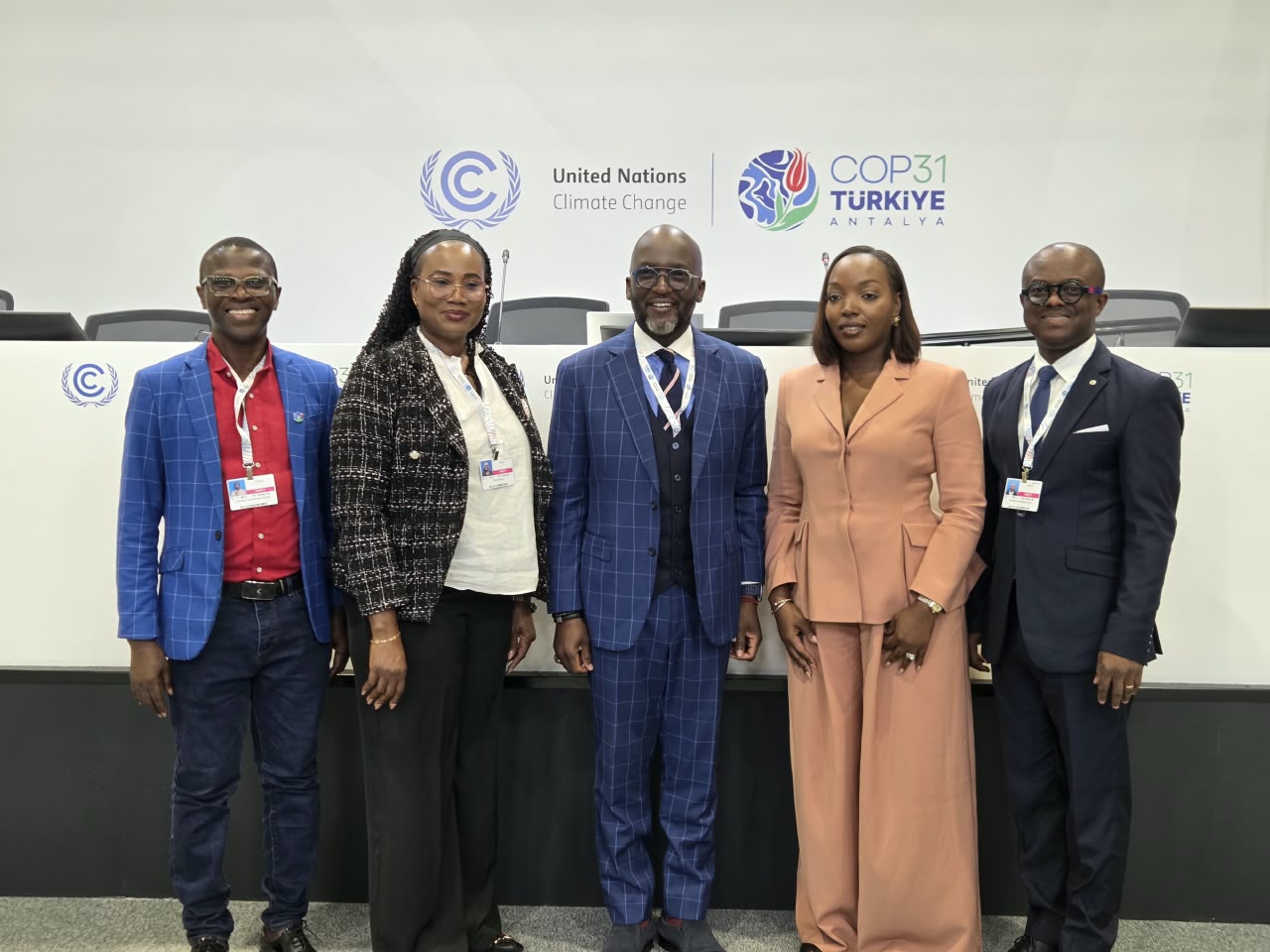
By Mabel Adorkor Annang
The Ghana Infrastructure Investment Fund (GIIF) is targeting up to $300 million in climate financing from the Green Climate Fund (GCF) to support infrastructure projects, with solar power generation and battery storage emerging as key investment priorities.
The proposed investments are expected to include standalone solar installations as well as solar plants integrated with battery energy storage systems to improve electricity supply, support industrial development and accelerate Ghana’s transition to cleaner energy.
Chief Executive Officer of GIIF, Nana Dwemoh Benneh, said renewable energy presents significant investment opportunities, with several solar projects already identified for development.
“Energy is one of the areas that have most of the low-hanging fruits in terms of projects. And therefore, we have a number of renewable energy projects that we have identified in the pipeline, mainly solar, but we are investigating some of the other forms of renewable energy,” he said.
Mr Benneh explained that the Fund is engaging project sponsors who have secured the necessary licences to develop the facilities, while working to establish the commercial viability and bankability of the proposed investments.
The renewable energy pipeline is also expected to support the proposed Volta Lake Economic Corridor, which government plans to develop into a net-zero industrial hub under the 24-Hour Economy and Export Development Programme.
The corridor is expected to host agro-processing facilities, climate-smart commercial farms and light manufacturing industries, creating demand for reliable and sustainable energy to power industrial and commercial activities.
GIIF is also exploring investments in other climate-friendly infrastructure, including low-carbon transportation systems, as part of efforts to reduce the environmental footprint of economic activities.
Mr Benneh said the Fund will initially seek Green Climate Fund support for project preparation before submitting the proposals for technical assessment and consideration by the GCF Board.
GIIF is targeting the third quarter of 2027 to present its initial portfolio of projects to the Board.
Head of Risk and Sustainability at GIIF, Kojo Kwakye Gyan, said the Fund’s accreditation followed several years of institutional development, capacity building and engagement with development partners to meet the Green Climate Fund’s requirements.
He said the process involved strengthening the Fund’s governance arrangements, fiduciary systems, environmental and social safeguards and institutional frameworks.
Mr Gyan said GIIF has been accredited under the Green Climate Fund’s Environmental and Social Risk Category B and Intermediation 2 classification, allowing it to pursue eligible climate investments within those classifications.
“Our next task is to turn this opportunity into investment-ready projects. And as the CEO mentioned, we’ve already identified a number of projects that we’re looking forward to submitting to the GCF,” he said.

He added that GIIF intends to leverage its Green Project Preparation Facility, a proposed climate sub-fund and strategic partnerships to develop a strong pipeline of climate-resilient infrastructure projects.
The Fund is also benefiting from technical assistance through its collaboration with the Coalition for Disaster Resilient Infrastructure to strengthen the assessment and prioritisation of infrastructure investments that can withstand climate-related risks.
Mr Gyan said the real measure of the accreditation would be the Fund’s ability to translate the opportunity into tangible development outcomes.
“Ultimately, our success will not be measured simply by obtaining this accreditation, but by the volume of climate finance we are able to mobilise, the investments we facilitate, and the tangible benefits these investments deliver to Ghanaian communities,” he said.
The Fund’s accreditation as a Direct Access Entity of the Green Climate Fund is expected to provide Ghana with a more direct channel to access international climate finance for renewable energy and other sustainable infrastructure investments.
Beyond large-scale infrastructure, GIIF is working with commercial banks and financial institutions to facilitate concessional financing for small and medium-sized enterprises expected to establish businesses within planned industrial parks.
The Fund also intends to explore grant financing for alternative livelihood programmes aimed at protecting environmentally sensitive areas, including mangrove ecosystems.
The proposed investments form part of a broader strategy to use climate finance to drive renewable energy development, industrial growth and sustainable economic transformation in Ghana.