By: Marcella Mwinkoma Babing
The government has announced plans to invest in new power generation, grid modernisation and nuclear energy development as part of efforts to secure Ghana’s energy future and support industrialisation.
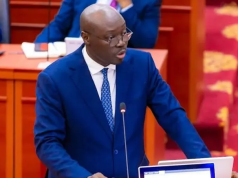
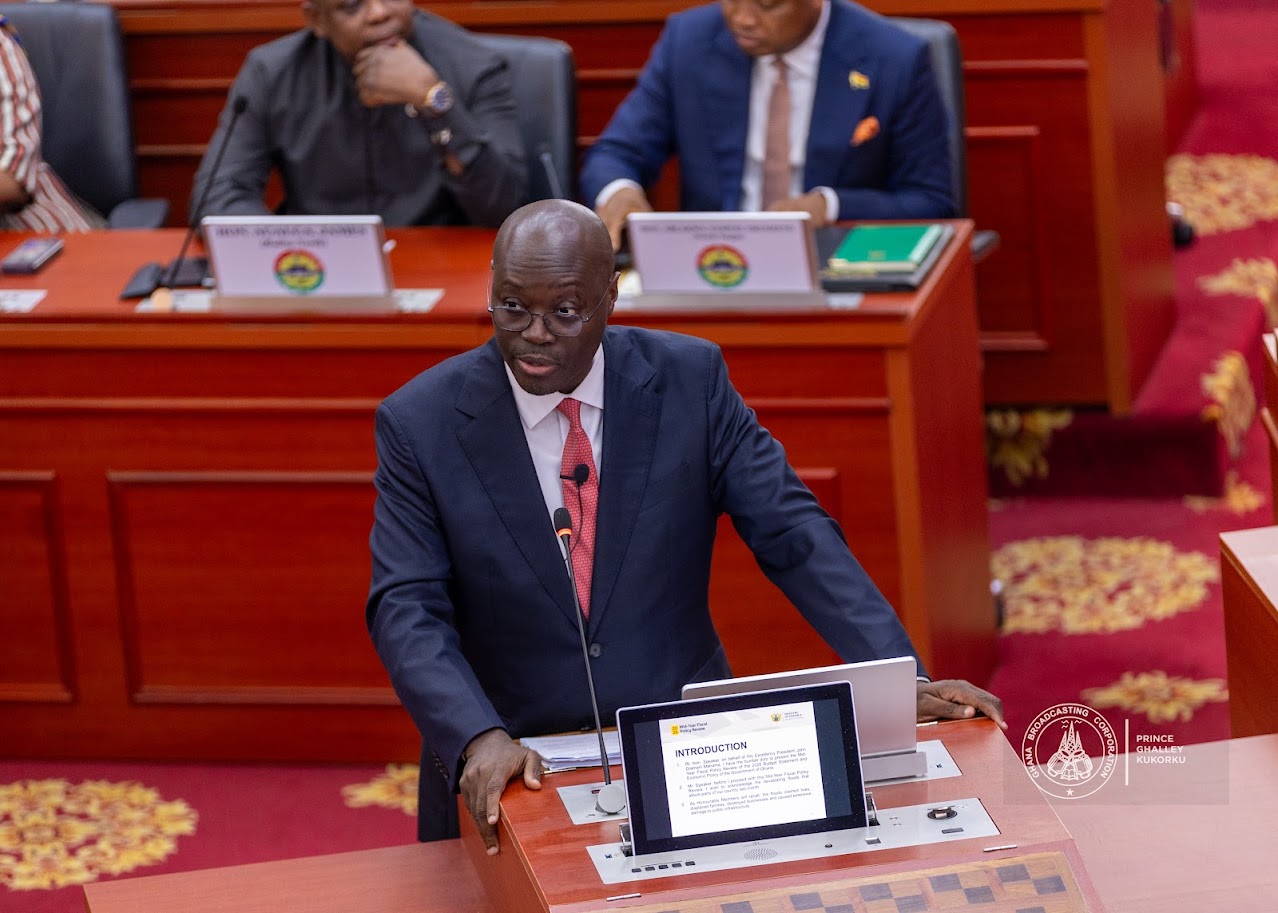
Presenting the 2027 Budget Statement and Economic Policy in Parliament on Thursday, November 12, 2026, Finance Minister Dr Cassiel Ato Forson outlined the third pillar of the New Economy Programme, which focuses on energy sovereignty and affordable electricity.
He announced plans to begin construction in December 2026 of a 1,450-megawatt state-owned thermal power plant at Kafuti Abrubano in the Central Region.
According to the Finance Minister, the project will be fully funded and owned by the state, without borrowing.
The first 600 megawatts are expected to be completed by December 2028, with the remaining 850 megawatts scheduled for completion by December 2030.
The plant is expected to use approximately 150 million standard cubic feet of natural gas daily from Ghana’s Sankofa and Jubilee fields.
Government also plans to construct a 600-megawatt state-owned solar power plant supported by 2,000 megawatt-hours of battery storage to improve grid stability and supply electricity during peak demand.
Dr Forson said the combined investments would support energy-intensive industries, including bauxite, manganese, steel, cement and agro-processing, as well as the government’s 24-hour economy initiative.
He further announced a US$500 million investment between 2027 and 2030 to modernise the electricity transmission network, reduce power losses and strengthen connections between northern and southern Ghana.
The programme will also include the deployment of two million prepaid electricity meters and the full implementation of performance-based private sector participation in electricity distribution by the end of 2027.
The Finance Minister said the measures are expected to address the energy sector’s annual financial shortfall, which he put at approximately US$1.4 billion.
Government is also targeting a reduction in the cost of power generation from approximately 16 US cents per kilowatt-hour to 8 US cents or less.
In another major announcement, Dr Forson said government would invest US$200 million in a 24-month nuclear readiness programme running from January 2027 to December 2028.
The programme is expected to prepare Ghana to sign an engineering, procurement, construction and financing contract for a fully state-owned nuclear power plant by December 2028.
He clarified that nuclear readiness by 2028 would not mean electricity generation would begin that year, but would indicate that critical preparations, including site selection, technology assessment, environmental studies, licensing preparation and safety requirements, had been completed.
Government also plans to train more than 2,000 scientists to develop local expertise to support the country’s nuclear energy ambitions.
Dr Forson said the broader objective is to reduce Ghana’s dependence on costly emergency power plants by December 2030 and secure reliable, affordable electricity to drive industrial growth.
He maintained that energy capacity is directly linked to economic capacity, stressing that affordable and dependable power would reduce production costs, attract investment, strengthen local manufacturing and create employment.