By Valentia Tetteh
The Ministry of Education is working with telecommunications company MTN to establish a dedicated hotline through which students, parents and other members of the public can report cases of corporal punishment and other forms of abuse in schools.
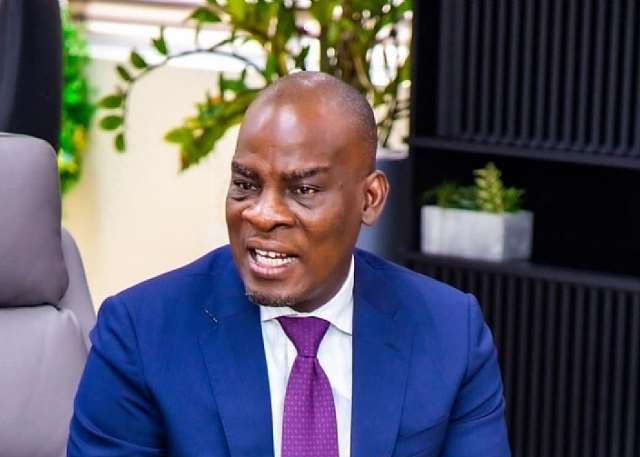
The Minister for Education, Haruna Iddrisu, disclosed this on the floor of Parliament on Wednesday, November 25, 2026, while responding to questions on discipline and student welfare in schools.
He said the proposed hotline would be located at the office of the Deputy Minister for Education and jointly managed by the Director-General of the Ghana Education Service (GES) and the Minister for Education.
The initiative follows concerns over reports of teachers continuing to administer corporal punishment despite the existing ban, as well as incidents of alleged abuse in some schools, including developments at Obuasi Technical School.
Mr Iddrisu explained that corporal punishment had been prohibited under the Ghana Education Service’s Revised Code of Conduct for Staff, introduced in 2017, which replaced earlier arrangements that allowed head teachers to authorise caning.
He said the prohibition was further reinforced in 2019 through a circular issued after reports emerged that some teachers were still using physical punishment to discipline students.
Under the existing policy, teachers and school heads are required to adopt non-violent approaches to managing student behaviour, as outlined in the GES Positive Discipline Toolkit.
These include counselling, withdrawal of privileges, detention, reflection periods and restorative tasks.
The Minister said the Ghana Education Service was also strengthening school-based guidance and counselling units to ensure that behavioural issues were addressed systematically rather than through physical punishment.
He added that teachers and school administrators who administer corporal punishment or permit unauthorised persons, including parents, to assault students on school premises could face disciplinary sanctions.
Such sanctions, he said, range from formal queries and demotion to interdiction and dismissal, alongside possible criminal proceedings under the Children’s Act, 1998 (Act 560).
Mr Iddrisu further explained that school improvement support officers and district education directors were expected to conduct regular monitoring visits to ensure compliance. Students, parents and community members could also report violations through the appropriate GES and district education channels.
Beyond enforcement, the Minister identified the reintroduction of Parent-Teacher Associations (PTAs) as another measure the government intends to pursue to improve school governance and discipline.
He argued that the absence of an effective PTA system had weakened parental involvement in school management, stressing that parents and guardians must play a more active role in supporting teachers and maintaining discipline.
According to him, the government intends to reintroduce PTAs as part of President John Dramani Mahama’s education policy agenda.
Mr Iddrisu maintained that the decision to abolish corporal punishment was taken by the previous administration in recognition of children’s fundamental rights and freedoms.
He, however, argued that the prohibition should not be interpreted as preventing teachers from maintaining discipline in schools.
“Today’s children are unlike our generation; they know their rights, and they demand those rights,” he told Parliament.
The Minister also called for greater respect for teachers, describing teaching as the foundation of all other professions and emphasising the need for parents to support educators in maintaining order in schools.
He said the government remained concerned about declining parental responsibility and family values, which he believes have contributed to disciplinary challenges in educational institutions.
Mr Iddrisu stressed that the Ministry of Education and the Ghana Education Service would continue to work towards ensuring that schools remain safe environments where students’ rights are protected and teachers are supported to carry out their responsibilities.