

The government is moving to institutionalise evidence-informed policy making through stronger analytical capacity, improved policy evaluation systems and closer collaboration with research institutions.
Speaking at the 2026 Evidence to Action (E2A) Conference in Accra on behalf of Chief of Staff Julius Debrah, Deputy Presidential Spokesperson Shamima Muslim said the Mahama administration is taking steps to ensure evidence plays a more central role in policy formulation, implementation and evaluation.
The initiative comes as policymakers across Africa seek to address a persistent disconnect between research and public-sector decision-making, a challenge widely seen as undermining governance effectiveness and development outcomes.
Ms. Muslim said government decisions are often shaped by fiscal constraints, political realities and implementation challenges that differ significantly from academic research timelines.
“When a minister walks into Cabinet with a major policy proposal, the first questions are not about what a systematic review says or what an evaluation found,” she said. “The questions are: what will it cost, who does it affect, can institutions deliver it and is there political will to sustain it.”
To improve policy delivery, the government has established a Presidential Delivery Unit to monitor implementation, track commitments and identify execution gaps in real time.
According to Ms. Muslim, three key barriers continue to limit the uptake of evidence in policymaking: timing, translation and trust.
She noted that policymakers often require immediate answers, making lengthy research processes difficult to integrate into decision-making. As a result, she called for concise evidence products, analytical summaries and decision briefs tailored to the needs of policymakers.
The challenge is compounded by the technical nature of much academic research, which can be difficult for decision-makers to quickly interpret and apply.
“Evidence is frequently dismissed not because it is wrong, but because it is seen as coming from institutions perceived to be disconnected from local realities and priorities,” she said, stressing the need for stronger relationships between government and research institutions.
The administration is also strengthening analytical capacity within ministries and seeking to ensure major policy proposals are accompanied by evidence-based assessments. Feedback systems are being developed to capture lessons from implementation and improve future policy design.
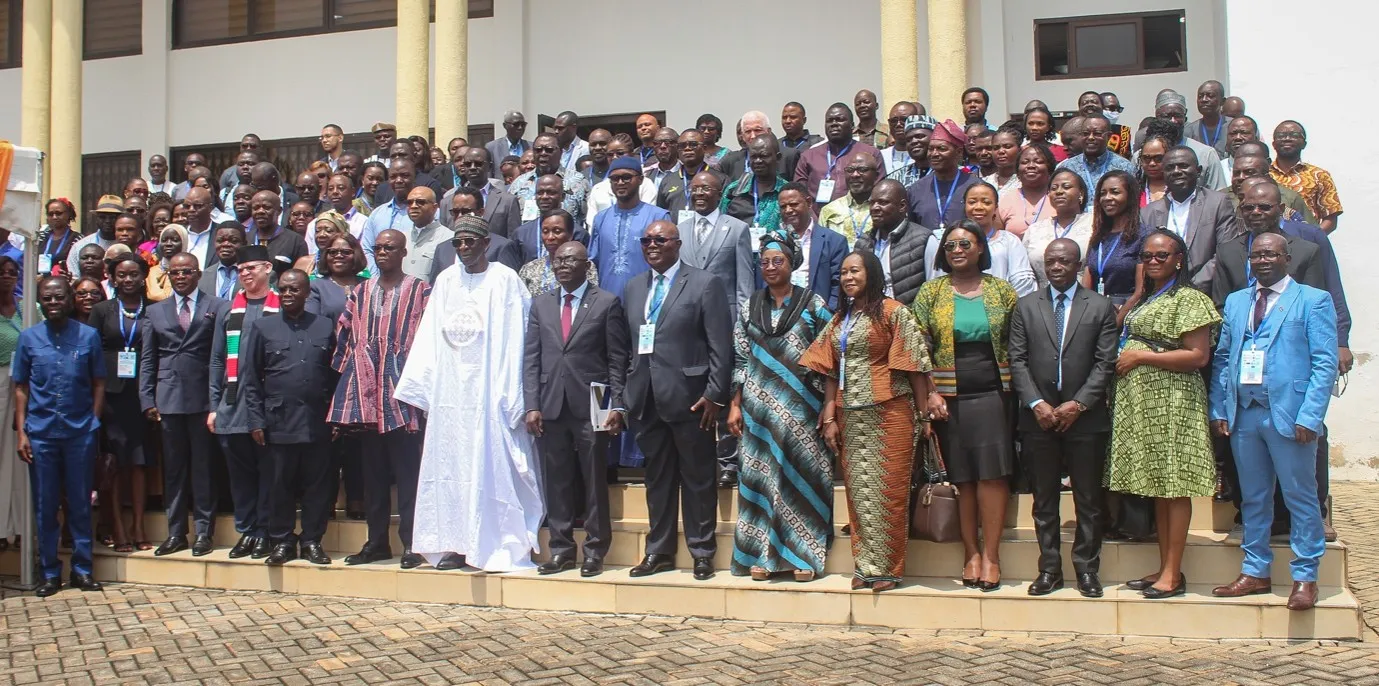
The conference, hosted by the Institute of Statistical, Social and Economic Research (ISSER) at the University of Ghana and organised with the International Centre for Evaluation and Development (ICED), brought together policymakers, researchers, parliamentarians and development practitioners from across Africa.
ISSER Director Prof. Robert Darko Osei said the conference reflects the institute’s longstanding commitment to producing policy-relevant research and promoting its use in decision-making. Hosting the event for a third consecutive year, he said, demonstrates confidence in ISSER’s role in advancing evidence-informed development across the continent.
Opening the conference, ICED President and Chief Executive Officer Dr. David Ameyaw said Africa’s growing population, climate vulnerabilities, food insecurity and debt pressures require stronger evidence systems and more effective public institutions.
“Evidence is no longer optional. It is indispensable,” he said, while cautioning that research often fails to influence policy decisions.
Parliament also signalled a stronger commitment to evidence-based governance. Speaking on behalf of Speaker Alban Bagbin, First Deputy Speaker Bernard Ahiafor said public policies, legislation and expenditure decisions must increasingly be informed by research, data and evaluation.
“Evidence must not only be rigorous; it must also be relevant, accessible and actionable,” Mr. Ahiafor said.
As part of the conference, Parliament signed a memorandum of understanding with ISSER aimed at strengthening its capacity to generate and use evidence in legislative and oversight functions.
Kenya’s Government Spokesperson, Dr. Isaac Mwaura, said Africa’s challenge is no longer producing evidence but ensuring it reaches decision-makers and translates into action.
“Evidence influences change when institutions listen, evidence creates impact when leaders act, and evidence transforms lives when it is translated into policy,” he said.
Post Views: 1
Discover more from The Business & Financial Times
Subscribe to get the latest posts sent to your email.